For visitors and readers curious about Chinese culture, China’s National Day—observed annually on October 1st—offers a window into the nation’s history, values, and collective spirit. What makes this holiday especially relatable to global audiences is its resonance with world history, foreign literary themes, and universal traditions of community and national pride.
The Origins: A Parallel to World Revolutionary Legacies
China’s National Day commemorates the founding of the People’s Republic of China on October 1st, 1949, when Mao Zedong proclaimed the nation’s independence at Tiananmen Square. This pivotal moment bears striking parallels to defining events in Western history: just as the 1776 signing of the Declaration of Independence birthed the United States, and the 1789 storming of the Bastille ignited France’s modern nationhood, 1949 marked China’s emergence as a sovereign, unified state after decades of upheaval. For those familiar with the revolutionary narratives in works like Thomas Paine’s Common Sense (a rallying cry for American independence) or Victor Hugo’s Les Misérables (a testament to French national reformation), China’s National Day origin story is a familiar tale of a nation forging its own destiny.

Modern Celebrations: Universal Traditions with Chinese Flair
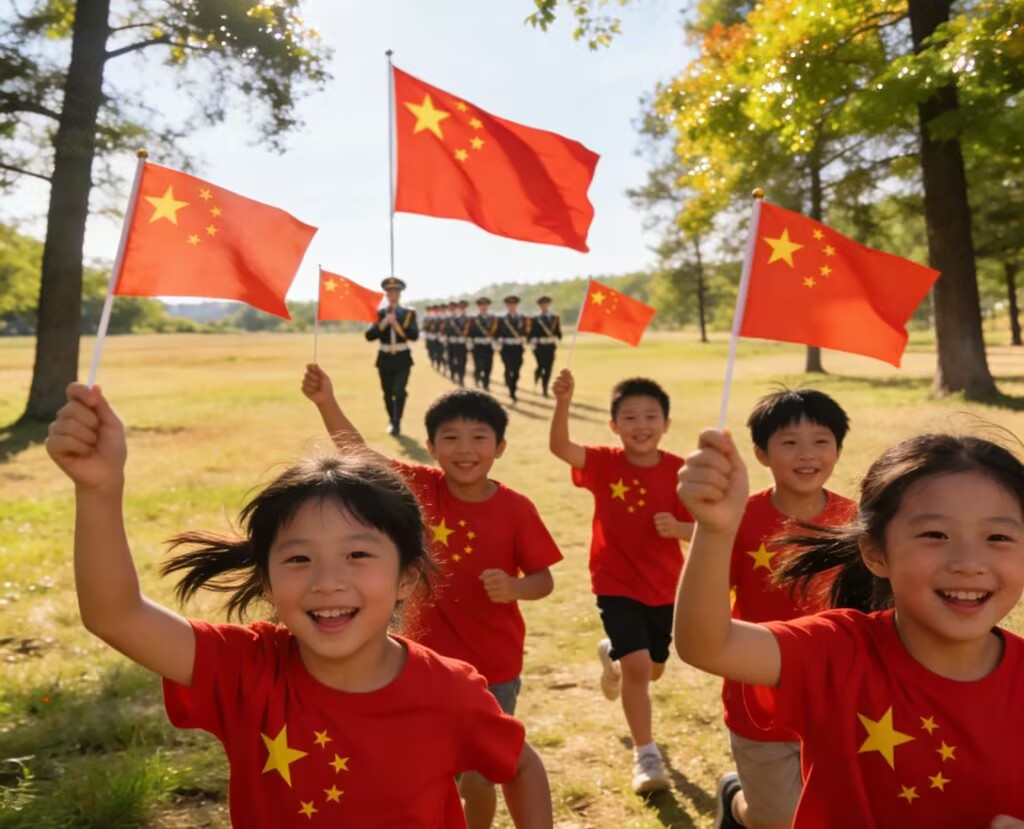
Today’s National Day celebrations blend grand state ceremonies with intimate family and community gatherings—much like national holidays across the globe. The centerpiece is the flag-raising ceremony at Tiananmen Square, where crowds gather at dawn to watch the five-star red flag ascend, a ritual as iconic as the Fourth of July flag-raising in Washington, D.C. Occasional military parades (held on decennial anniversaries) showcase China’s national strength, echoing the Bastille Day military displays in Paris that honor French unity.
Beyond official events, ordinary Chinese people embrace the 7-day “Golden Week” holiday with family reunions, domestic travel, and neighborhood fairs. This focus on togetherness mirrors the festive bonding in Charles Dickens’ A Christmas Carol, where holidays serve as a backdrop for reconnecting with loved ones, or the summer barbecues and fireworks that define America’s Independence Day. Many cities also host flower exhibitions and cultural parades, with floats featuring traditional art and modern achievements—similar to the Oktoberfest processions in Germany that merge heritage and contemporary life.
Cross-Cultural Echoes: National Pride in Foreign Literature
The sentiment of national pride at the heart of China’s National Day is a theme that reverberates through foreign literature. For example, the quiet patriotism in William Wordsworth’s Lines Composed a Few Miles Above Tintern Abbey—where the poet’s love for his native English landscape ties to his national identity—mirrors the affection Chinese people hold for their country’s diverse scenery, from the Great Wall to the Yangtze River, which is often celebrated during National Day travels.
Ernest Hemingway’s For Whom the Bell Tolls, which explores a character’s commitment to his nation’s cause, also resonates with the collective identity fostered by China’s National Day. While the contexts of war and peace differ, both works capture the idea that a nation’s holiday is not just a celebration of the past, but a reaffirmation of shared values for the future. Even the playful, community-focused joy of Dr. Seuss’ The Grinch Who Stole Christmas (where a town’s festive spirit unites its people) can be seen in the street performances and public displays that bring Chinese communities together during National Day.
A Holiday for Global Visitors: Cultural Experiences to Enjoy
For international travelers in China during National Day, the holiday is an ideal chance to engage with Chinese culture. Many historical sites—such as the Forbidden City in Beijing or the Terracotta Army in Xi’an—offer special exhibitions, while local markets feature traditional snacks like mooncakes (a nod to the nearby Mid-Autumn Festival, often overlapping with Golden Week) and jianbing (savory crepes), analogous to the hot dogs and pretzels served at American Fourth of July events. Visitors can also join folk dance performances or calligraphy workshops, gaining hands-on insight into traditions that shape Chinese national identity.
Closing: A Celebration of Shared Humanity
At its core, China’s National Day is more than a national holiday—it is a celebration of the universal desire for unity, progress, and connection to one’s roots. Whether you know this sentiment from the pages of a European novel, the fireworks of an American holiday, or the parades of a French festival, China’s October 1st celebrations offer a chance to see a familiar spirit expressed through a unique cultural lens. We invite you to join the festivities, and discover the stories that bind China to the wider world.

Copyright Disclaimer for Images
Some images displayed on this website are sourced from the internet and are used for informational and reference purposes only.
We respect the intellectual property rights of all creators. The use of these images is not intended to infringe upon any owner’s copyright.
If you are the copyright holder of any image used on this site and believe it is being used without appropriate permission, please contact us. Upon verification of your ownership claim, we will promptly take the necessary action, which may include removing the image or providing proper attribution as per your request.
Please reach out to us at: [email protected]”