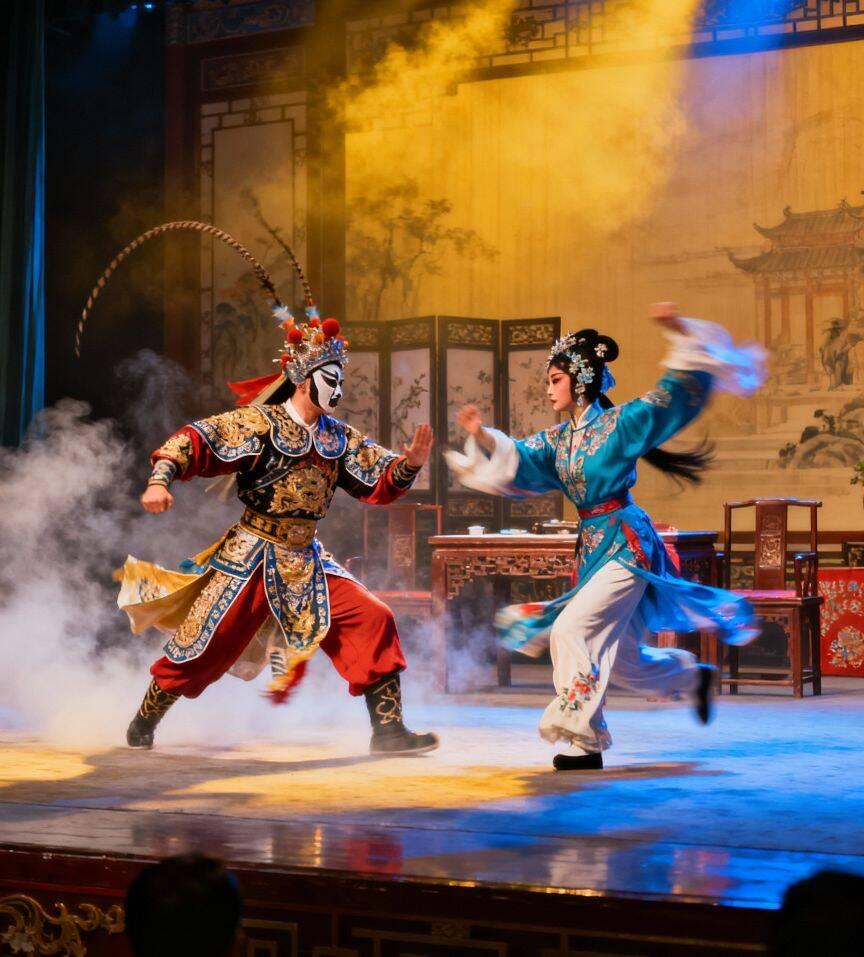
Imagine an opera that combines the energy of a rock concert, the costumes of a fashion show, the thrill of acrobatics, and the symbolism of dance—that’s Peking Opera. It’s a 200-year-old Chinese stage art. Let’s break it down in simple terms.

Origin and History: From Local Show to National Treasure
“Anhui Troupes Enter Beijing”: In 1790, a famous troupe from Anhui province came to Beijing to perform for the Emperor’s birthday. They were a huge hit and stayed. Other troupes from Anhui and Hubei followed.
Fusion and Creation: These troupes mixed their local singing styles, music, and acting techniques, while also absorbing elements from Beijing’s court arts. Between 1840 and 1860, a mature, new opera form was born. Because it was finalized in Beijing and loved by the Qing court, it was named Peking Opera.
The Great Masters: The early 20th century was its golden age. Master performer Mei Lanfang became a legend, touring the US and USSR and introducing the art to the world.
Cultural Meaning: More Than Just Singing
1.Total Art Form: It’s not just singing, but a perfect blend of song, dance, acting, acrobatics, and visual art. Every movement and costume has meaning.
2.The Beauty of Suggestion: Its core idea is “suggestion” over realism. A horsewhip represents a horse; a few flips mean traveling a long distance. It asks the audience to use their imagination.
3.Clear Character Types: All characters fall into four main types, like “character templates“
Sheng: Male roles, like scholars or generals.


Dan: Female roles. The most famous early performers
were men (like Mei Lanfang), but women actors are common now.
Jing: “Painted face” roles. Their colorful, complex masks show their personality—red for loyalty, white for treachery.


Chou:Comedy roles. A white patch on their nose is their mark.
What to Expect: How to “Read” a Performance
·The Opening Gongs & Drums: Loud, exciting percussion music starts the show and sets the mood (like for a battle scene).
The Four Key Skills: Performers master these:
Singing: Unique melodic singing—some voices are high and thin (Dan), others are rough and powerful (Jing).
Speaking: Rhythmic and musical speech.
Acting: Stylized movements and expressions for actions like crying, laughing, riding a horse, or rowing a boat.
Acrobatics: Dance-like combat with amazing flips and tumbling.
Visual Spectacle: The costumes are gorgeous and exaggerated to show a character’s status. The face paint’s colors and patterns directly tell you about their personality.
Modern Peking Opera: Tradition Meets New Ideas

Old and New Plays: You can still see centuries-old classics like The Drunken Concubine, plus new historical plays and experimental modern stories.
New Technology: Modern theaters use better lighting, projections, and English subtitles to help international audiences.
Going Global and Mixing Arts: Its elements appear in movies, it collaborates with Western orchestras, and short videos online showcase skills like “face-changing.”
The Big Challenge: Attracting younger audiences is its biggest task for the future.
Travel Tips: How to Enjoy Your First Show

1.What to Watch:
For Beginners: Choose a show with English subtitles. Plays with lots of action (“military plays”) are easier to start with than slower, singing-heavy “civilian plays.”
Short Highlights: Many theaters offer “Zhezi Xi”—collections of the best classic scenes. They are 1-2 hours long, perfect for a first try.
2.Where to Watch:
Beijing: Huguang Guild Hall (ancient theater), Chang’an Grand Theatre, and Mei Lanfang Grand Theatre are top choices.
Shanghai: Yifu Theatre is the major hub in southern China.
Tourist Spots: Some cultural districts (like Beijing’s Qianmen area) offer shorter highlights shows for tourists, often with English explanation.
3.Practical Tips:
Buy Tickets Early: Book your seat online in advance.
Etiquette: Neat dress is fine. It’s good to applaud and shout “Hao!” (Good!) after a brilliant move. Try to avoid talking or taking calls during the show.
Keep an Open Mind: Enjoy it as a colorful, energetic show. You don’t need to understand every word. Feel the atmosphere, enjoy the colors, music, and the amazing physical skills of the actors.
Copyright Disclaimer for Images
Some images displayed on this website are sourced from the internet and are used for informational and reference purposes only.
We respect the intellectual property rights of all creators. The use of these images is not intended to infringe upon any owner’s copyright.
If you are the copyright holder of any image used on this site and believe it is being used without appropriate permission, please contact us. Upon verification of your ownership claim, we will promptly take the necessary action, which may include removing the image or providing proper attribution as per your request.
Please reach out to us at: [email protected]”