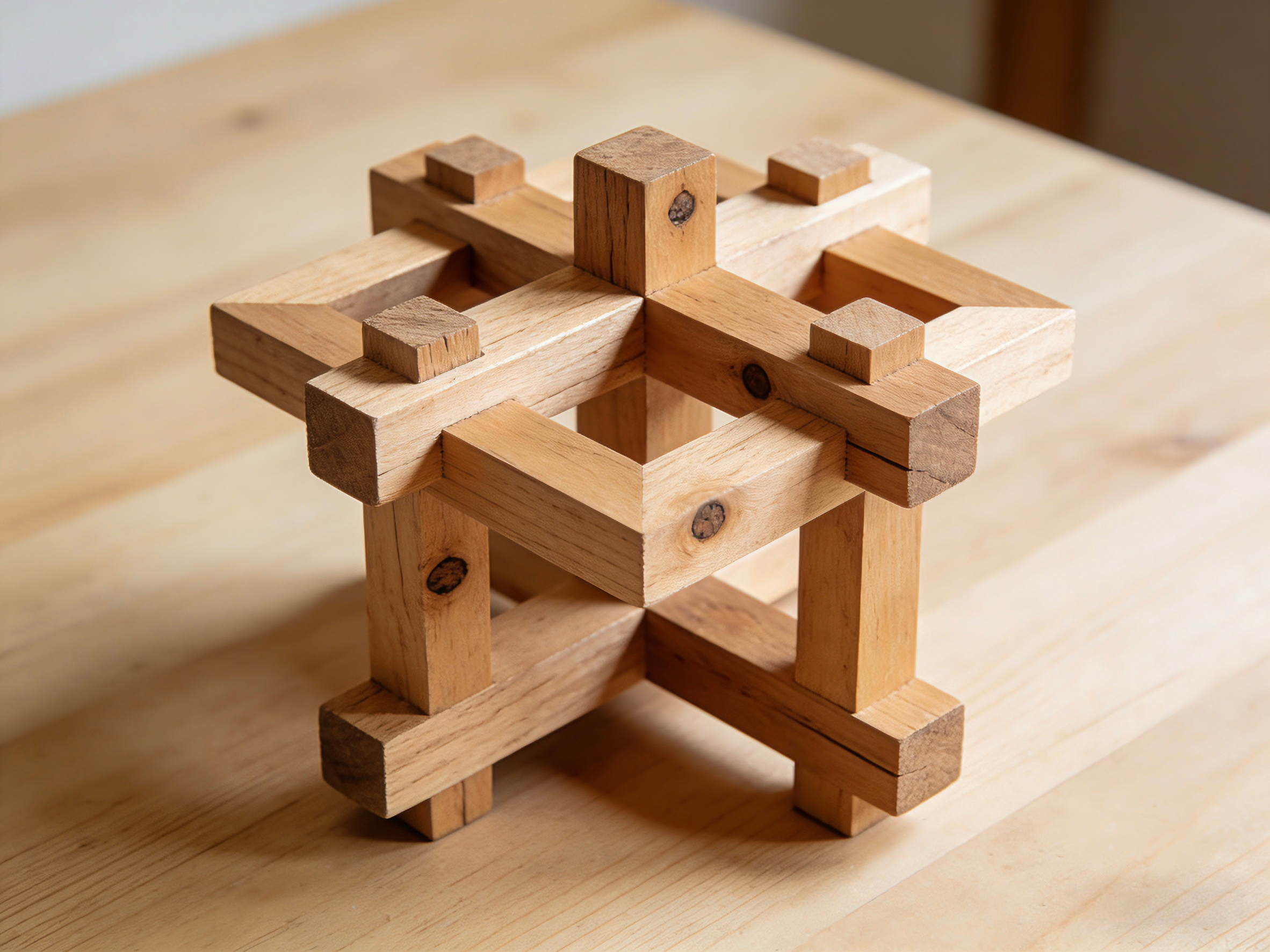
Hey there, builders, puzzle lovers, and history explorers! Ever looked at a wooden puzzle and thought, “Could you build a real house this way?” In China, they did—and not just houses, but towering pagodas, sprawling temples, and elegant bridges that have stood for centuries. Welcome to the world of traditional Chinese timber framing, where not a single nail is used. Instead, master craftsmen employ an ingenious system of interlocking joints—carved with precision and based on principles older than many civilizations. If you appreciate smart engineering, sustainable design, or simply beautiful things made by hand, you’re about to discover one of humanity’s most enduring architectural secrets.
The Craft: Joinery That Defies Time

At the heart of this technique lies mortise-and-tenon joinery—a method of constructing wooden structures by fitting carved projections (tenons) into corresponding cavities (mortises). Dating back over 7,000 years, this system relies on wood’s natural strength and flexibility. Artisans select and season timber for years, then carve each joint to exact specifications. When assembled, the structure becomes a flexible, cohesive whole, capable of absorbing shocks like earthquakes and even being dismantled and rebuilt.

Iconic Examples: Where Craft Meets Community
Two magnificent examples are the Drum Towers and Wind-and-Rain Bridges of the Dong people. In the mountainous regions of Guizhou and Guangxi, Dong communities gather in soaring drum towers—entirely nail-free—that serve as the heart of village life. Nearby, covered Wind-and-Rain Bridges cross rivers, providing shelter and a place for social exchange, all held together by joinery alone. Beyond these, the technique defines Beijing’s courtyard homes (siheyuan) and reaches its zenith in structures like the Yingxian Wooden Pagoda—the world’s tallest and oldest multi-story wooden pagoda, standing since 1056 AD.
Why It’s More Relevant Than Ever

This ancient craft is not confined to history books.Its principles inspire modern sustainable architecture worldwide, seen in eco-friendly wooden buildings from Switzerland to Japan. On a smaller scale, the logic of interlocking joints lives on in the wooden puzzle toys and 3D model kits you might enjoy today. In an age of disposable construction, this craft champions sustainability, resilience, and a profound respect for materials. It proves that the most advanced solutions can be elegant, low-tech, and in harmony with nature.
A Living Legacy
More than just a building method,this is a philosophy in wood. It embodies balance, patience, and the belief that true strength comes from interconnectedness. So next time you solve a wooden puzzle or admire a timeless structure, remember: you’re connecting with a living heritage that continues to teach, inspire, and build a better future—one joint at a time.
Copyright Disclaimer for Images
Some images displayed on this website are sourced from the internet and are used for informational and reference purposes only.
We respect the intellectual property rights of all creators. The use of these images is not intended to infringe upon any owner’s copyright.
If you are the copyright holder of any image used on this site and believe it is being used without appropriate permission, please contact us. Upon verification of your ownership claim, we will promptly take the necessary action, which may include removing the image or providing proper attribution as per your request.
Please reach out to us at: [email protected]”