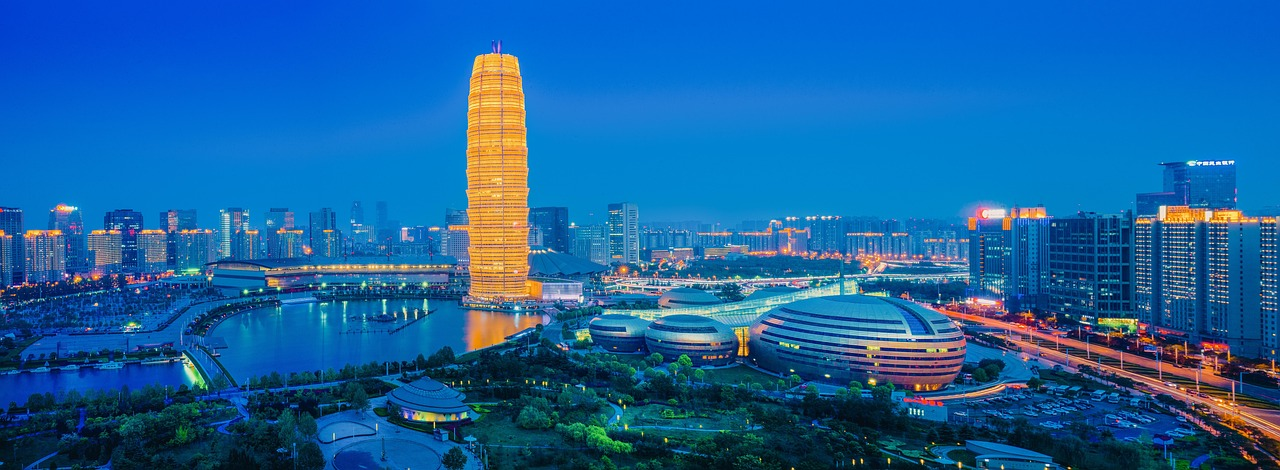
Located at the eastern foot of Songshan Mountain and on the banks of the Yellow River, Zhengzhou lies in the hinterland of China and was historically known as the “Center of Heaven and Earth”. It is not only a millennium-old commercial capital and one of China’s Eight Ancient Capitals, but also a renowned “Green City” nationwide. As a national central city, Zhengzhou is the only “double cross” hub in China’s railway network. Xinzheng International Airport connects to major global economies, the rice-shaped high-speed railway network radiates east, central and west China, and the urban subway links core scenic spots and business districts, ensuring efficient and convenient travel. With distinct four seasons, spring and autumn are the most pleasant. From April to May, the warm spring breeze makes it ideal for wandering ancient city ruins to feel the historical atmosphere; from September to October, the sky is clear and the air is crisp, coinciding with the colorful forests on Songshan Mountain, making it a perfect time for mountain climbing and ancestor worship.
Top tourist destinations
Shaolin Temple: Nestled in the hinterland of Songshan Mountain, it is a world-famous Buddhist temple and the birthplace of Shaolin Kung Fu. The red walls and black tiles of the Main Courtyard are set off by green pines and cypresses, and more than 230 pagodas in the Pagoda Forest witness the inheritance of a thousand years of Zen. The wonderful Shaolin Kung Fu performances fully demonstrate the vigorous and powerful essence of martial arts, where Zen and martial arts blend perfectly.
Zhengzhou Shang Dynasty Capital Ruins: The root of the city that has remained unchanged for 3,600 years. Wandering around the East City Wall Ruins and touching the thick rammed earth city walls, you can intuitively feel the glory of the early Shang Dynasty civilization. In the Zhengzhou Shang Dynasty Capital Ruins Museum, a wealth of cultural relics and exhibits restore the ancient legend of “a mysterious bird descending from heaven to give birth to the Shang people”, making it a three-dimensional textbook of Shang Dynasty capital civilization.
Huangdi’s Hometown: The spiritual home of Chinese people. This is where Xuanyuan Huangdi (the Yellow Emperor) was born, started his career and founded his capital. The simple Xuanyuan Temple and the solemn Ancestor Worship Ceremony Square carry profound cultural heritage. The annual Huangdi’s Hometown Ancestor Worship Ceremony attracts Chinese people at home and abroad to seek their roots and worship ancestors, where incense and homesickness interweave into a unique cultural bond.
Zhengzhou Memory · Youhuachang Creative Park: A new life of industrial civilization. The red brick walls and large chimneys retain the industrial marks of old Zhengzhou, and now it has transformed into a trendy cultural and creative space. Literary cafes, handcraft workshops and industrial relics coexist adjacent to each other. It is literary and fresh during the day and brightly lit at night, fully showing the vitality and romance of the old city’s rebirth.

Food Guide
Zhengzhou’s food embodies the mellow background of Central Plains culture. The solid and rich flavor of Henan cuisine and the rustic charm of street snacks together constitute the taste memory of this city. Braised noodles are Zhengzhou’s city card. Time-honored braised noodle restaurants represented by Heji and Xiaoji use milky white lamb bone soup simmered for 8 hours as the base. The hand-stretched wide noodles are chewy and elastic, paired with ingredients such as lamb slices, kelp shreds and tofu shreds. One sip of the soup is fresh and mellow, and one bite of the noodles is smooth and chewy, warming both the body and the heart.
The breakfast scene is dominated by Spicy Soup (Hulatang). The soup base simmered with beef bone stock is added with more than 20 kinds of spices, paired with ingredients such as beef, gluten and wood ear fungus, with a bright red color and a spicy and fragrant taste. The favorite “Liangcan” (mixed) way of eating among locals is Spicy Soup mixed with Tofu Pudding, served with just-out-of-the-pan crispy beef boxes or sesame cakes. One bite brings warmth straight to the bottom of the heart. In addition, the old Caiji Steamed Dumplings, founded in 1919, have paper-thin skins that burst with meat juice when bitten into; the jar meat in Geji Braised Pancakes is stewed until melt-in-your-mouth, and the pancake shreds are soaked in meat juice but still elastic and soft. These three traditional flavors of Zhengzhou (“Zhengzhou Laosanji”), which are intangible cultural heritage, are an unmissable taste inheritance. At night, the Jiankang Road and Ruhe Community night markets are bustling with activity, with a variety of snacks such as grilled skewers, stir-fried jelly and almond tea, fully showing the comfort of rustic life.
Urban Cultural Core
The cultural background of Zhengzhou lies in the adherence to the thousand-year cultural context and the inheritance of openness and inclusiveness. As an important birthplace of Chinese civilization, the 8,000-year-old Peiligang Culture, 6,000-year-old Dahecun Culture and 3,600-year-old Shang Dynasty Royal City Culture are superimposed here; the Dengfeng “Center of Heaven and Earth” Historical Building Complex, as a world cultural heritage, witnesses the exchange and integration of Confucianism, Buddhism and Taoism. From the “Erqi Spirit” forged by the Beijing-Hankou Railway Workers’ Great Strike to the open attitude of the China-Europe Railway Express (Zhengzhou) connecting the world, this city has always innovated in inheritance and forged ahead in adherence.
The plane trees all over the city are lush and leafy, like the gentle armor of the “Green City”, guarding the rustic hustle and bustle; the profound heritage of this city comes not only from the numerous cultural relics and historical sites, but also from the harmonious coexistence of the hot morning spicy soup, the lively night market snacks and the vigorous vitality of the ancient capital’s new look, allowing every visitor to feel the temperature of history and the enthusiasm of life.

Practical Information
The best seasons to visit are spring and autumn, avoiding the extreme heat of summer and severe cold of winter; urban buses and subways cover major scenic spots, and you can choose tourist special lines or ride-hailing services to go to Songshan Mountain and Shaolin Temple; Alipay and WeChat Pay are accepted in most places, and many time-honored shops also support cash payment; Mandarin is widely spoken, and some local elderly people speak Central Plains Mandarin, so simple communication is stress-free; when tasting Henan cuisine, you can inform the restaurant of your taste preferences in advance—local dishes are generally salty, fragrant and mellow; it is recommended to buy Songshan specialty products and cultural and creative products in regular scenic spot stores, and the intangible cultural heritage handicrafts around Huangdi’s Hometown are of great commemorative value.
Image sourced from the internet
Copyright Disclaimer for Images
Some images displayed on this website are sourced from the internet and are used for informational and reference purposes only.
We respect the intellectual property rights of all creators. The use of these images is not intended to infringe upon any owner’s copyright.
If you are the copyright holder of any image used on this site and believe it is being used without appropriate permission, please contact us. Upon verification of your ownership claim, we will promptly take the necessary action, which may include removing the image or providing proper attribution as per your request.
Please reach out to us at: [email protected]