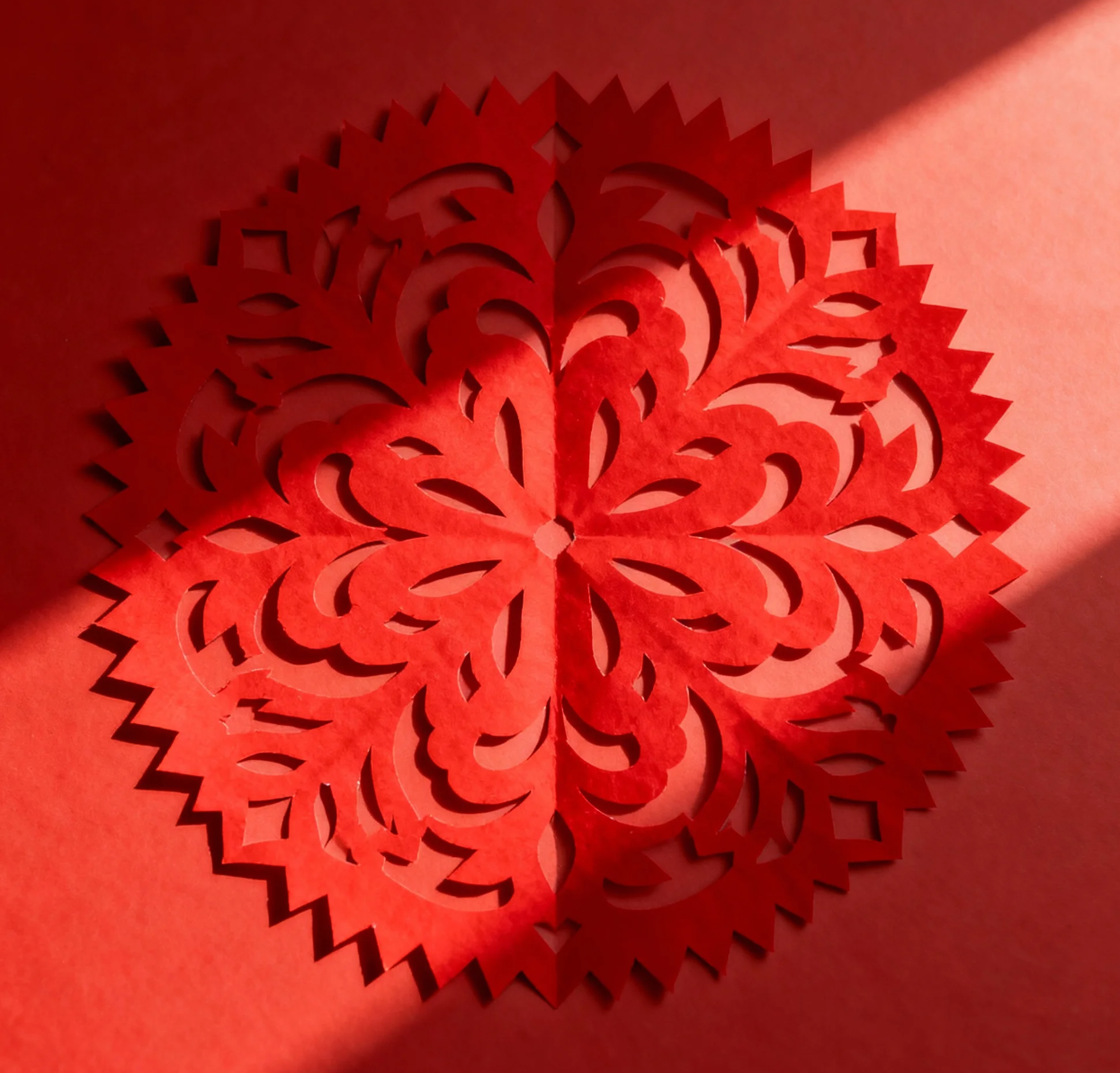
Imagine a simple red paper and a pair of skilled hands with scissors. A precise dance begins, and within moments, intricate flowers, lively mythical creatures, and tales from ancient times come to life. This is the magic of Chinese paper-cutting—a form of “living poetry” that decorates daily life and celebrates existence.

The Story of Scissors and Paper
The history of paper-cutting is closely tied to paper itself, one of China’s Four Great Inventions. As early as the Han Dynasty, soon after paper was invented, creative Chinese artisans began experimenting with this new material. Initially used in rituals and ceremonies, paper-cutting gradually became a staple for festive decorations—especially during Chinese New Year, when “window flowers” are pasted on windows to welcome spring and invite good luck. The art flourished during the Tang and Song dynasties and became widely popular among ordinary households by the Ming and Qing eras. In 2009, its cultural significance earned global recognition when UNESCO added it to the Representative List of the Intangible Cultural Heritage of Humanity.

Symbols and Meanings
In China, paper-cutting is more than decoration—it’s a visual language. Many patterns carry symbolic wishes. Understanding them is like decoding silent poems:

Upside-Down Character “福” (Fu): It’s not a mistake! In Chinese, “upside down” (倒 dào) sounds like “arrive” (到 dào). Turning the character for “good fortune” (福) upside down expresses the wish for “good luck arriving.” Think of it like Westerners kissing under mistletoe for luck.
Lotus and Fish: This pattern, called “连年有余” (liánnián yǒuyú), plays with homophones—”fish” (鱼 yú) sounds like “surplus” (余 yú). It symbolizes a wish for abundance and prosperity year after year.

The Craftsmanship
There are two basic techniques in paper-cutting:
Yang Cutting: The design is formed by connected lines—the blank spaces are cut away.
Yin Cutting: The pattern is created by cutting away the design itself, leaving empty spaces to form the image.
Just as pizza varies across Italy, paper-cutting styles differ across China:
Northern Style: Bold, bright, and dramatic, often featuring opera characters.

Southern Style: Delicate, refined, and realistic, with intricate details.

Paper-Cutting in Modern Life
Think paper-cutting is just for grandmothers? Think again! Today, young Chinese artists are reinventing this ancient art in creative ways. You can spot paper-cutting influences on fashion runways, in animated films, and even as decor in trendy cafés.
For travelers, the best way to experience it is by joining a paper-cutting workshop. Much like a pottery or painting class in the West, it offers a hands-on chance to create your own piece under expert guidance—and take home a unique Chinese memory.
Copyright Disclaimer for Images
Some images displayed on this website are sourced from the internet and are used for informational and reference purposes only.
We respect the intellectual property rights of all creators. The use of these images is not intended to infringe upon any owner’s copyright.
If you are the copyright holder of any image used on this site and believe it is being used without appropriate permission, please contact us. Upon verification of your ownership claim, we will promptly take the necessary action, which may include removing the image or providing proper attribution as per your request.
Please reach out to us at: [email protected]