Imagine creating art where you don’t fully control the final picture. That’s Zhadran (tie-dye). By tying, folding, and binding fabric before dipping it in dye, you create one-of-a-kind, cloudy patterns. It’s art born from controlled randomness.
An Ancient Global Language
While famous in China’s Dali (Yunnan), this resist-dyeing technique is a global ancient art. Think of Japanese Shibori or West African patterns. In China, it dates back over 1,500 years, thriving along the ancient trade routes.
The Process: Tie, Dye, Reveal
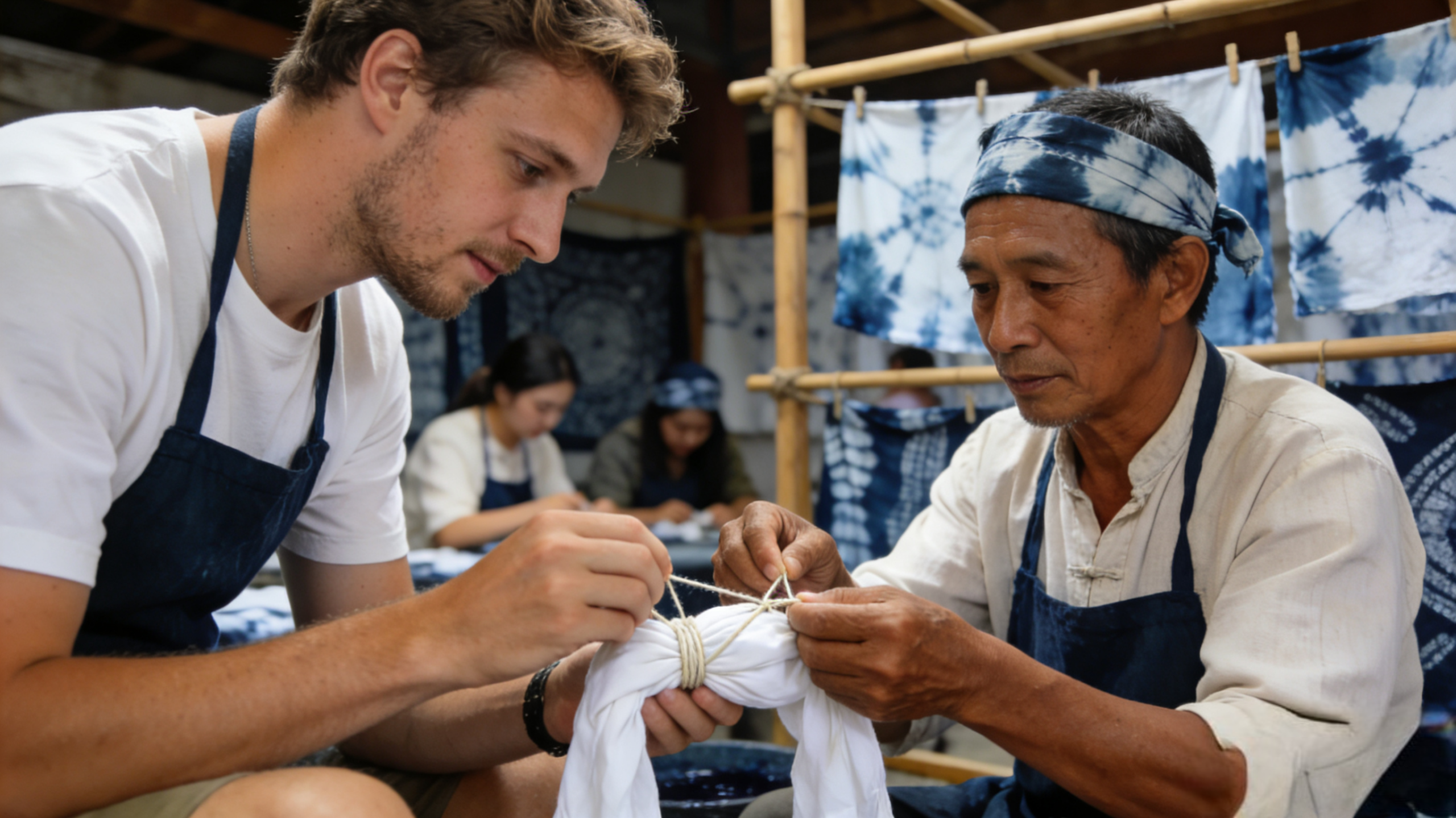
First, you design by tying cloth with strings or binding it with sticks. Then, you dip it into plant-based dyes like indigo. Finally, you unfold it—the magic moment. The tied parts resist the dye, creating unique white patterns against a blue background. No two pieces are ever alike.

Philosophy in Cloth
Zhadran is more than craft. It teaches harmony with the unexpected. You plan the folds, but the dye flows freely, creating surprises. It celebrates imperfect beauty, like the unique cracks in Japanese kintsugi pottery. The result is always a surprise gift.

Bohemian Chic, Ancient Roots
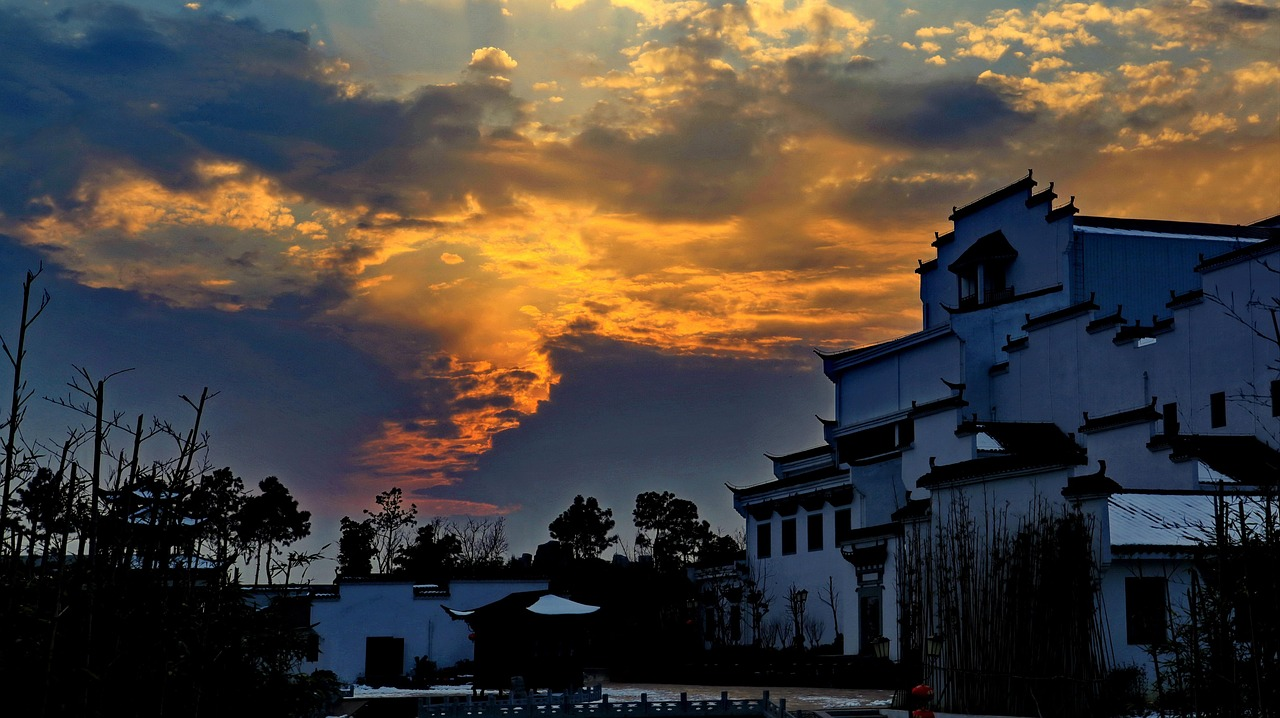
Today, Zhadran is loved worldwide for its bohemian, artistic vibe. In China, it’s a symbol of ethnic Bai culture in Dali. Modern designers use it on everything from clothes to wall hangings, blending ancient technique with contemporary style.
Try It Yourself
You can easily try this art! Join a workshop in Dali Old Town or many Chinese cities. It’s simple, fun, and meditative. You’ll take home a wearable souvenir that’s uniquely yours—a true accident of beauty.
Ever tried an art form where chance creates the beauty? Does the idea of a “happy accident” in design appeal to you? Share your thoughts below!
Copyright Disclaimer for Images
Some images displayed on this website are sourced from the internet and are used for informational and reference purposes only.
We respect the intellectual property rights of all creators. The use of these images is not intended to infringe upon any owner’s copyright.
If you are the copyright holder of any image used on this site and believe it is being used without appropriate permission, please contact us. Upon verification of your ownership claim, we will promptly take the necessary action, which may include removing the image or providing proper attribution as per your request.
Please reach out to us at: [email protected]”