Who is the teacher?
Teacher Pang Zhonghua is a key figure in promoting hard pen calligraphy in China. His teaching method is simple and clear, making it very suitable for beginners.

What does this lesson cover?
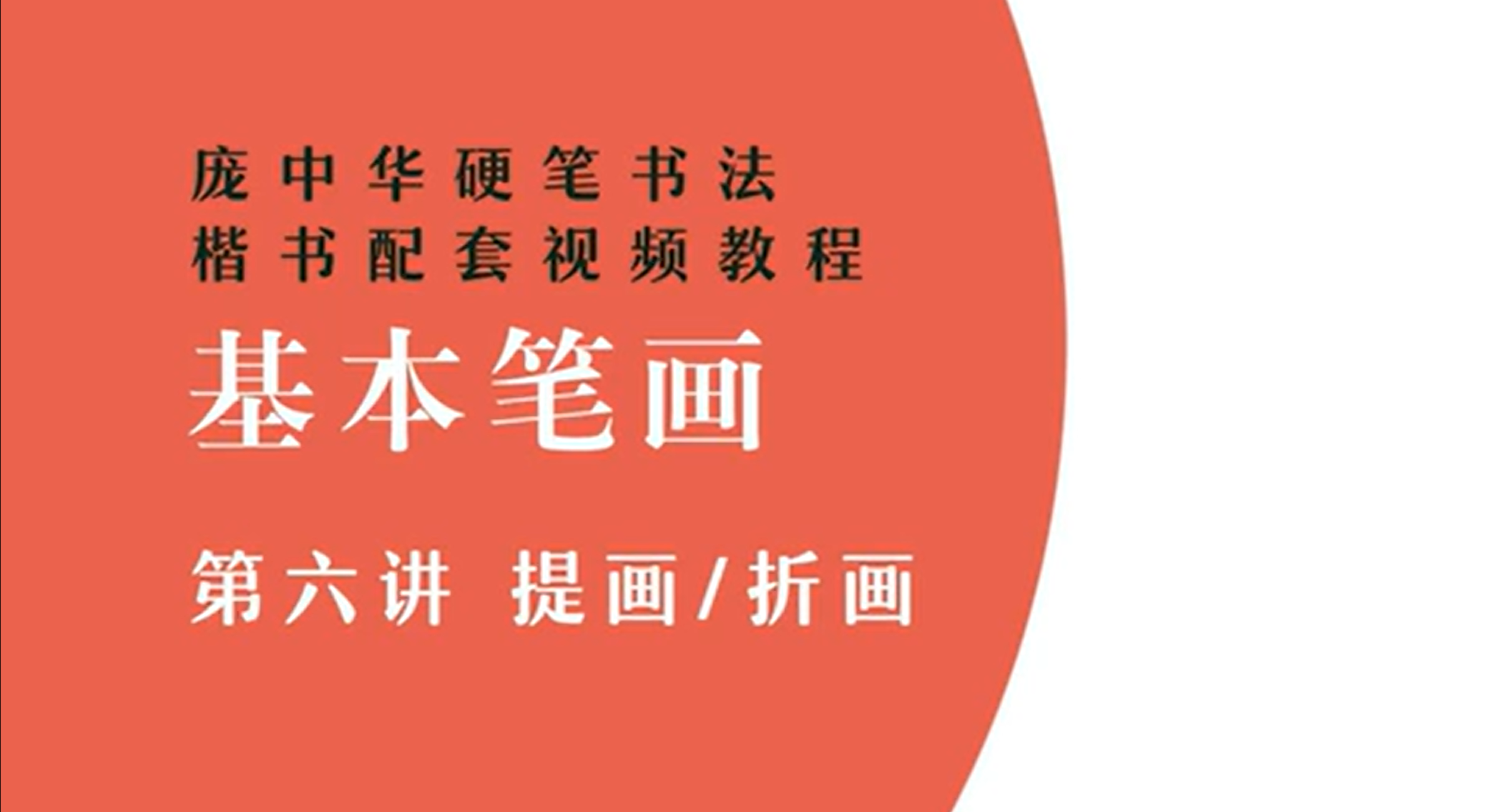
This is the fifth lesson, focusing on four frequently used “combined dot strokes”. Learning their standard formation, combination rules, and application in characters will help make your regular script writing more beautiful and balanced.
What are the four combined dot strokes?
- Facing Dots
· Appearance: Composed of a left dot and a right falling dot, resembling two dots facing each other—open at the top, closed at the bottom.
· Key Points: The left dot is lower, the right dot is higher; align the bottoms; the two dots should be compact and connected. - Back-to-Back Dots (like the character “八” bā, eight)
· Appearance: Composed of a left short falling stroke and a right long dot, resembling two dots turning away from each other, opening left and right.
· Key Points: The starting points are roughly level; the left stroke is restrained, the right one is more expansive; the overall structure must be stable. - Three-Water Radical (“氵”)
· Appearance: Composed of two dots and a rising stroke, arranged in an outward-curving arc.
· Key Points: The first two dots are slightly smaller, the final rising stroke is slightly larger; spacing between strokes is tighter in the front, looser in the back; the directions should echo each other. - Four-Bottom Dots (“灬”)
· Appearance: Composed of four dots, with variations in height and size, spread out evenly.
· Key Points: Typically, the first dot on the left is slightly lower, and the last dot on the right is slightly higher and heavier, acting as a stable base to support the upper part of the character; the spacing between the four dots should be even.
Why is this lesson helpful?
· Easy-to-remember Rhymes: For example, “Facing dots gather inward, back-to-back dots open outward, three dots form an arc, four dots support the base.”
· Emphasizes Connection: Teaches how dots relate to each other so they don’t appear isolated.
· Highly Practical: The standardized writing style is suitable for daily writing, exams, and office use.
· Beginner-Friendly: Each step is broken down with explanations and paired with example characters, making it easy to practice and see quick results.
The course link is as follows:
https://www.bilibili.com/video/av851715637?t=1.0&p=5
Copyright Disclaimer for Images
Some images displayed on this website are sourced from the internet and are used for informational and reference purposes only.
We respect the intellectual property rights of all creators. The use of these images is not intended to infringe upon any owner’s copyright.
If you are the copyright holder of any image used on this site and believe it is being used without appropriate permission, please contact us. Upon verification of your ownership claim, we will promptly take the necessary action, which may include removing the image or providing proper attribution as per your request.
Please reach out to us at: [email protected]”