Forget seeing it just as Beijing’s “neighbor”—Tianjin is a vibrant coastal metropolis straddling the Haihe River, a city where century-old Western concession architecture stands side by side with traditional Chinese courtyards, where the romance of the Haihe River blends with the down-to-earth warmth of Tianjin’s “genuine and humorous” locals, and where every bite of street food tells the story of its unique culinary heritage. Imagine this: you savor a crispy Jianbing Guozi (Tianjin crepe) at a street stall at dawn, cycle through the “Exhibition Hall of World Architecture” in Five Great Avenues, take a cruise along the Haihe River to watch the sunset paint the skyline golden, and wander the European-style streets of Italian Concession as the neon lights turn on. This is Tianjin: a city where East meets West in perfect harmony, where history is etched in every building, and where the relaxed, cheerful atmosphere makes every visitor feel at home. Not overly crowded, full of unique charm and sincere hospitality, it’s the perfect destination to discover the diverse soul of northern China.
Getting There & Getting Around
Arriving in Tianjin
- By Air: Fly into Tianjin Binhai International Airport (TSN), with direct flights to major Chinese cities and regional destinations in Asia. Metro Line 2 connects the airport to the city center in about 40 minutes; airport shuttles and taxis are also available for convenient travel, with clear signage for international visitors.
- By High-Speed Train: The most convenient way to reach Tianjin, especially from Beijing—it takes just 30 minutes by high-speed train, making it an ideal day trip or extended stay. The city has three major high-speed rail stations with distinct locations: Additional high-speed rail times: Tickets can be booked on Ctrip/Trip.com or at station self-service kiosks with English interfaces—hassle-free for international travelers.
- Tianjin Station: Located by the Haihe River, closest to Italian Concession and Ancient Culture Street.
- Tianjin West Station: Near Xibei Corner, convenient for visiting Five Great Avenues and Jinyuan Garden.
- Tianjin South Station: In the suburbs, with cheaper tickets but longer travel time to the city center (not recommended for tight schedules).
- From Shanghai: ~5 hours
- From Chengdu: ~8 hours
- From Xi’an: ~5.5 hours
Getting Around the City
- Metro & Bus: Metro Lines 1–9 cover all core attractions (Tianjin Eye, Five Great Avenues, Italian Concession, Ancient Culture Street) with clear English signage and affordable fares. WeChat Pay/Alipay transit cards work for both metro and buses, which reach every corner of the city. Metro Line 9 also connects to Binhai New Area for day trips to Binhai Library or Haichang Polar Ocean Park.
- Ride-Hailing & Ferries: Didi Chuxing has an English version, ideal for late-night trips, traveling with luggage, or visiting scattered attractions. Avoid rush hour (17:00–19:00) for faster travel. Don’t miss the Haihe River Ferry—a cheap, local way to cross the river, offering stunning views of the city’s skyline and architecture, a better alternative to the Tianjin Eye on windy days.
- Leisure Cycling: Rent a shared bike or an electric bike to explore Five Great Avenues and Italian Concession—it’s the best way to wander the tree-lined streets and admire the diverse architectural styles at a leisurely pace. Remember to park in designated areas to avoid fines.
- Day Trips: For Binhai Library (a futuristic architectural landmark), Haichang Polar Ocean Park, or Jizhou Mountain Scenic Area, take a direct metro, tourist bus, or book a small-group tour. Car rental is also a convenient option (around ¥200–300 per day) for exploring scattered attractions, with easy pickup at the airport or Tianjin Station.
Must-Do & Must-See Attractions

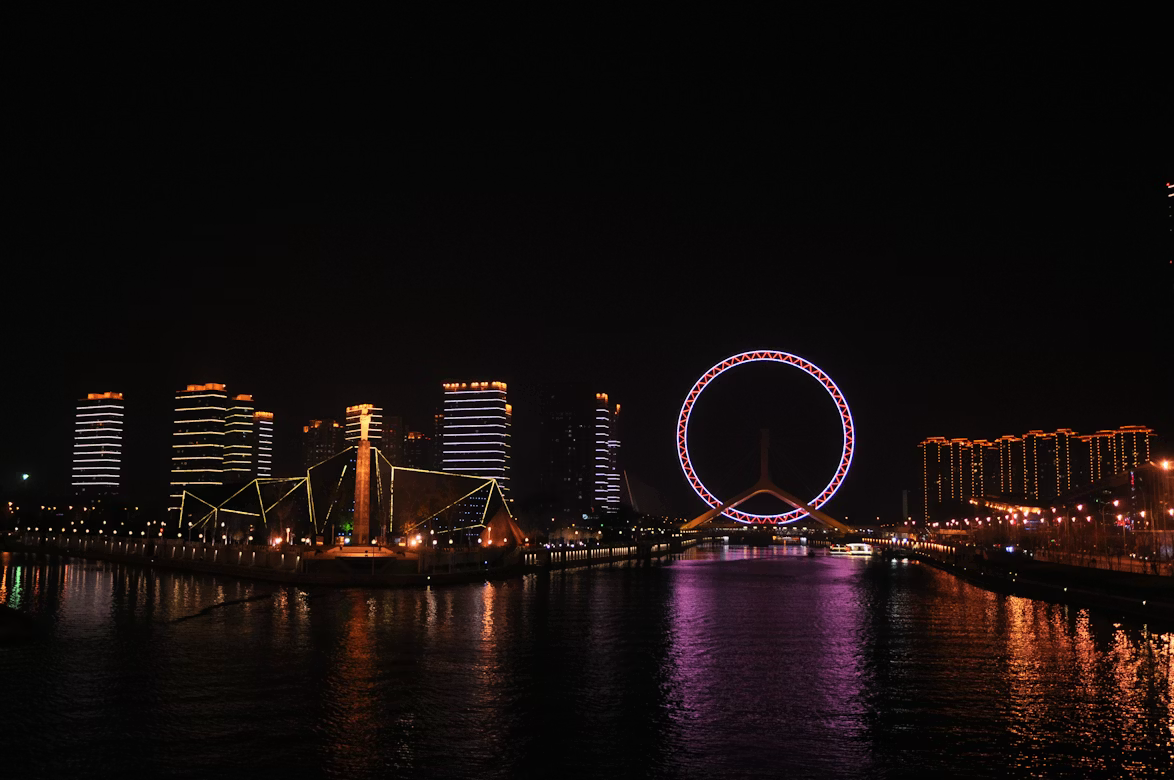
- Tianjin Eye (Tianjin Zhiyan) Tianjin’s most iconic landmark—the only Ferris wheel in the world built on a bridge, standing 120 meters tall over the Haihe River. Ride the air-conditioned pods to enjoy panoramic views of the river, ancient buildings, and modern skyscrapers. It’s especially stunning at night when lit up, reflecting beautifully in the river water. Pro Tip: The Tianjin Eye may close due to strong winds or maintenance—check the official WeChat account in advance. Lines are long on weekends and holidays; arrive before 10:00 AM to avoid crowds. Book tickets online in advance for faster entry.
- Five Great Avenues (Wudadao) Known as the “Exhibition Hall of World Architecture,” this area features over 2,000 garden-style buildings from the 1920s–1930s, blending Western styles (French, British, Italian, German) with Chinese elements. Wander the tree-lined streets, visit former residences of celebrities, and relax in Minyuan Square (a renovated historic stadium, perfect for photos at night when lit up). Pro Tip: Visit before 9:00 AM for fewer crowds and soft morning light, ideal for photography. Rent a bike to cover the entire area easily; avoid driving as streets are narrow and parking is limited.
- Italian Concession (Yishifengqingqu) A well-preserved European-style neighborhood, once the Italian concession in the early 20th century. It features red-tiled roofs, cobblestone streets, and elegant Western buildings, now home to cafes, restaurants, bars, and handicraft shops. At night, the area comes alive with neon lights, street performers, and a lively atmosphere. Pro Tip: Visit in the evening for the best ambiance; try authentic Italian food at local restaurants or enjoy a drink at a riverside bar. It’s also within walking distance of Tianjin Station and the Haihe River.
- Ancient Culture Street (Guwenhuajie) A traditional Chinese street lined with ancient-style buildings, one of Tianjin’s top ten scenic spots. It’s the best place to buy local handicrafts, such as Yangliuqing New Year Paintings, Niren Zhang (clay figurines), and Fengzheng Wei (kites). You’ll also find numerous snack stalls serving authentic Tianjin food. Pro Tip: The main street is more touristy—wander the side alleys for more authentic handicrafts and affordable snacks. Respect local traditions when visiting temples in the area.
- Binhai Library A futuristic architectural marvel, known as the “Eye of Binhai,” with a stunning interior featuring a spiral bookshelf that looks like a “starry sky.” It’s not only a library but also a popular photo spot, attracting visitors from all over the world. The library offers free entry and has English signage. Pro Tip: Book tickets online in advance via the official WeChat account; arrive before 11:00 AM to avoid crowds. Photography is allowed, but keep quiet to respect other visitors.
Local Food You Can’t Leave Without Trying
- Jianbing Guozi (Tianjin Crepe): Tianjin’s signature breakfast—a thin mung bean crepe cooked with an egg, topped with a crispy fried dough stick (guozi), scallions, and a savory sauce. It’s fresh, crispy, and filling, available at every street stall (look for long lines—they’re a sign of authenticity).
- Mahua (Tianjin Fried Dough Twist): A classic Tianjin snack, most famous from Shibajie Mahua. It’s crispy, sweet, and fragrant, with various flavors (original, sesame, red bean). It’s perfect as a snack or a souvenir to take home.
- Gabaicai (Mung Bean Pancake Soup): A beloved Tianjin breakfast—thin mung bean pancakes cut into strips, topped with a rich savory sauce, tofu skin, and green onions. It’s warm, flavorful, and best paired with a hot sesame seed cake.
- Zeng Beng Carp: A traditional Tianjin delicacy—fresh carp fried with its scales on, served with a sweet and sour sauce. The scales are crispy, and the meat is tender, offering a unique texture and flavor.
- Laobao San: A classic Tianjin stir-fry dish with three main ingredients: pork liver, pork kidney, and pork tenderloin. It’s stir-fried with garlic and ginger, savory and tender, a popular side dish for meals or drinks.
Travel Tips for Visitors
- Best Time to Visit: March–May (mild spring, blooming flowers) or September–November (crisp autumn, comfortable temperatures). Tianjin has distinct seasons—avoid the hot, humid summer (June–August) and cold, dry winter (December–February), when temperatures can drop below freezing.
- Cuisine Tip: Tianjin food is savory, slightly sweet, and not spicy. Most dishes are hearty and filling—order small portions if you want to try multiple snacks to avoid waste. Street stalls offer the most authentic flavors, so don’t be afraid to try local favorites.
- Payment: WeChat Pay and Alipay are accepted almost everywhere. Ask your hotel staff to help link your overseas bank card. Carry a small amount of cash (¥10/20/50 notes) for tiny street stalls that don’t accept mobile payments.
- Etiquette: Tianjin locals are friendly and humorous—don’t hesitate to ask for help if you need it. Ask permission before taking photos of locals, especially in ancient streets or concession areas. Keep quiet in libraries, museums, and temples.
- Language: Mandarin is the main language. Basic English is available at major attractions, hotels, and tourist centers. Download Google Translate for menu reading and casual conversations—it’s essential for street food adventures. Learning a few simple Tianjin dialect words (like “gengu” meaning “humorous”) will make locals smile!
- Visa Tip: Tianjin offers a 144-hour visa-free transit policy for international visitors with a connecting flight to a third country. The policy applies at Tianjin Binhai International Airport and Tianjin Port Cruise Home Port, allowing travel within the Beijing-Tianjin-Hebei region.
- Emergency Contacts: Police: 110, Ambulance: 120, Fire: 119. Ask the hotel front desk to write down your hotel’s address in Chinese to show to taxi drivers or use in emergencies.
Ready to immerse yourself in Tianjin’s blend of Chinese and Western charms, Haihe romance, and delicious local food? Save this guide, bring an empty stomach and an open mind, and let this vibrant coastal metropolis surprise you with its unique and diverse charm.
Follow us for more insider guides to China’s underrated cities—no tourist traps, just authentic local experiences.
Image sourced from the internet
Copyright Disclaimer for Images
Some images displayed on this website are sourced from the internet and are used for informational and reference purposes only.
We respect the intellectual property rights of all creators. The use of these images is not intended to infringe upon any owner’s copyright.
If you are the copyright holder of any image used on this site and believe it is being used without appropriate permission, please contact us. Upon verification of your ownership claim, we will promptly take the necessary action, which may include removing the image or providing proper attribution as per your request.
Please reach out to us at: [email protected]