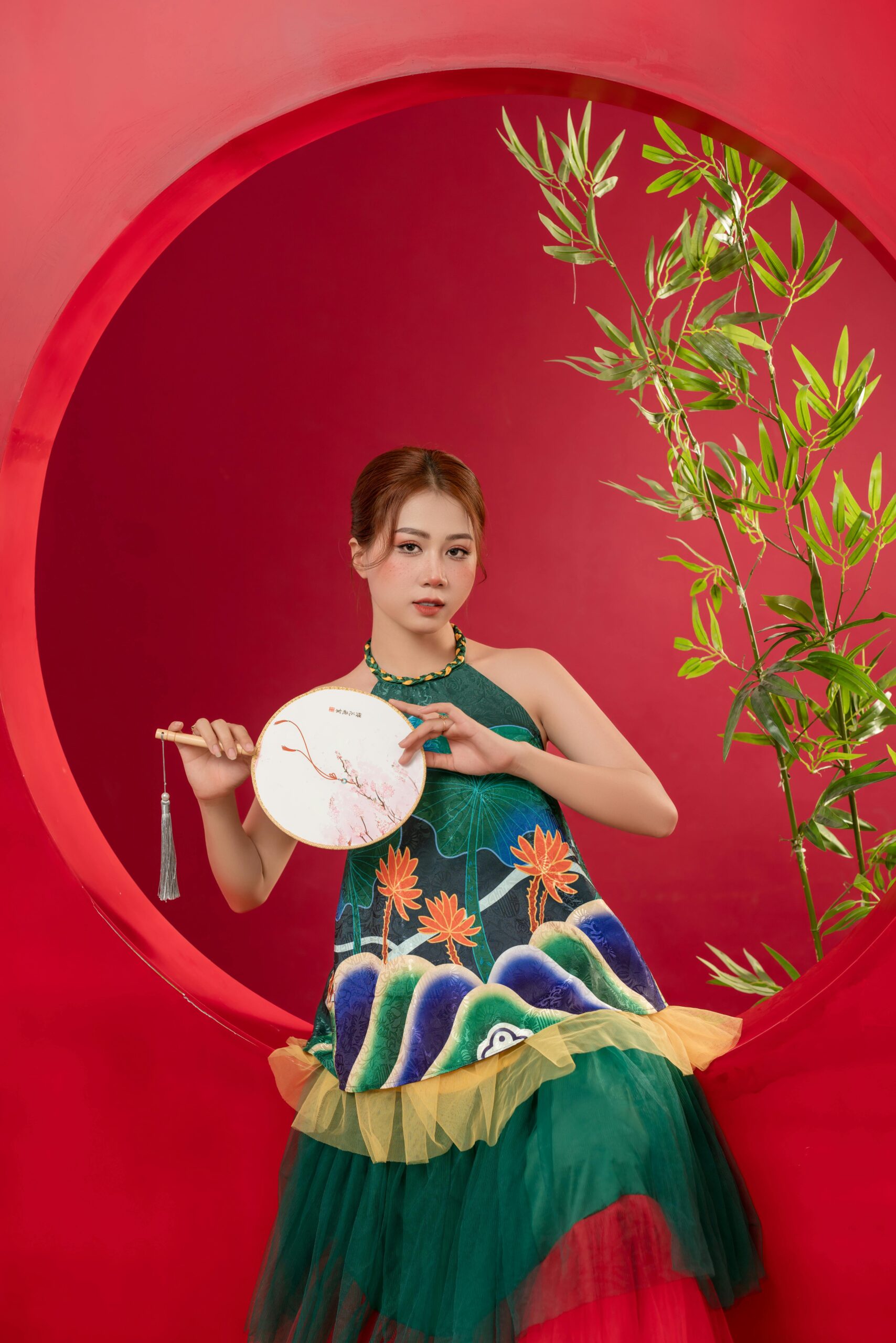
A traditional craft that perfectly blends the gifts of nature with human artistry. It is not just a breeze on a summer day, but a refined art object carrying China’s silk culture and the elegance of scholarly pursuits.

The Land of Silkworms, The Source of Craftsmanship
The art of silk fan making is passed down in multiple silk-producing regions across China, with Jiangsu, Zhejiang, and Sichuan provinces being particularly renowned. These areas boast a mild, humid climate and have been celebrated as the homeland of sericulture since ancient times. They are easily accessible, with convenient connections from major international hubs like Shanghai, Hangzhou, and Chengdu.

A Trio of Nature, Culture, and Craftsmanship
The Beauty of Nature: The Natural Rhythm of Silk
The heart of the silk fan lies in its material – natural silk. The fan surface of each piece originates from the continuous filaments drawn from silkworm cocoons, making it as light and lustrous as a cloud. When light filters through, the fan surface reveals a soft, warm texture, with its grain embodying the innate beauty of life and nature.

The Secret: From Cocoon to Completed Fan
The creation of a silk fan is a precise manual art, centered on the forming of the fan surface. It primarily follows two traditional schools: “Spreading Silk Floss” and “Weaving Warp and Weft.”

Spreading Silk Floss (Exemplified by “Tongxiang Silk Fans”):
Boiling Cocoons & Opening Floss: Double cocoons (where two silkworms spin one cocoon together) are boiled in water, then manually stretched open, rinsed clean, resulting in damp “small floss pouches.”
Teasing & Spreading: The artisan teases the floss pouch into an extremely thin, even layer of silk fibers, called a “floss sheet.” This sheet is then carefully spread and adhered onto a pre-prepared fan frame while submerged in water.
Drying & Adhering: As the water evaporates naturally, the silk fibers, relying on their natural sericin (silk gum), tightly bond to the frame, forming a seamless, gossamer-thin plain fan surface.
Weaving Warp and Weft (Exemplified by “Suzhou-Hangzhou Silk Round Fans”):
Reeling & Preparing Thread: Single cocoons are reeled into continuous raw silk threads, which are then combined, twisted, and prepared into threads suitable for weaving.
Mounting & Weaving: The threads are fixed on a round or shaped fan loom in warp and weft directions, resembling a miniature loom. Using special fine needles, the artisan employs extremely delicate stitching techniques for “twisting weave” or “net weaving,” ultimately creating a fan surface with geometric, openwork patterns.
Mounting & Finishing: The completed woven fan surface is trimmed, edged, and finally assembled with a meticulously crafted handle (often bamboo, wood, or jade) to become a complete fan.
Regardless of the technique, each requires the artisan’s precise control over touch, pressure, and moisture—a process entirely irreplaceable by machines. Every finished piece is a unique work of art.

Local Experiences: Touching a Millennia-Old Craft
Hands-on Craft Workshops: In cities like Hangzhou and Suzhou, visitors can find workshops where, under the guidance of a master artisan, they can personally experience key steps of “spreading silk floss” or “weaving warp and weft” to complete their own silk fan.
Cultural Festivals: The annual spring “Silkworm Flower Festival” and related folk events often feature important demonstrations and displays of silk fan making.
Aesthetic Tea Ceremonies: Some cultural spaces integrate silk fans with tea ceremony and incense appreciation, creating a holistic Chinese aesthetic experience.

Travel & Experience Guide
We recommend incorporating a silk fan-making experience into a cultural tour of the Jiangnan (regions south of the Yangtze River) or Sichuan areas. Spring to early summer offers pleasant weather and often coincides with the sericulture season, allowing for a more complete understanding of the journey from silkworm to silk to fan. The experience can be combined with visits to nearby silk museums, ancient town streets, and ecological mulberry farms for deeper exploration.
An Invitation: Hold the Fan, Touch a Millennia of Culture
A single silk fan begins with a silkworm cocoon and, passing through the hands of artisans, becomes a breeze in your palm. With each gentle wave, it carries the whisper of millennia of civilization; within its warp and weft lies the Chinese philosophy of harmonizing with nature and dedicated craftsmanship. We invite you to personally touch this delicate heritage passed from nature to fingertip, to hold the aesthetics of the East and ancient wisdom in your palm, and cherish it in your heart.
Copyright Disclaimer for Images
Some images displayed on this website are sourced from the internet and are used for informational and reference purposes only.
We respect the intellectual property rights of all creators. The use of these images is not intended to infringe upon any owner’s copyright.
If you are the copyright holder of any image used on this site and believe it is being used without appropriate permission, please contact us. Upon verification of your ownership claim, we will promptly take the necessary action, which may include removing the image or providing proper attribution as per your request.
Please reach out to us at: [email protected]”