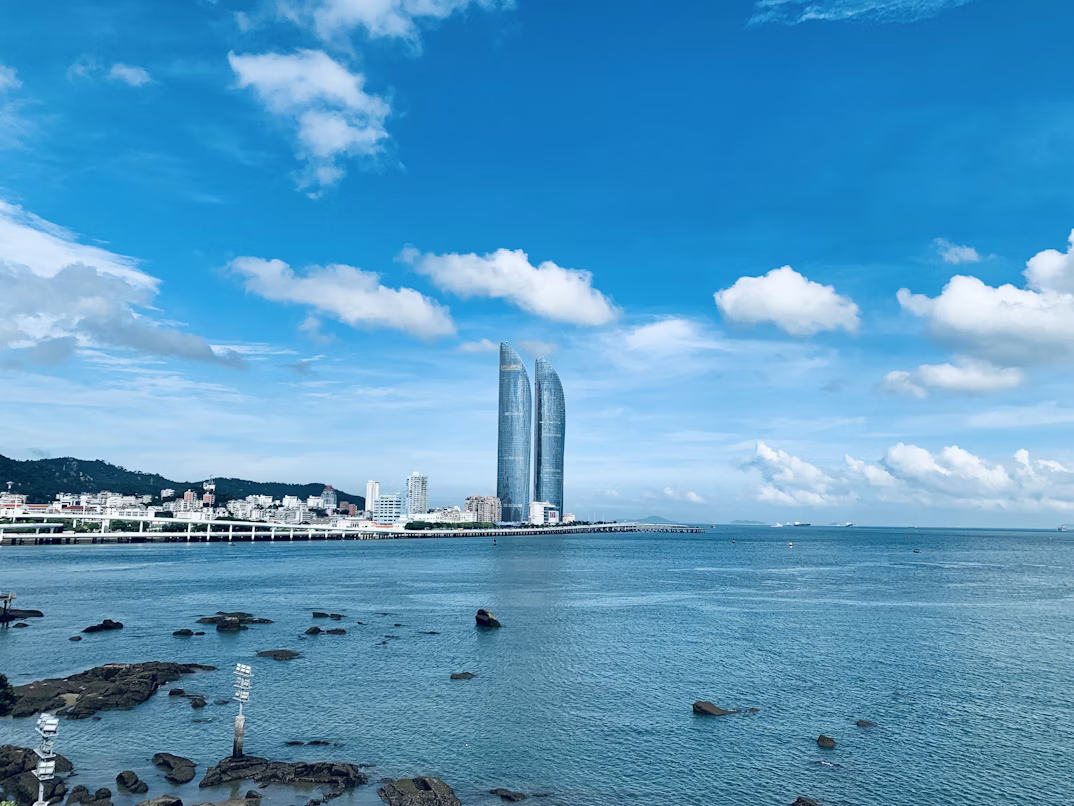
Don’t just regard it as a coastal city — Xiamen is a romantic island city in southeast China, where blue seas embrace winding coastal roads, ancient Qiaoxiang (overseas Chinese hometown) architecture blends with fresh artistic spaces, and authentic Minnan flavors fill the old alleys. This is a city of leisure and romance: the sea breeze blows gently through Gulangyu Island’s stone paths, the fragrance of osmanthus lingers in old streets, and the sound of waves accompanies every casual stroll. Unlike fast-paced cities, Xiamen invites you to slow down, walk along the coast, taste local snacks, and feel the unique blend of island style, overseas Chinese culture and Minnan customs.
Picture this: you wander through Gulangyu Island’s car-free streets, admiring colonial-style buildings and blooming bougainvillea; you walk along Zengcuo’an’s coastal plank road, watching the sunset paint the sea golden; you sip a cup of Tieguanyin tea in a quiet teahouse; and you savor crispy oyster omelets and sweet peanut soup at a street stall. This is Xiamen: fresh, romantic, warm and inclusive, a city where every corner is full of poetic charm and life’s warmth.
Getting There & Getting Around
Arriving in Xiamen
- By Air: Fly into Xiamen Gaoqi International Airport (XMN), a major air hub in southeast China with direct flights to major Chinese cities and international destinations in Asia, Europe, and Southeast Asia. The airport has a foreigner one-stop service center, multi-language (English, Japanese, Korean, etc.) customer service, and self-service foreign currency exchange machines. Metro Line 3 connects the airport to the city center in about 30 minutes; airport shuttles and taxis are also available, with clear English signage. International visitors can use the “Immigration Bureau 12367” APP for multi-language entry consultation, and self-service customs clearance machines support English operation.
- By High-Speed Train: A convenient way to reach Xiamen, with an extensive high-speed rail network linking to nearby cities and regions. Xiamen has two major high-speed rail stations: Xiamen North Station (main station for long-distance high-speed trains) and Xiamen Station (downtown, close to the coastal area). Tickets can be booked on Ctrip/Trip.com or station self-service kiosks with English interfaces. All metro stations support VISA, Master Card and other international bank cards for ticket purchase, and WeChat Pay/Alipay transit cards are easy to bind for foreign visitors.
- From Fuzhou: ~1.5 hours
- From Guangzhou: ~3.5 hours
- From Shanghai: ~5 hours
- From Beijing: ~8.5 hours
Getting Around the City
- Metro & Bus: Metro Lines 1–3 cover all core attractions (Gulangyu Island Ferry Terminal, Zengcuo’an, South Putuo Temple, Xiamen University). All main roads and scenic spots have Chinese-English bilingual signs, and tourist buses (No. 29, 47, 951) connect major scenic spots, with English announcements on key routes. The “Xiamen Travel” mini-program has a foreigner service area, supporting 7 languages and providing ferry ticket booking, scenic spot navigation and other services.
- Ferry to Gulangyu Island: The only way to reach Gulangyu Island (no cars allowed on the island). Ferries depart from Xiamen Ferry Terminal (Domestic Terminal) and Dongdu International Cruise Terminal, with tickets available online (via Ctrip or official WeChat account) in English. It’s recommended to book tickets 3 days in advance, especially during peak seasons.
- Ride-Hailing & Taxis: Didi Chuxing has an English version, suitable for short trips and late-night outings. Most taxis in Xiamen are equipped with multi-language translation devices, supporting simple English communication. Taxis use meters, and it’s recommended to confirm the meter is on before departure.
- Walking & Cycling: The coastal area and Gulangyu Island are best explored on foot; Zengcuo’an, Shapowei and other artistic blocks are perfect for walking or cycling. Shared bikes and electric bikes are available all over the city, ideal for a leisurely tour along the coastal road.
- Day Trips: For Kinmen Island (with valid travel documents), Wuyi Mountain, or Zhangzhou Tulou (UNESCO World Heritage Site), book a small-group tour or take a direct coach/high-speed train. Kinmen Island is a short ferry ride from Xiamen, offering a unique cross-strait cultural experience.

Can’t-Miss Experiences & Attractions
- Gulangyu Island (UNESCO World Heritage Site) A car-free island known as the “Garden on the Sea,” with winding stone paths, colonial-style buildings, and blooming flowers everywhere. It’s a paradise for photography, with iconic attractions such as Sunlight Rock (the highest point on the island, offering panoramic views of Xiamen), Shuzhuang Garden (a classical garden blending Chinese and Western styles), and the Organ Museum (housed in a former Western-style church). Pro Tip: Arrive early to avoid crowds; rent a battery car (¥50–80 per hour) to explore the island easily (walking is also great for soaking up the atmosphere). Don’t miss the local snack stalls on the island, such as peanut soup and fish balls.
- South Putuo Temple A famous Buddhist temple in southern China, with a history of over 1,000 years. The temple is surrounded by green mountains, with grand halls, ancient pagodas, and lush banyan trees. It’s a quiet and sacred place, and visitors can taste free vegetarian meals (lunch only) in the temple canteen. Pro Tip: Wear modest clothing (no shorts or sleeveless tops) out of respect for the temple. The temple is free to visit, and the nearby Xiamen University is worth a visit (book in advance via the official website).
- Zengcuo’an A former fishing village turned artistic coastal block, known as the “most beautiful village in Xiamen.” It’s lined with trendy cafes, handcraft shops, and local snack stalls, with a unique blend of fishing village customs and artistic vibe. The coastal plank road here offers stunning sea views, perfect for watching sunsets. Pro Tip: Visit in the afternoon and stay until night to enjoy the lively atmosphere; try local snacks like oyster omelet, fried taro cake, and peanut soup.
- Shapowei Art Zone An old dock transformed into an artistic zone, with graffiti walls, art galleries, and creative studios. It’s a popular spot for young people and photographers, with a raw, industrial artistic vibe. The old warehouses and fishing boats add a unique charm to the area. Pro Tip: Visit in the morning for soft light, ideal for photography. There are many niche cafes and bookstores here, perfect for a relaxing afternoon.
- Xiamen University One of China’s most beautiful universities, known as the “Garden University.” It features Western-style buildings, lush greenery, and a lake with lotus flowers. The iconic Bell Tower and Furong Tunnel (covered with student graffiti) are must-visit spots. Pro Tip: Book a visit 3 days in advance via the university’s official WeChat account (English interface available). Visit on weekdays to avoid crowds.
- Haicang Bridge & Haicang Wetland Park Haicang Bridge is one of China’s longest sea-crossing bridges, offering stunning views of the sea and Xiamen skyline. Haicang Wetland Park, located near the bridge, is a coastal wetland with lush mangroves, migratory birds, and a boardwalk. It’s a great place to experience Xiamen’s ecological beauty. Pro Tip: Walk or cycle along the bridge’s pedestrian path for panoramic views; visit the wetland park in the morning to watch birds.
Local Flavors You Can’t Miss
- Oyster Omelet (Ha Jian): Xiamen’s signature snack — fresh oysters mixed with eggs and sweet potato starch, fried until crispy, topped with sweet and sour sauce. It’s crispy on the outside and tender on the inside, full of seafood flavor.
- Xiamen Fish Balls: Fresh fish paste made into tender fish balls, filled with pork and shrimp, boiled in a clear broth. It’s delicious and comforting, a favorite among locals and tourists.
- Peanut Soup (Hua Sheng Tang): A classic Minnan dessert — peanuts boiled until soft and sweet, served with a little sugar. It’s warm and fragrant, perfect for breakfast or a snack.
- Fried Taro Cake (Yu Tou Gao): Taro mashed into a paste, mixed with pork and shrimp, fried until golden and crispy. It’s savory and flavorful, a popular street snack.
- Tieguanyin Tea: A famous oolong tea from Xiamen, with a rich fragrance and mellow taste. You can visit a local teahouse to taste freshly brewed Tieguanyin and learn about tea culture.
- Minnan Braised Duck: A traditional Minnan dish — duck braised with soy sauce, sugar, and Chinese herbs, with tender meat and rich flavor. It’s a must-try for meat lovers.
Travel Tips
- Best Time to Visit: March–May (spring) and September–November (autumn) — the weather is warm and sunny, with comfortable temperatures for outdoor activities. Xiamen has a subtropical marine climate, with hot and rainy summers (June–August) and mild winters (December–February). Winter is also a good time to visit, with fewer crowds.
- Climate Note: Xiamen has high humidity and strong ultraviolet radiation, so be sure to bring sunscreen, a sun hat, and an umbrella (for sudden rain). The sea breeze can be cool in the evening, so prepare a thin coat.
- Payment & Shopping: WeChat Pay and Alipay are widely accepted; foreign visitors can ask hotel staff to help link overseas bank cards. Xiamen has many local specialty stores selling Tieguanyin tea, seafood, and Minnan handicrafts. The “Xiamen Duty-Free Shop” offers multi-language services and tax refund for foreign visitors.
- Etiquette: Respect Minnan customs — when visiting temples, be quiet and respectful. Ask permission before taking photos of locals, especially in old alleys and fishing villages. Don’t litter on the beach or in scenic spots; protect the marine environment.
- Language & Service: Mandarin is the main language, and Minnan dialect is also widely used. English is available in major hotels, attractions, and tourist centers. Xiamen’s tourist service centers offer multi-language consultation, translation, and ticket booking services. Bilingual travel guides are available at airports and stations.
- Emergency Contacts: Police: 110, Ambulance: 120, Fire: 119. Ask the hotel front desk to write down your hotel’s address in Chinese to show to taxi drivers or use in emergencies. The “Immigration Bureau 12367” hotline provides multi-language consultation services.
Ready to wander the coastal beauty of Xiamen’s islands, savor the authentic Minnan flavors, and feel the artistic and romantic vibe? Save this guide, bring a curious mind and an empty stomach, and let this beautiful island city surprise you with its unique charm.
Follow us for more insider guides to China’s underrated cities — no tourist traps, just authentic local experiences.
Image sourced from the internet
Copyright Disclaimer for Images
Some images displayed on this website are sourced from the internet and are used for informational and reference purposes only.
We respect the intellectual property rights of all creators. The use of these images is not intended to infringe upon any owner’s copyright.
If you are the copyright holder of any image used on this site and believe it is being used without appropriate permission, please contact us. Upon verification of your ownership claim, we will promptly take the necessary action, which may include removing the image or providing proper attribution as per your request.
Please reach out to us at: [email protected]