
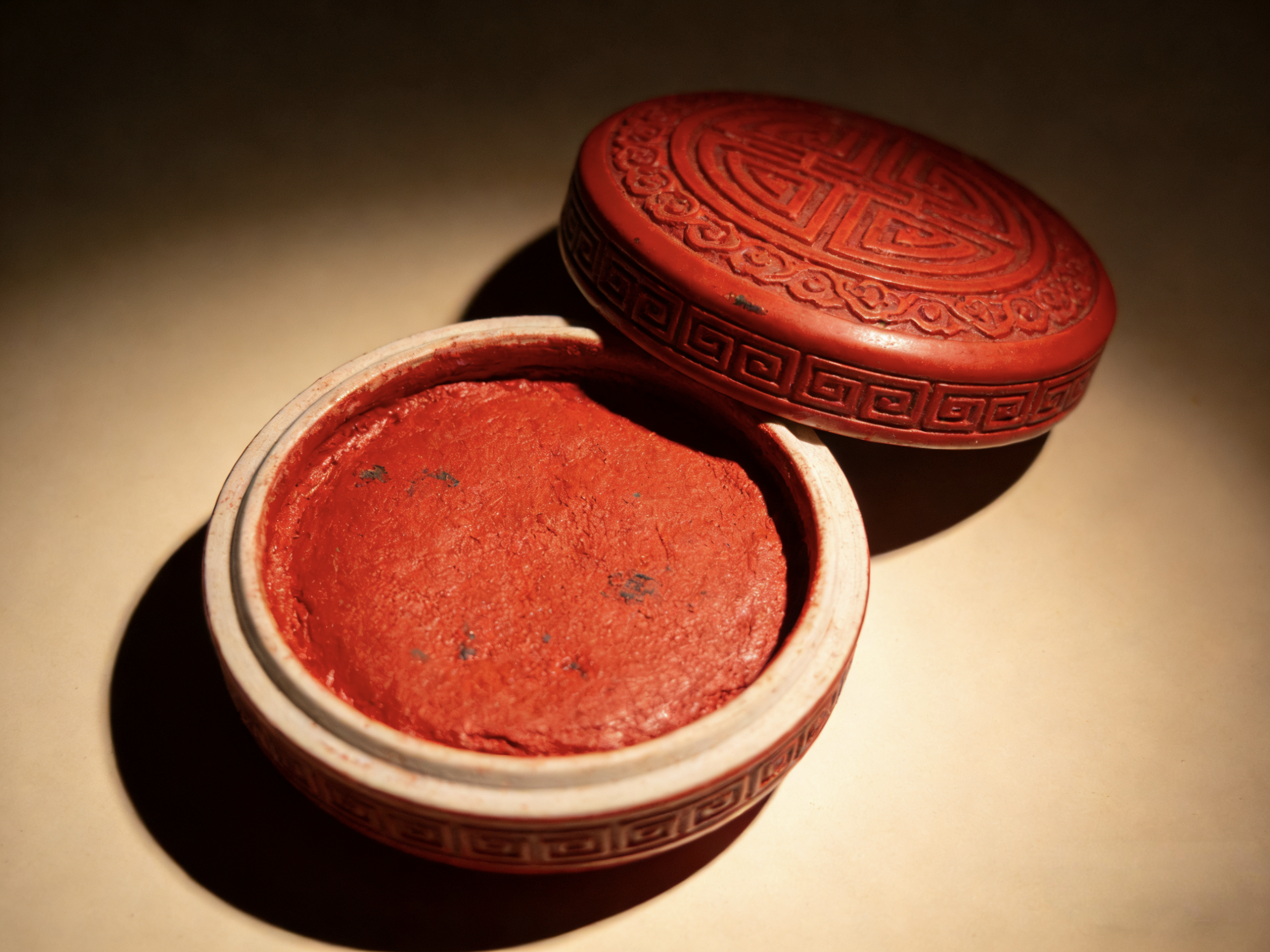
In a single vermilion stamp, Chinese seal paste carries centuries of tradition.
From Clay to Imperial Courts
Seal paste began in the Warring States period as clay for sealing documents. As paper emerged, it evolved into cinnabar-based ink paste, later becoming an imperial tribute known as the “fifth treasure of the study.”

Tools for Making Seal Paste
Nature Refined by Hand
Aged castor oil provides the base, while mugwort fibers give body. Cinnabar is ground and washed repeatedly before being blended with thousands of manual folds—never stirred—to create a paste that defies water, fire, and time.
Red That Speaks Across Centuries
This art completes Chinese calligraphy and seal carving, preserving the soul of scholar culture. To the world, that small box of red represents the enduring elegance of “China Red,” bridging ancient aesthetics and global appreciation.
Copyright Disclaimer for Images
Some images displayed on this website are sourced from the internet and are used for informational and reference purposes only.
We respect the intellectual property rights of all creators. The use of these images is not intended to infringe upon any owner’s copyright.
If you are the copyright holder of any image used on this site and believe it is being used without appropriate permission, please contact us. Upon verification of your ownership claim, we will promptly take the necessary action, which may include removing the image or providing proper attribution as per your request.
Please reach out to us at: [email protected]”