
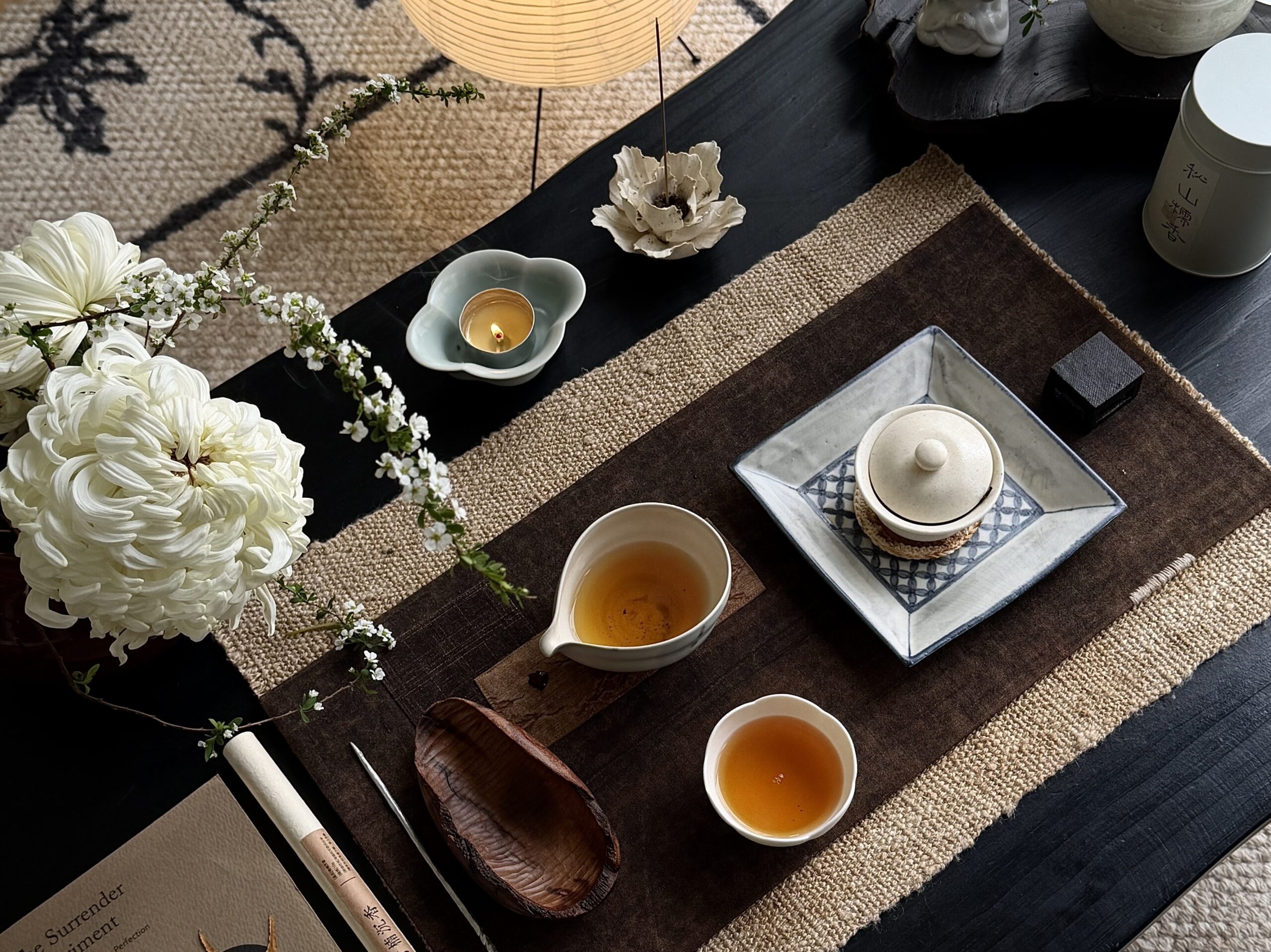
You’ve just sat down in a Chinese home, and before you can even take in the room, a small cup of hot tea appears in front of you. No one asked if you wanted it. No one offered alternatives. The tea is simply there, placed with a quiet certainty that says: you’re welcome here, and this is how we begin.
In China, offering tea to a guest isn’t hospitality in the Western sense — it’s not a menu option or a social nicety you can politely decline. It’s a ritual of acknowledgment, a way of saying “I see you, I respect you, and I’m glad you’re here.” Understanding why tea occupies this role reveals a surprising amount about Chinese social logic, and it will change how you experience nearly every interaction during your trip.
The Roots — Tea as Respect, Not Refreshment
Tea became China’s drink of ceremony not because it tastes good, but because it occupies a unique cultural sweet spot: precious enough to honor someone, ordinary enough to offer every day. During the Tang Dynasty (618–907 CE), tea shifted from a medicinal brew to a social act. The poet Lu Yu wrote The Classic of Tea, treating the preparation and sharing of tea as something close to a moral discipline — mindfulness, simplicity, and respect for the guest all poured into a single cup.
The logic behind offering tea runs deeper than hospitality. In traditional Chinese thought, a guest is not just a visitor — they carry the dignity of their family and their relationships. To receive someone without offering tea would be like inviting them into your home and forgetting to offer a chair. The tea says: this space is yours now, too. The specific gesture matters — the host pours with two hands, or touches the serving hand with the other as a sign of deference. The guest receives with both hands, or with a gentle nod of thanks. No one explains these micro-rituals; they’re absorbed the way children absorb language, by watching.
There’s also a practical layer. Historically, serving tea marked the transition from arrival to conversation. A cup of tea signals: we’ve acknowledged each other, now we can talk. When the host refills your cup, it means: stay longer, I’m not rushing you. When the tea goes cold and isn’t refilled, that’s a signal too — one that most visitors miss entirely.

Tea in Everyday Life — The Language Behind the Cup
Walk into any Chinese office, and the first thing you’ll notice isn’t the desks or the screens — it’s the tea. Nearly everyone has a personal tea setup: a glass thermos, a small gaiwan lidded cup, or a full tea tray with tiny porcelain cups. Business meetings begin with tea. Negotiations unfold over tea. A boss who pours tea for a subordinate is signaling respect, not servitude; a subordinate who pours for the boss is showing attentiveness, not flattery. The tea itself is secondary — the act of pouring and receiving is the real communication.
In Chinese restaurants, you’ll notice something that puzzles many visitors: the first pot of tea arrives unasked, and it appears on the bill as a per-person charge. This isn’t a trick — it’s simply the default. A restaurant that didn’t offer tea would feel incomplete to Chinese diners, the way a Western restaurant without bread on the table might feel stingy. The small fee (usually just a few yuan) covers the expectation that tea is part of the dining experience, not an extra.
Then there’s the teahouse culture that still thrives in cities like Chengdu, where entire afternoons disappear over glasses of jasmine tea in bamboo chairs. In Chengdu’s People’s Park, tea isn’t a beverage — it’s the infrastructure of social life. Friends meet, deals are struck, grandfathers play chess, and it all happens over tea that costs less than a dollar. The teahouse is the Chinese equivalent of the European café, but with one difference: nobody is in a hurry. The tea keeps coming, and time isn’t measured in cups but in conversations.
One detail that catches visitors off guard: the tea-sniffing ritual. In more formal settings, after the host pours, the guest may lift the cup, bring it near the nose, inhale the aroma, and nod appreciatively before drinking. This isn’t performative — it’s a genuine moment of gratitude, a way of receiving the host’s effort before the first sip.

What Visitors Get Wrong — And How to Get It Right
The most common mistake is treating offered tea the way you’d treat an offered drink at home: “No thanks, I’m fine.” In China, refusing tea on arrival can read as refusing the welcome itself. You don’t have to finish it, and you don’t have to love it — but receiving it matters. Hold the cup with both hands when it’s offered, take at least a sip, and set it down gently. That small act signals that you accept the relationship the host is offering.
The second mistake is overthinking it. Many visitors freeze, worried about which hand to use, whether to bow, or whether they’ve missed some hidden rule. Here’s the truth: the host isn’t grading you. Chinese people know their tea customs are unfamiliar to foreigners, and they’re far more focused on the gesture of your acceptance than on the mechanics of your cup-holding. Pick it up, drink, smile. That’s enough.
A subtler misunderstanding involves refills. In a Chinese home or office, a host will keep topping up your cup as long as it’s less than half full. If you keep drinking, they’ll keep pouring — it’s the Chinese way of showing continuous care. Some visitors find this overwhelming and wonder how to signal “I’m done.” The traditional method: leave your cup mostly full, or place your hand gently over the cup when the host reaches for the pot. No words needed — the gesture is universally understood.
There’s also a beautiful custom most visitors never see: the finger-tap thank-you. When someone pours tea for you — especially in a group setting — you can tap two or three fingers lightly on the table near your cup as a silent thank you. The story goes that an emperor once traveled in disguise, and when he poured tea for his ministers, they couldn’t bow without revealing his identity, so they tapped their fingers instead. Whether the legend is true doesn’t matter — the gesture is real, and using it will earn you quiet smiles of appreciation.
Finally, a word about what not to do. Don’t flip the lid of your teapot in a restaurant to signal you need more hot water and then forget about it — it’s like leaving your turn signal on. Don’t use tea to wash your chopsticks or your cup at the table; some older Chinese people find this wasteful or mildly offensive. And if you’re served kung fu tea in small cups, don’t gulp it — sip slowly, the way you’d taste a good wine. The point isn’t hydration; it’s appreciation.
Tea in China is never just tea. It’s the first word in a conversation, the period at the end of a visit, and the quiet proof that someone has thought about your comfort before you even sat down. When you receive it, you’re not just drinking — you’re stepping into a relationship that Chinese people have been building, one cup at a time, for over a thousand years.
