
The Origin of the Chinese Zodiac: Interweaving Legends and History
The Chinese zodiac, known as “Shengxiao” in Chinese (meaning “birth year animal”), has a history of more than 2,000 years. Historians still debate its exact origin, but it is generally believed to have taken shape during the Han Dynasty (206 BC – 220 AD), when the 12-year cycle was standardized in synchronization with the Chinese lunar calendar. Before that, ancient Chinese people used the “Twelve Earthly Branches” system to calculate years, months, and even hours—later, they paired each branch with an animal to make the system easier to remember and more closely connected to daily life.
There are many theories about the selection of these twelve animals. A widely spread view is the “life connection theory”: most of the animals were common in the daily life of ancient Chinese people. For example, cattle, horses, sheep, dogs, roosters, and pigs (known as the “Six Domestic Animals”) were indispensable for agricultural production and daily life, while rats, tigers, rabbits, snakes, and monkeys often appeared in the natural world around people’s homes. The only exception is the dragon—a mythical creature symbolizing power and good luck in Chinese culture.
Another theory links the Chinese zodiac to ancient astronomy: the twelve animals correspond to the 12-year orbital period of Jupiter observed by ancient astronomers. They believed that Jupiter’s operation would affect the Earth’s seasons and people’s lives, so they used animals to represent each year in this cycle. Although its exact origin remains a mystery, one thing is clear: the Chinese zodiac has become part of Chinese culture, influencing China’s traditions, festivals, and even the way people understand themselves and others for hundreds of years.

The Order of the Zodiac: The Legend of the Twelve Animals’ Race
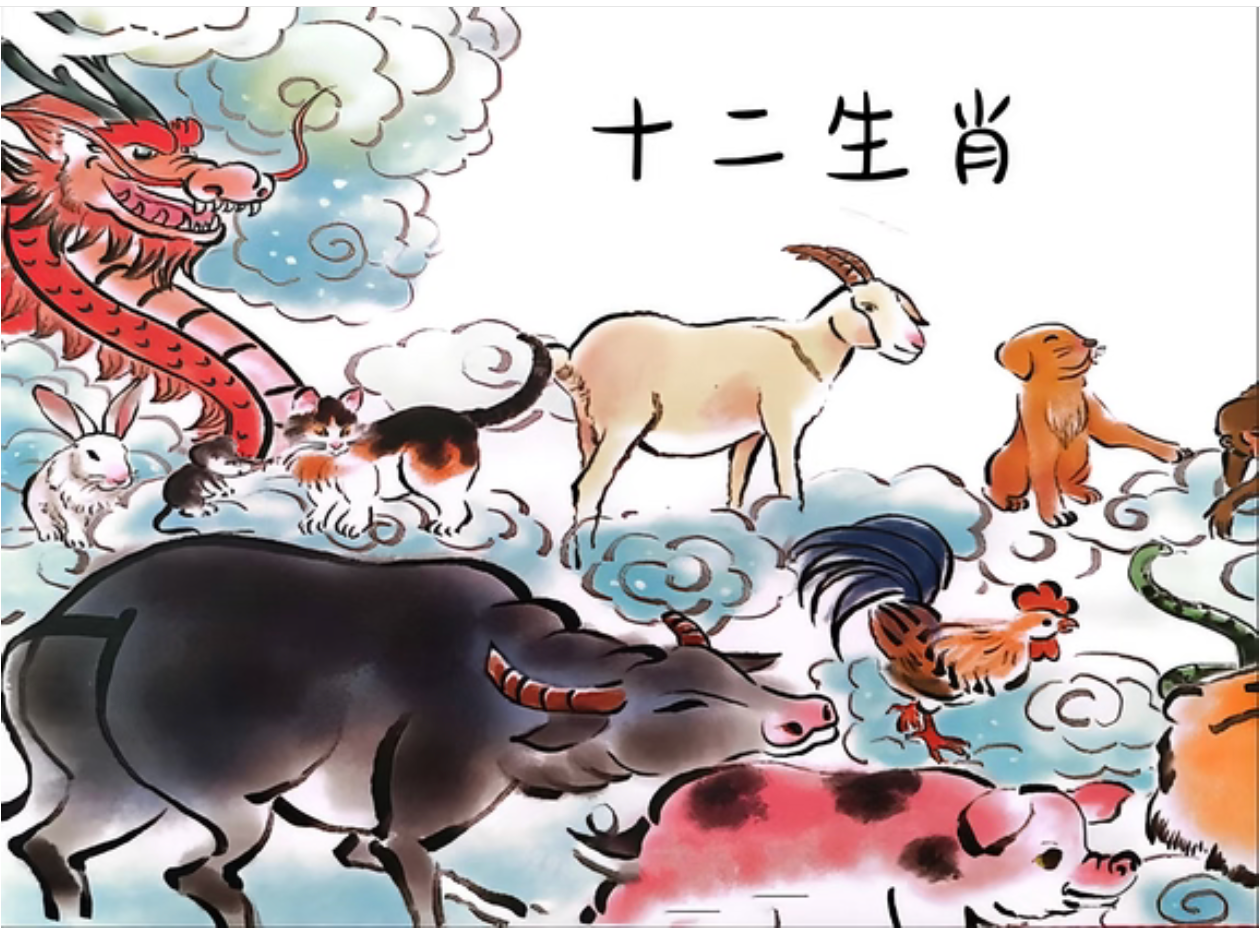
The most famous story explaining the order of the Chinese zodiac is “The Race of the Twelve Animals”, a fun legend that Chinese children have heard since childhood. According to the legend, the Jade Emperor—the ruler of heaven in Chinese mythology—decided to create a 12-year calendar and invited all animals to participate in a race. The first twelve animals to reach his palace would be awarded a place in the Chinese zodiac in the order of their arrival.
Here is a brief account of the race:
The Ox, known for its diligence, woke up early and set off first. It thought it would definitely win—until a clever Rat asked to ride on its back. The kind Ox agreed, not noticing the Rat’s trick. When they approached the finish line, the Rat jumped off the Ox’s head and crossed the finish line first! That is why the Rat ranks first in the Chinese zodiac.
The Ox took second place, followed by the Tiger (the king of the mountains, agile and brave) and the Rabbit (who hopped over the river to catch up). The Dragon, which could fly, should have been first—but it stopped to help a village with rain, so it ranked fifth. The Snake slithered quietly to sixth place, followed by the Horse (agile and energetic) in seventh. The Goat, Monkey, and Rooster helped each other cross a river, so they ranked eighth, ninth, and tenth respectively. The playful Dog stopped to swim in the river and ranked eleventh. Finally, the gluttonous Pig stopped to eat and rest, so it ranked last.
This story not only explains the order of the animals but also implies their personalities—such as the Rat’s cleverness, the Ox’s kindness, and the Pig’s laziness. Although it is just a legend, it is a fun way to remember the twelve animals and their characteristics.

Interpretation of the Chinese Zodiac Meanings: Personality Traits of Each Animal
For Chinese people, your zodiac sign (determined by your birth year) is like a “personality label”. It is not scientific, but it is a fun way to talk about personality and connect with others. Below is a simple interpretation of the meaning of each animal—no complicated terms, just easy-to-understand descriptions of their traits:
- Rat (1924, 1936, 1948, 1960, 1972, 1984, 1996, 2008, 2020, 2032): Clever and adaptable. People born in the Year of the Rat are good at solving problems and making the most of small opportunities. They are also sociable and like to be with friends, but sometimes they can be a bit selfish (just like the Rat in the race!).
- Ox (1925, 1937, 1949, 1961, 1973, 1985, 1997, 2009, 2021, 2033): Hardworking and reliable. People born in the Year of the Ox are patient, honest, and never give up easily. They are “silent doers” who prefer to work hard rather than talk boastfully about their goals. People trust those born in the Year of the Ox because they always keep their promises.
- Tiger (1926, 1938, 1950, 1962, 1974, 1986, 1998, 2010, 2022, 2034): Brave and passionate. People born in the Year of the Tiger are natural leaders—confident, strong, and full of energy. They like challenges and hate boredom, but sometimes they can be too stubborn or impulsive.
- Rabbit (1927, 1939, 1951, 1963, 1975, 1987, 1999, 2011, 2023, 2035): Gentle and kind. People born in the Year of the Rabbit are calm, friendly, and good at mediating conflicts. They hate conflict and prefer to live a peaceful and happy life. They are also creative and have a keen insight into beauty.
- Dragon (1928, 1940, 1952, 1964, 1976, 1988, 2000, 2012, 2024, 2036): A symbol of power and luck. The Dragon is the only mythical creature in the Chinese zodiac, representing success, wealth, and good luck. People born in the Year of the Dragon are charming and ambitious, and they like to be the center of attention—but sometimes they can be a bit arrogant.
- Snake (1929, 1941, 1953, 1965, 1977, 1989, 2001, 2013, 2025, 2037): Intelligent and calm. People born in the Year of the Snake are thoughtful, patient, and good at planning. They don’t talk much, but they are good at observing and can make wise decisions. In Chinese culture, the Snake also symbolizes longevity and wisdom.
- Horse (1930, 1942, 1954, 1966, 1978, 1990, 2002, 2014, 2026, 2038): Energetic and freedom-loving. People born in the Year of the Horse yearn for freedom and hate being restrained. They are hardworking and optimistic, always ready to embark on new adventures. They are good friends because they are honest and loyal.
- Goat (1931, 1943, 1955, 1967, 1979, 1991, 2003, 2015, 2027, 2039): Gentle and kind. People born in the Year of the Goat care about others, are compassionate, and are willing to help others. They are not good at dealing with conflicts and prefer to follow others rather than lead. They are also creative and like art, music, and nature.
- Monkey (1932, 1944, 1956, 1968, 1980, 1992, 2004, 2016, 2028, 2040): Clever and playful. People born in the Year of the Monkey are quick-witted, curious, and like to have fun. They are good at learning new things and solving problems, but sometimes they can be too naughty or impetuous.
- Rooster (1933, 1945, 1957, 1969, 1981, 1993, 2005, 2017, 2029, 2041): Confident and organized. People born in the Year of the Rooster are hardworking, punctual, and pay attention to their image. They are honest (sometimes too honest!) and like to speak their minds directly. They can also be good leaders because they are responsible.
- Dog (1934, 1946, 1958, 1970, 1982, 1994, 2006, 2018, 2030, 2042): Loyal and friendly. People born in the Year of the Dog are the most loyal in the Chinese zodiac—they deeply love their family and friends. They are honest and hardworking, always ready to help. Sometimes they can be a bit stubborn or anxious, but their kindness more than makes up for it.
- Pig (1935, 1947, 1959, 1971, 1983, 1995, 2007, 2019, 2031, 2043): Optimistic and generous. People born in the Year of the Pig are easy-going, friendly, and love life. They are not greedy (despite what the legend says!)—they are very generous and always willing to share. They also have a good sense of humor and can make people around them happy.
In short, the Chinese zodiac is more than just a way of counting years—it is a window into Chinese culture, values, and beliefs. It is a fun and simple way for people to connect with each other. Even if you don’t believe in its “predictive” power, learning about these twelve animals can help you better understand Chinese people and their traditions. Next time you meet a Chinese person, ask them about their zodiac sign—you will get a great topic for conversation!
