
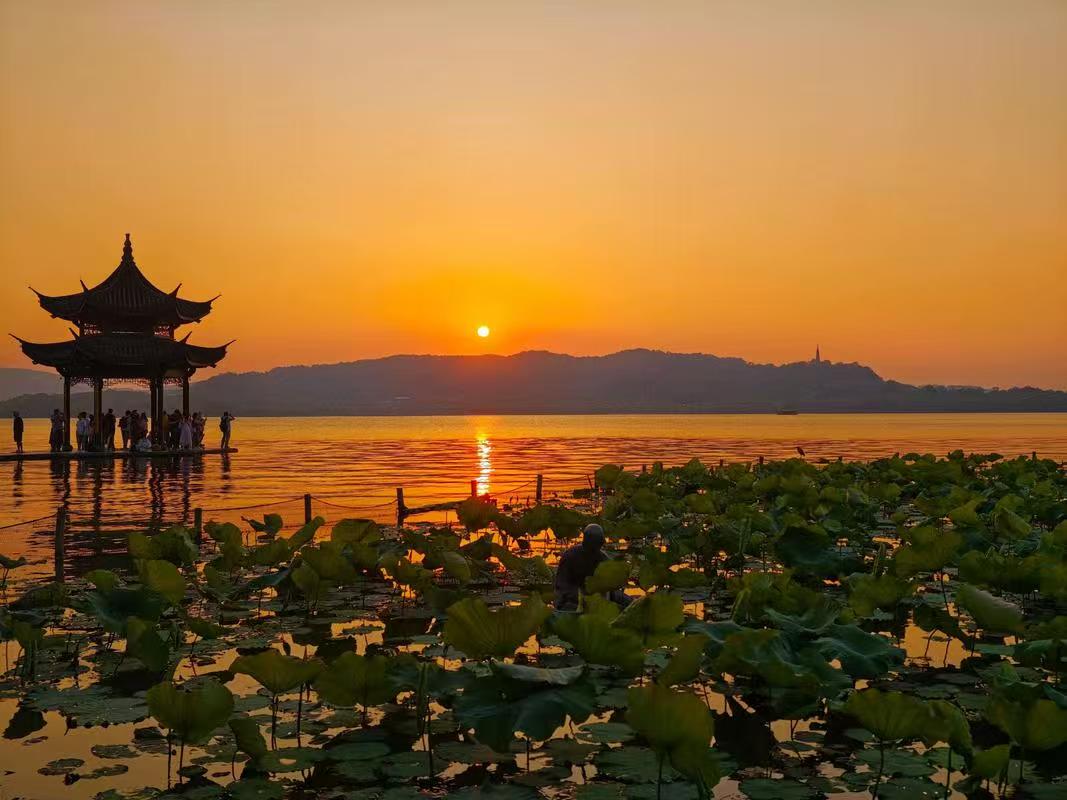
Hangzhou is more than just a pin on the map; it’s a living slice of Southeast China’s history. It’s where a thousand years of politics, fine taste, and daily life all mix together. For travelers coming from abroad, West Lake isn’t just water—it’s a 3D textbook on Eastern aesthetics, showing how people find balance in nature without forcing it to be perfect. And Longjing tea? That’s the secret code to the city. It’s not as aggressive as coffee, but it leaves a lasting, sweet aftertaste. This guide skips the surface-level sights. We’re going deep—from the history of imperial tea gardens to the daily grind of tea farmers, and from ancient tea-whisking skills to your modern cup of tea.
The Vibe: Where the Lake Meets the Leaf
The feel of Hangzhou is all about West Lake and Longjing tea. Hangzhou is famous nationwide, so take time to learn fundamental Chinese tea culture before your visit. West Lake isn’t just a random lake; it’s a massive garden that has been tweaked for over a thousand years. People built causeways, islands, and planted trees to turn a wild body of water into a place for walking and thinking. It wasn’t about conquering nature, but about finding a rhythm with it.
Longjing tea gives the city its flavor. Here, tea doesn’t care who you are. Everyone drinks it, from government officials to street vendors. This ability to make a refined lifestyle accessible to everyone is what makes Hangzhou so charming. Sit by Lingyin Temple listening to the bells, or watch the mist roll in over the tea fields in Longjing Village. You’ll see that the local philosophy is all about humans and nature looking out for each other.

Deep Dives: Experiences for Your Hands and Mind
Hunting for the Imperial Tea: Cracking the Code in the SoilDrive away from the city center, and as you climb the winding mountain roads, you’ll reach the heart of the “Lion Peak” tea region. There are no shopping malls here, just endless terraced fields. Your mission is to find the famous eighteen tea bushes once reserved for the Emperor. Don’t just take a photo; crouch down and touch the rough bark and damp moss. Ask a local farmer to explain why this specific soil, combined with the fog and the temperature swings, produces China’s most expensive green tea. You’ll realize it’s not luck—it’s pure geology.
Feeling the Heat: Reshaping Life in an Iron WokStep into a farmer’s courtyard where a large, tilted iron wok is steaming hot. This is where the magic happens. Stand by the stove and watch the green leaves change color and shrink under the intense heat. Hold your palm a few inches above the metal to feel that burning sensation. Watch the farmer’s hands—the way they grab, shake, and press. These moves aren’t just stirring; they control the moisture and the aroma. It’s a high-stakes game: too cool and the tea lacks flavor, too hot and it burns. It’s a direct conversation between human experience and the laws of nature.

Painting with Tea Foam: A Tiny Universe in a BowlChange into something comfortable and sit at a low table with a bowl of tea powder and a bamboo whisk. This isn’t just making a drink; it’s performance art. You’ll learn to whisk the tea rapidly until a thick layer of white foam appears—just like a cappuccino. Then, use a teaspoon to drip darker liquid onto the foam to “paint” simple shapes, like distant mountains or birds. While the Japanese call this “matcha,” its roots are right here. It demands total focus and forces you to quiet down instantly.
Zen Bells and Tea Songs: West Lake is home to numerous ancient temples and pavilions. When you visit these religious sites, please observe traditional Chinese temple etiquette.Once the crowds leave Lingyin Temple, the setting sun lights up the stone carvings on Feilai Peak. Walk up the stone steps toward the back of the mountain, where the silence filters out the city noise. Find a smooth rock to sit on, leaning against an ancient statue. Wait for the deep, far-reaching evening bell to ring, while the songs of tea pickers heading home from the fields drift up from below. Close your eyes, and you’ll find the solemn bells blend perfectly with the lively tunes — together they make up the authentic soundtrack of Hangzhou. This is precisely why tea and meditation have long been spoken of side by side.

Two-Day Plan: A Slow Walk Through Hills and Canals
Day 1: The Lake and the Tea Fields
Since you’re in Hangzhou, you have to start with West Lake. Begin your morning at Broken Bridge and walk slowly along Bai Causeway. The mist on the water at this time is peak “traditional Chinese painting” vibes. In the afternoon, skip the crowded pavilions and head to the National Tea Museum. It’s tucked right into the tea fields and does an amazing job of connecting the history of the lake with the history of tea. Stay overnight in a guesthouse in Meijiawu. Open your window to terraced tea fields. For dinner, don’t miss the Longjing Shrimp—it’s stir-fried with fresh tea leaves.
Day 2: Picking Leaves and Old School Craft
Get up early and follow a farmer up the hill with a bamboo basket. Feel the cool dew on your pants as you pinch off the youngest buds. Have lunch in an old village house, watching the sunlight hit your cup of amber tea. In the afternoon, head to the Grand Canal. Hop on a water bus down the river to Gongchen Bridge. Check out the old streets where artisans hammer away at scissors under lantern light. It’s a different kind of craftsmanship.

Travel Tips for the Curious
This route is for people who like to slow down and dig into culture. It’s not a hardcore hiking trip, nor is it a rush to tick boxes. It’s something in between.
Manners: Keep your voice down in temples and traditional teahouses. When someone pours you tea, tap two fingers lightly on the table. It’s the local way of saying thanks.
When to Go: Late March to April is prime time. The tea harvest is on, the hills are super green, and the air smells amazing. September/October is also great when osmanthus flowers fall into your tea.
Getting Around: Traffic around West Lake is a nightmare on weekends. Rent a bike for the causeways or stick to the subway and walking. Grab a taxi to Longjing Village, but take Bus 27 back—the views are fantastic.
Don’t Get Ripped Off: Those “sky-high price” teas sold on the street are usually scams. If you want to buy tea, go to the official shop at the Tea Museum or look for licensed, reputable brands
The best trips happen on quiet trails or over a steaming cup of tea. If you want to skip the chaos, go listen to the bells at Lingyin Temple, or just feel the heat of the wok where the tea is roasted. Start dreaming up your plan now. Hangzhou isn’t going anywhere—it’ll be there waiting for you whenever you decide to come.
Image sourced from the internet
Copyright Disclaimer for ImagesSome images displayed on this website are sourced from the internet and are used for informational and reference purposes only.We respect the intellectual property rights of all creators. The use of these images is not intended to infringe upon any owner’s copyright.If you are the copyright holder of any image used on this site and believe it is being used without appropriate permission, please contact us. Upon verification of your ownership claim, we will promptly take the necessary action, which may include removing the image or providing proper attribution as per your request.Please reach out to us at: [email protected]