
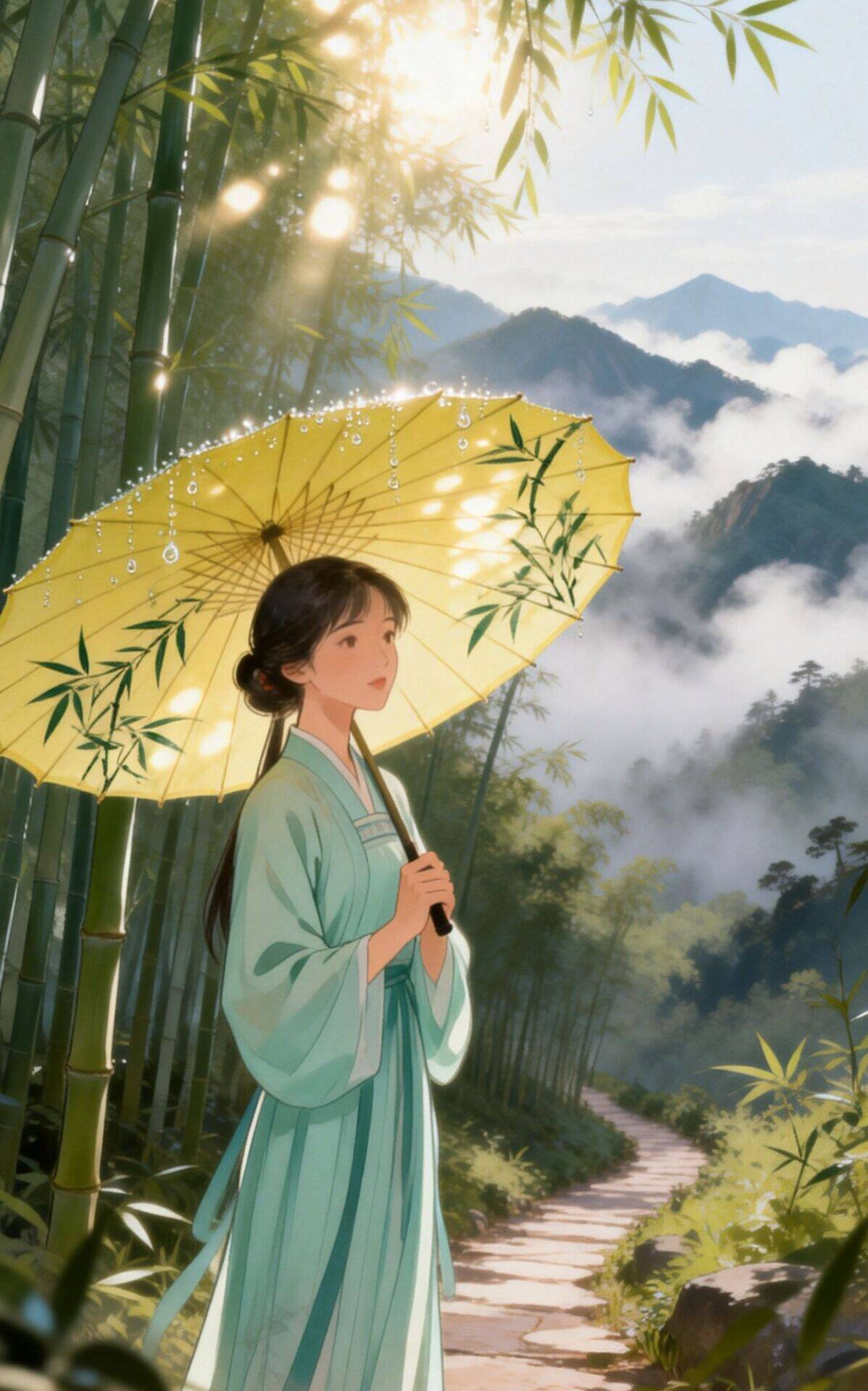
If you’ve ever seen an umbrella whose canopy is not a plain color but painted with scenes of Jiangnan landscapes, flowers, birds, or fish, emitting a faint tung oil fragrance in the rain—that is most likely a Chinese oil-paper umbrella. It is not just a tool for sheltering from rain but a breathing piece of traditional craftsmanship.

Origin and History: A Thousand-Year Journey from “Deng” to “Umbrella”
The Earliest Inspiration: Legend has it that the earliest umbrella in China was invented by Lu Ban’s wife. her husband working under harsh sun and rain, she created a movable “pavilion,” which became the “umbrella.” The earliest physical evidence dates back to the Spring and Autumn and Warring States periods, where it was called a “Deng.” Made of silk and bamboo, it was primarily a ceremonial canopy for nobility to shade from the sun.
The Key Material Revolution: After the Han Dynasty, with the popularization of papermaking, people began using cheaper tough bark paper instead of expensive silk. To make it waterproof, craftsmen discovered the perfect method: applying natural tung oil. This combination of “paper” and “oil” marked the true birth of the “oil-paper umbrella,” transforming it from a luxury to an everyday item for common people.
Heyday and Memory: Before the advent of plastic and nylon umbrellas, the oil-paper umbrella was an indispensable part of every Chinese person’s life. As late as the 1970s and 80s, it remained a beautiful sight in the misty rains of Jiangnan. Many regions in China are famous for their umbrellas, such as the delicate West Lake Silk Umbrellas of Hangzhou, Zhejiang, the sturdy Luzhou Oil-Paper Umbrellas of Sichuan, and the Jialu Umbrellas of Xiangtan, Hunan, each with its own characteristics.

Cultural Meaning: One Umbrella, Many Blessings
Auspicious Homophones: This is its core cultural code. In Chinese, “oil-paper” ( yóuzhǐ) sounds like “having sons” ( yǒuzǐ), symbolizing many children and blessings. The traditional character for “umbrella” ( sǎn) contains four “person” ( rén) characters, symbolizing family reunion, happiness, and a thriving family. Therefore, it was an important part of a bride’s dowry in traditional weddings.
· Perfection and Steady Advancement: The round canopy represents reunion, perfection, and inclusiveness. The bamboo frame symbolizes integrity and the beautiful wish for “steady advancement” in one’s career.
· Symbol of Romance and Art: In many legends and literary works (like “The Legend of the White Snake”), the oil-paper umbrella is a romantic token for encounters and love promises. It is also poetically associated with the water towns of Jiangnan and rainy alleys, becoming an icon of Eastern aesthetics.

Modern Development: Fading from Daily Life, Returning as Art
Becoming Artwork and Collectibles: Today, finely crafted oil-paper umbrellas are primarily high-end handicrafts, decorations, and collectibles. Craftsmen meticulously hand-paint traditional Chinese paintings or calligraphy on the canopy or use unique techniques like the “fully threaded umbrella” (using colored threads to weave through all the ribs), greatly increasing their value.
Fashion and “Guochao” Element: Oil-paper umbrellas frequently appear in period dramas, Guofeng (national style) music and dance performances, and fashion shows. They are also the perfect prop for Hanfu enthusiasts during photoshoots. Many designers incorporate their elements into modern lamps and home decor.
Persevering Craftsmanship: Making a traditional oil-paper umbrella requires over 70 steps of pure handmade work, including making the frame, pasting the paper, applying oil, and threading. In places like Luzhou and Hangzhou, artisans still persevere in this National Intangible Cultural Heritage craft. Their work keeps this skill a “living art.”
Travel Suggestions: Where to Encounter It
Visit Workshops and Museums:
· Luzhou, Sichuan: Home to the representative intangible cultural heritage “Luzhou Oil-Paper Umbrella.” You can visit local umbrella factories or workshops to see masters demonstrate the skill of “threading the ribs.”
· Hangzhou, Zhejiang: Famous for the more elegant “West Lake Silk Umbrella.” At the China Umbrella Museum (located west of Gongchen Bridge in Hangzhou), you can see the most comprehensive history and collection of umbrellas.
· Hunan, Jiangxi, Fujian and other places also have traditional umbrella-making villages with their own characteristics.
· Find It Amidst Scenery:
· In the alleys of ancient Jiangnan towns (like Wuzhen, Xitang, Nanxun), shops selling oil-paper umbrellas are common. They make great photo props and souvenirs.
· You can also easily find them in artistic scenic areas like Yangshuo, Guilin, or Lijiang, Yunnan.
· Experience and Purchase Tips:
· If buying, please distinguish between machine-printed and hand-painted umbrellas, as their price and artistic value differ greatly. You can politely ask the shopkeeper about the production method.
· Some studios offer simple experience classes where you can try painting a few strokes on a plain umbrella—a very unique travel memory.
· Cultural Notes:
· Oil-paper umbrellas are exquisite but relatively delicate. Avoid prolonged exposure to strong sun or wind to prevent damage to the paper surface.
· In China, giving an umbrella as a gift is a good blessing, especially symbolizing “perfection” and “support” (sheltering from wind and rain).
Copyright Disclaimer for Images
Some images displayed on this website are sourced from the internet and are used for informational and reference purposes only.
We respect the intellectual property rights of all creators. The use of these images is not intended to infringe upon any owner’s copyright.
If you are the copyright holder of any image used on this site and believe it is being used without appropriate permission, please contact us. Upon verification of your ownership claim, we will promptly take the necessary action, which may include removing the image or providing proper attribution as per your request.
Please reach out to us at: [email protected]”