
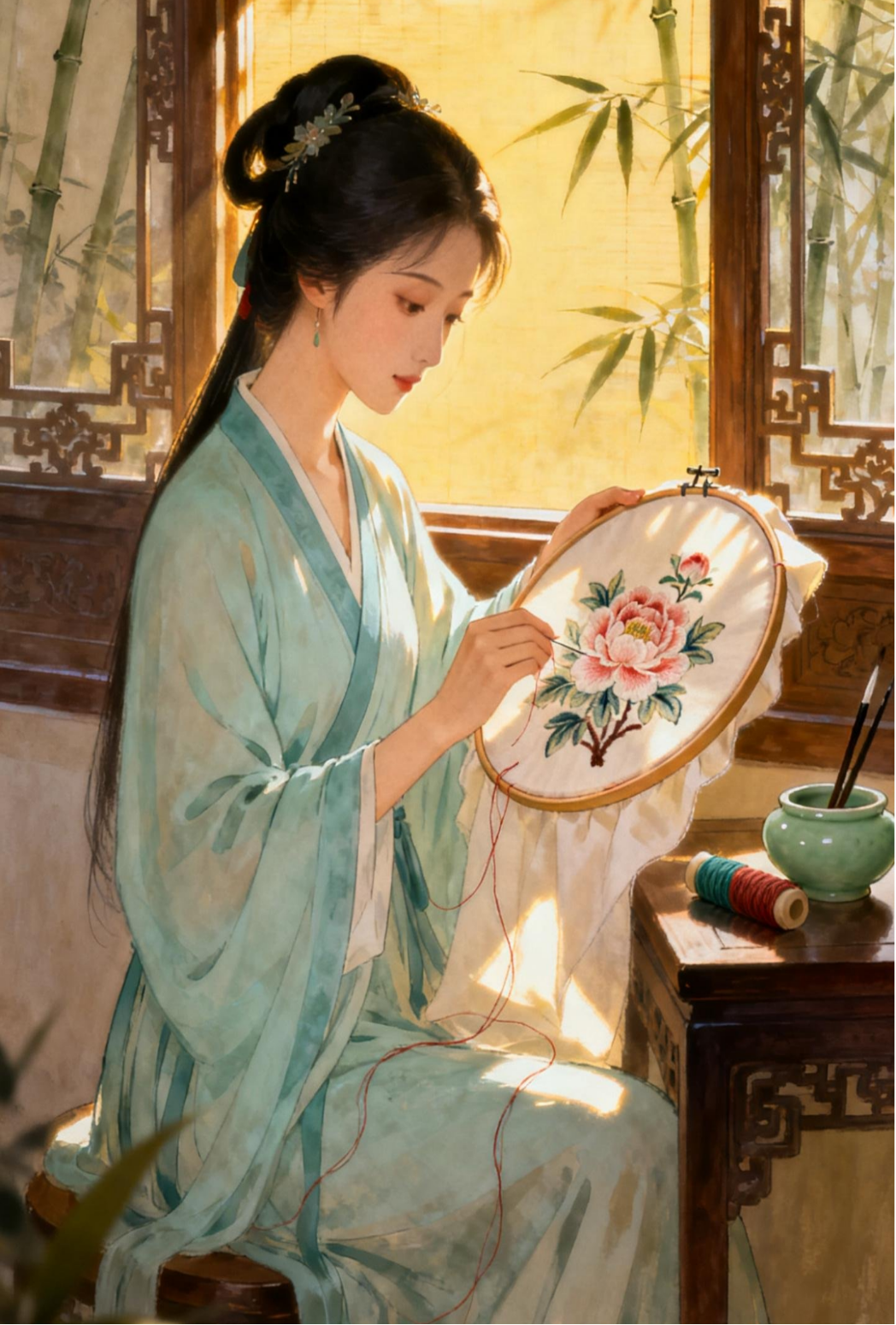
Su Embroidery is an exquisite embroidery art from the Suzhou region of China, renowned as “painting with needle and thread.” It is famous for its elegant patterns, fine craftsmanship, and refined colors, and is considered the foremost of China’s Four Great Embroideries.

Origin and History
The origins of Su Embroidery can be traced back over two thousand years to the Spring and Autumn and Warring States periods. The Jiangnan region, where Suzhou is located, has had a developed textile industry since ancient times, providing the foundation for embroidery. During the Song Dynasty, with the economic and cultural prosperity of Jiangnan, Su Embroidery gradually matured. It reached its zenith during the Ming and Qing dynasties (approx. 14th-19th centuries), when Suzhou was known as the “Embroidery City,” producing many pieces for the imperial court. Its signature technique, “double-sided embroidery” (where both sides of the fabric display equally exquisite patterns), was perfected during this period.

Cultural Significance
- An Emblem of Jiangnan Aesthetics: Su Embroidery perfectly embodies the refinement, elegance, and subtlety of Jiangnan culture. Unlike the intensity of oil paintings, it resembles Chinese ink wash painting, emphasizing artistic conception and negative space, with exceptionally natural color transitions.
- “Using the Needle as a Brush, Thread as Ink”: The highest level of Su Embroidery does not merely replicate paintings. Instead, it uses silk threads of varying thickness and complex stitching techniques (like flat stitch, set stitch, and random stitch) to portray light, shadow, texture, and depth, giving the embroidery more three-dimensionality and vitality than the original artwork.
- The Pinnacle of Artisan Spirit: A complex piece of Su Embroidery can require an embroiderer to dedicate months or even years of focused work. Every stitch demands absolute precision, reflecting the Chinese pursuit of perfection and “artisan spirit.”
Modern Development
· Moving into Art and Fashion: Su Embroidery is not just a craft but a high art form. It is displayed in art galleries and collaborates with international fashion brands, appearing on gowns and handbags. Young designers blend Su Embroidery with modern design to create jewelry, home decor, and more.
· Innovation in Themes and Techniques: Themes have expanded from traditional flowers, birds, and landscapes to include portraits, abstract art, and even sci-fi subjects. While preserving its handmade core, it also explores integration with digital technology.
· Preservation and Transmission: Su Embroidery is a National Intangible Cultural Heritage. Suzhou has established workshops and schools to teach the craft to younger generations, ensuring its living transmission.
Travel Tips
· Visit Museums (Best Starting Point):
· Suzhou Embroidery Research Institute or China Suzhou Embroidery Museum: Here you can see top-tier collections and historical introductions, making it the ideal first stop to understand the artistic heights of Su Embroidery.
· Explore Embroidery Studios and Workshops:
· In Suzhou’s Old Town (near areas like Pingjiang Road or Shantang Street) or on Zhenhu Embroidery Art Street, many studios are open to the public. You can witness embroiderers working meticulously at their frames—an irreplaceable immersive experience.
· Hands-On Experience:
· Some of the above venues and studios offer short-term experience classes (1-3 hours). Under an instructor’s guidance, you can learn basic stitches and complete a simple small item (like a bookmark or coaster), creating a meaningful travel souvenir.
· Purchasing Advice:
· Machine-made embroidery is inexpensive with stiff patterns. Handmade Su Embroidery has neat stitches on the back, smooth lines, and lively patterns. Small fine pieces or works by masters hold collectible value.
In summary, Su Embroidery is Suzhou’s delicate poetic gift to the world. It reminds us that in our fast-paced era, the most moving beauty still springs from the patience and focus of human hands. When you see light and shadow flowing on the silk threads with your own eyes, you will understand the timeless charm of this “slow art.”
Copyright Disclaimer for Images
Some images displayed on this website are sourced from the internet and are used for informational and reference purposes only.
We respect the intellectual property rights of all creators. The use of these images is not intended to infringe upon any owner’s copyright.
If you are the copyright holder of any image used on this site and believe it is being used without appropriate permission, please contact us. Upon verification of your ownership claim, we will promptly take the necessary action, which may include removing the image or providing proper attribution as per your request.
Please reach out to us at: [email protected]”