
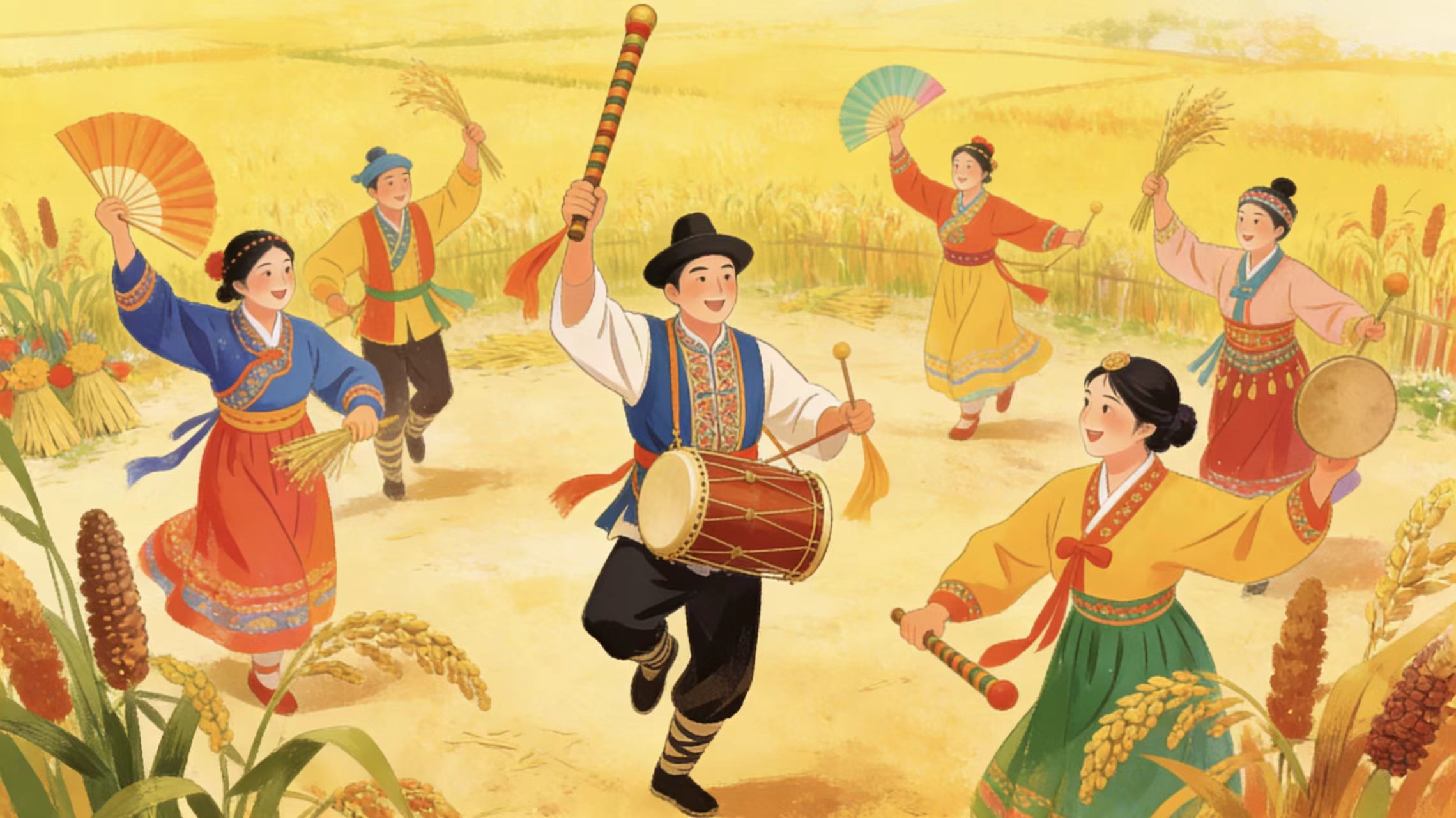
Originating from ancient Korean Peninsula farming rituals, Nongak was brought to China and has evolved into a distinctive part of China’s intangible cultural heritage.
Performance Sequence
A traditional Nongak performance typically begins with a procession to gather the community. The performance unfolds in stages, starting with rhythmic percussion to set the pace, followed by group dances that gradually build in energy. The highlight is the iconic Sangmo (Hat Dance), where performers spin long ribbons from their hats in complex, synchronized patterns.
Community Role
Traditionally, Nongak served to organize communal farming, settle disputes, and strengthen social bonds during festivals and gatherings. It remains a vital expression of cultural identity and harmony for the Korean ethnic community in China.
Protected Heritage
Designated as China’s National Intangible Cultural Heritage, Nongak is actively preserved, showcasing the diversity of Chinese culture.
Copyright Disclaimer for Images
Some images displayed on this website are sourced from the internet and are used for informational and reference purposes only.
We respect the intellectual property rights of all creators. The use of these images is not intended to infringe upon any owner’s copyright.
If you are the copyright holder of any image used on this site and believe it is being used without appropriate permission, please contact us. Upon verification of your ownership claim, we will promptly take the necessary action, which may include removing the image or providing proper attribution as per your request.
Please reach out to us at: [email protected]”