
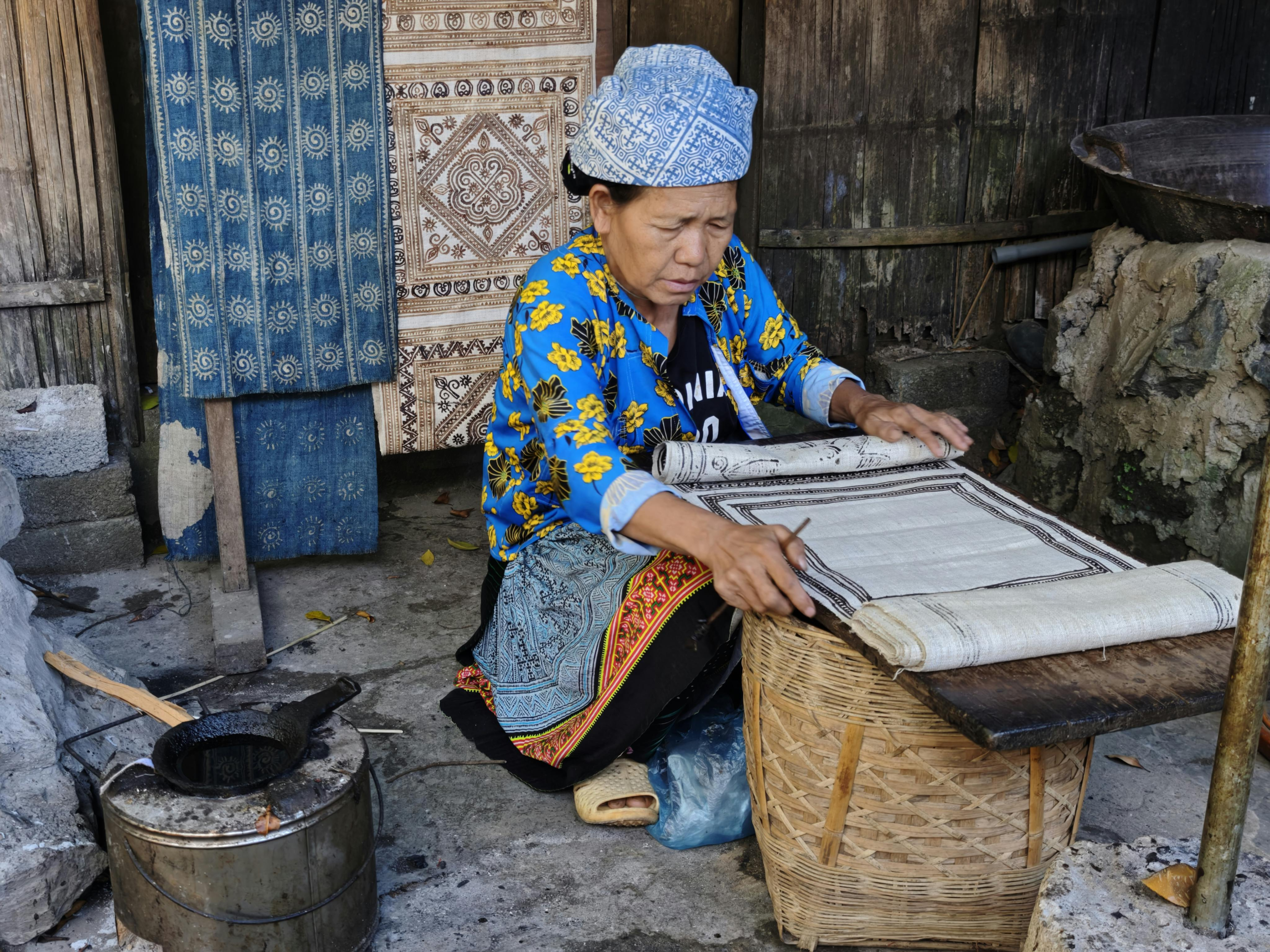
Hand-painted batik, known as Shouhui Lazanin Chinese, is a living art form passed down through generations among ethnic minorities in Guizhou, Yunnan, and other regions of China. Using hands as brushes and wax as ink, artisans create a world of blue and white filled with stories on cotton cloth. This is more than just observation—it is a creative journey you can take part in. Through the traditional steps of drawing, waxing, dyeing, and setting, you will create a one-of-a-kind artwork imprinted with the warmth of your own hands.

Core Experience: A Four-Step Artistic Journey You Can Complete Yourself
The entire process is like a conversation with time. In just four steps, you can create your own masterpiece:
Sketching and Wax Drawing
Using a pencil, trace traditional patterns such as butterflies, flowers, or plants onto cotton cloth. Then, heat a special copper wax pen (lajian) over charcoal, dip it into melted beeswax, and carefully outline and fill the design. The wax penetrates the fabric, creating a resist layer—this step is crucial to the success of the pattern.

Layering and Setting the Wax
After the first layer of wax cools and hardens, additional layers can be applied to preserve different shades of blue and white. As the wax cracks naturally on the cloth, it forms unique “ice crack” patterns, making every piece truly one of a kind.

Indigo Dyeing
Immerse the wax-covered cloth into a dye vat made from fermented indigo, derived from plants like banlangen(Isatis root). Through repeated dipping and oxidation, the fabric gradually shifts from yellow to green, then to deep blue. Depending on the desired color depth, this process may be repeated over several hours or even days.

Boiling to Remove the Wax
Once dyed, the cloth is boiled in water. The beeswax melts away, leaving colorful swirls on the water’s surface, while the areas once covered by wax reveal the original white of the fabric. With the wax gone, the pattern emerges—vibrant, distinct, and alive.

This is not only a craft but also an ‘unwritten historical record’ through which ethnic minorities (such as the Miao and Buyi) document their history and convey blessings. Common patterns include the Butterfly Mother (symbolizing the origin of life) and the Tuotuo flower (representing good fortune and health). Each design holds ancient ethnic memories and beautiful aspirations.
Copyright Disclaimer for Images
Some images displayed on this website are sourced from the internet and are used for informational and reference purposes only.
We respect the intellectual property rights of all creators. The use of these images is not intended to infringe upon any owner’s copyright.
If you are the copyright holder of any image used on this site and believe it is being used without appropriate permission, please contact us. Upon verification of your ownership claim, we will promptly take the necessary action, which may include removing the image or providing proper attribution as per your request.
Please reach out to us at: [email protected]”