
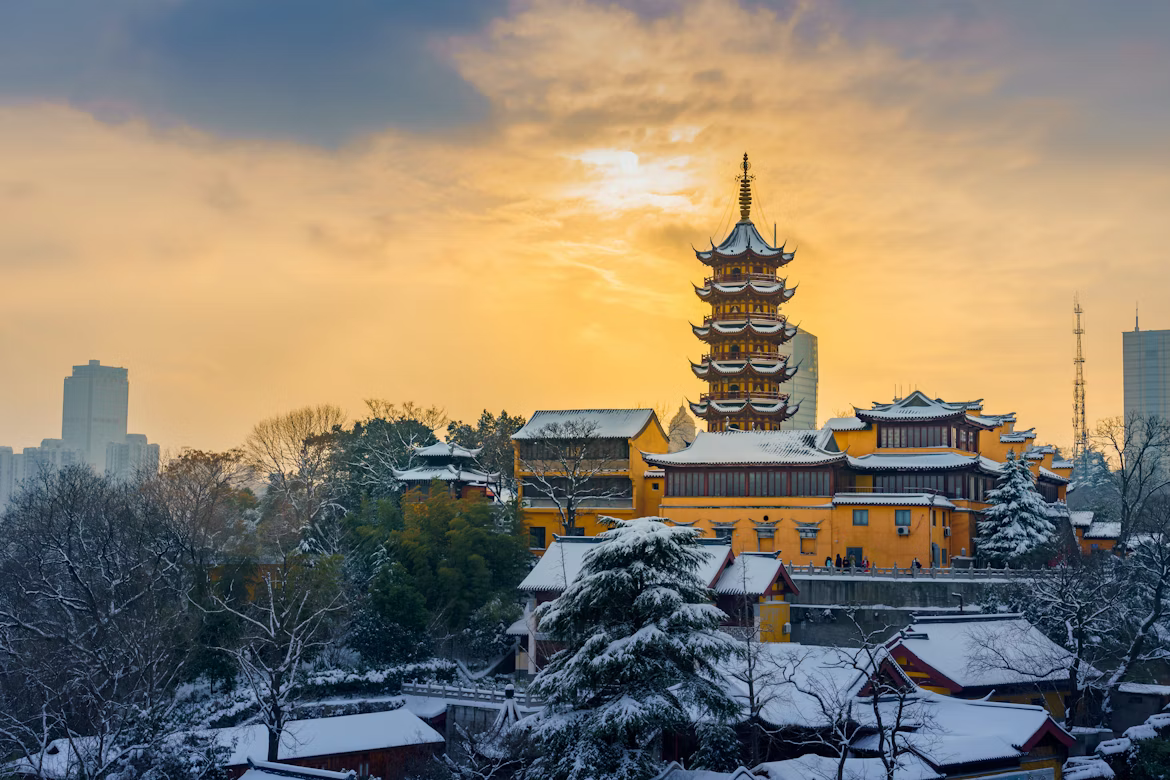
Forget the plain “ancient capital” label—Nanjing is a timeless gem nestled between the Yangtze River and Purple Mountain, where the romance of the Qinhuai River, the grandeur of Ming and Qing dynasties, the poise of Republican-era mansions, and the rich, comforting taste of Jinling cuisine blend into an unforgettable journey. Imagine this: you slurp a bowl of savory duck blood vermicelli soup at a street stall at dawn, climb the steps of Sun Yat-sen Mausoleum under the shade of plane trees, drift along the Qinhuai River on a painted boat as lanterns glow at night, and wander the nostalgic lanes of Laomendong where locals chat over tea. This is Nanjing: a city where millennium-old history meets modern vibrancy, where solemn memorials remind us of peace, and every bite of local food tells the story of Jiangsu’s culinary heritage. Not overly crowded, full of quiet grace and genuine warmth, it’s the perfect destination to discover the soul of China’s ancient capitals.
Getting There & Getting Around
Arriving in Nanjing
- By Air: Fly into Nanjing Lukou International Airport (NKG), with direct flights to major Chinese cities and global hubs in Asia, Europe, and North America. The airport metro line (Line S1) connects directly to the city center in 40 minutes; airport shuttles and taxis are also available for convenience.
- By High-Speed Train: The most recommended way to reach Nanjing, with an extensive high-speed rail network linking to nearby metropolises.
- From Shanghai: ~1 hour
- From Hangzhou: ~1.5 hours
- From Changsha: ~4 hours
- From Beijing: ~4.5 hoursTickets can be booked on Ctrip/Trip.com or at station self-service kiosks with English interfaces—smooth and stress-free for international travelers.
Getting Around the City
- Metro & Bus: Metro Lines 1–10 and suburban lines cover all key attractions (Sun Yat-sen Mausoleum, Confucius Temple, Nanjing Museum) with clear English signage and low single-trip fares. WeChat Pay/Alipay transit cards work for both metro and buses, which reach every corner of the city.
- Ride-Hailing: Didi Chuxing (English version supported) is ideal for late-night trips, transfers between Zhongshan Scenic Area spots, and travel with luggage—affordable and reliable.
- Leisure Strolls: Walk or rent a bike to explore the Qinhuai River Scenic Belt, Laomendong Ancient District, and the Nanjing City Wall. Slow down to soak in the city’s laid-back charm and spot authentic local life at every turn.
- Day Trips: For Niushou Mountain Cultural Tourism Area (magnificent Foding Palace) or Yangtze River Bridge, book a small-group tour or take a direct tourist bus from the city center—no transfer hassle with one-stop service.
Must-Do & Must-See Attractions
- Zhongshan Scenic Area (World Heritage Site)The soul of Nanjing, home to multiple iconic spots.
- Sun Yat-sen Mausoleum: A masterpiece of modern Chinese architecture, free but mandatory advance reservation. Climb the 392 steps to the top for panoramic views of the city and Purple Mountain, a place of reverence for China’s modern revolutionary history.
- Ming Xiaoling Mausoleum: The mausoleum of Emperor Zhu Yuanzhang, founder of the Ming Dynasty. Its Stone Elephant Road (often called Nanjing’s most beautiful 600 meters) is breathtaking in autumn when the leaves turn golden-red.
- Meiling Palace: Known as the “Plane Tree Necklace” from an aerial view, its elegant colonial-style architecture and well-manicured gardens are perfect for photos.Pro Tip: Visit early in the morning to avoid crowds; buy a scenic area shuttle pass to save energy for exploring all the sites.
- Confucius Temple & Qinhuai River Scenic BeltThe cultural heart of Nanjing, famous for the ancient scholars’ quarter and the poetic night scenery of the Qinhuai River. Stroll the traditional streets lined with red lanterns, visit the Confucius Temple, and take a painted boat cruise at night—watch the lights reflect on the water and listen to folk music, just like in ancient Chinese poems.Pro Tip: Skip the overpriced tourist snacks on the main street; head to Laomendong Ancient District nearby for authentic local treats and quieter, more photogenic ancient lanes.
- Nanjing MuseumOne of China’s top three museums, free but reservation required (closed Mondays). Don’t miss the Republican-era Street Exhibition Hall—a fully restored 1920s–1930s street with old post offices, tea houses, and shops, offering an immersive time-travel experience. The historical hall also houses precious cultural relics spanning thousands of years of Chinese history, with detailed English explanations.
- Memorial Hall of the Victims in Nanjing Massacre by Japanese InvadersA solemn site to remember history and cherish peace. It is free to enter with advance booking and requires visitors to maintain absolute silence and respect. The exhibition uses historical relics, photos, and videos to document the tragic events, leaving a profound impact on every visitor.Pro Tip: No loud talking, eating, or inappropriate clothing. Pair your visit with a walk in the nearby Peace Park to reflect on the importance of peace.
- Jiming Temple & Xuanwu LakeJiming Temple, one of the oldest Buddhist temples in the south, is especially beautiful when cherry blossoms bloom in spring. After visiting the temple, walk to Xuanwu Lake, one of China’s largest imperial garden lakes. Rent a boat to enjoy the lake views, or watch the sunset over the city skyline from the lakeside—an ideal relaxing afternoon.

Local Food You Can’t Leave Without Trying
- Duck Blood Vermicelli Soup: Nanjing’s signature breakfast—tender vermicelli in rich duck broth, with silky duck blood, chewy duck gizzards, and fresh coriander. It’s warm, comforting, and full of flavor, available at every street stall and restaurant.
- Salted Duck (Osmanthus Duck): Jinling cuisine’s most famous dish—tender duck meat cured with salt and osmanthus, with a delicate, savory taste and no gamey flavor. It’s the perfect snack or side dish, sold at local specialty shops like Guihua Duck.
- Duck Oil Sesame Cake: A crispy, flaky pastry brushed with duck oil and sprinkled with sesame seeds. The outer layer is crunchy, and the inside is soft—an addictive local snack, best eaten fresh from the oven.
- Sugar Taro Balls: A sweet, soft dessert made with taro simmered in sugar water and osmanthus. It’s warm, fragrant, and a great way to end a meal, especially popular in autumn.
- Beef Potstickers: Pan-fried dumplings with juicy beef filling, crispy on the bottom and soft on the top. They are a staple at Nanjing’s halal restaurants and street food stalls, often paired with a bowl of clear soup.
Travel Tips for Visitors
- Best Time to Visit: March–May (mild spring, cherry blossoms and plum blossoms in full bloom) or September–November (crisp autumn, golden leaves on Stone Elephant Road). Avoid the hot, humid rainy season (June–July) and cold, damp winters.
- Cuisine Tip: Jinling cuisine is mild, savory, and not spicy at all. You don’t need to ask for less heat—just enjoy the rich, natural flavors of the ingredients.
- Payment: WeChat Pay and Alipay are accepted everywhere. Ask hotel staff to help link your overseas bank card. Carry a small amount of cash (¥10/20/50 notes) only for tiny street stalls that don’t accept mobile payments.
- Etiquette: Be extremely quiet and respectful when visiting the Nanjing Massacre Memorial Hall. Ask permission before taking photos of locals in ancient districts. Speak softly in museums and temples.
- Language: Mandarin is the main language. Basic English is available at major attractions, hotels, and tourist centers. Download Google Translate for menu reading and casual conversations—it’s a lifesaver for street food adventures.
- Emergency Contacts: Police: 110, Ambulance: 120, Fire: 119. Ask the hotel front desk to write down your hotel’s address in Chinese to show to taxi drivers or use in emergencies.
Ready to immerse yourself in Nanjing’s six dynasties’ grandeur, Republican-era elegance, and comforting Jinling flavors? Save this guide, bring an empty stomach and an open mind, and let this timeless ancient capital surprise you with its unique charm.
Follow us for more insider guides to China’s underrated cities—no tourist traps, just authentic local experiences.
Image sourced from the internet
Copyright Disclaimer for Images
Some images displayed on this website are sourced from the internet and are used for informational and reference purposes only.
We respect the intellectual property rights of all creators. The use of these images is not intended to infringe upon any owner’s copyright.
If you are the copyright holder of any image used on this site and believe it is being used without appropriate permission, please contact us. Upon verification of your ownership claim, we will promptly take the necessary action, which may include removing the image or providing proper attribution as per your request.
Please reach out to us at: [email protected]