
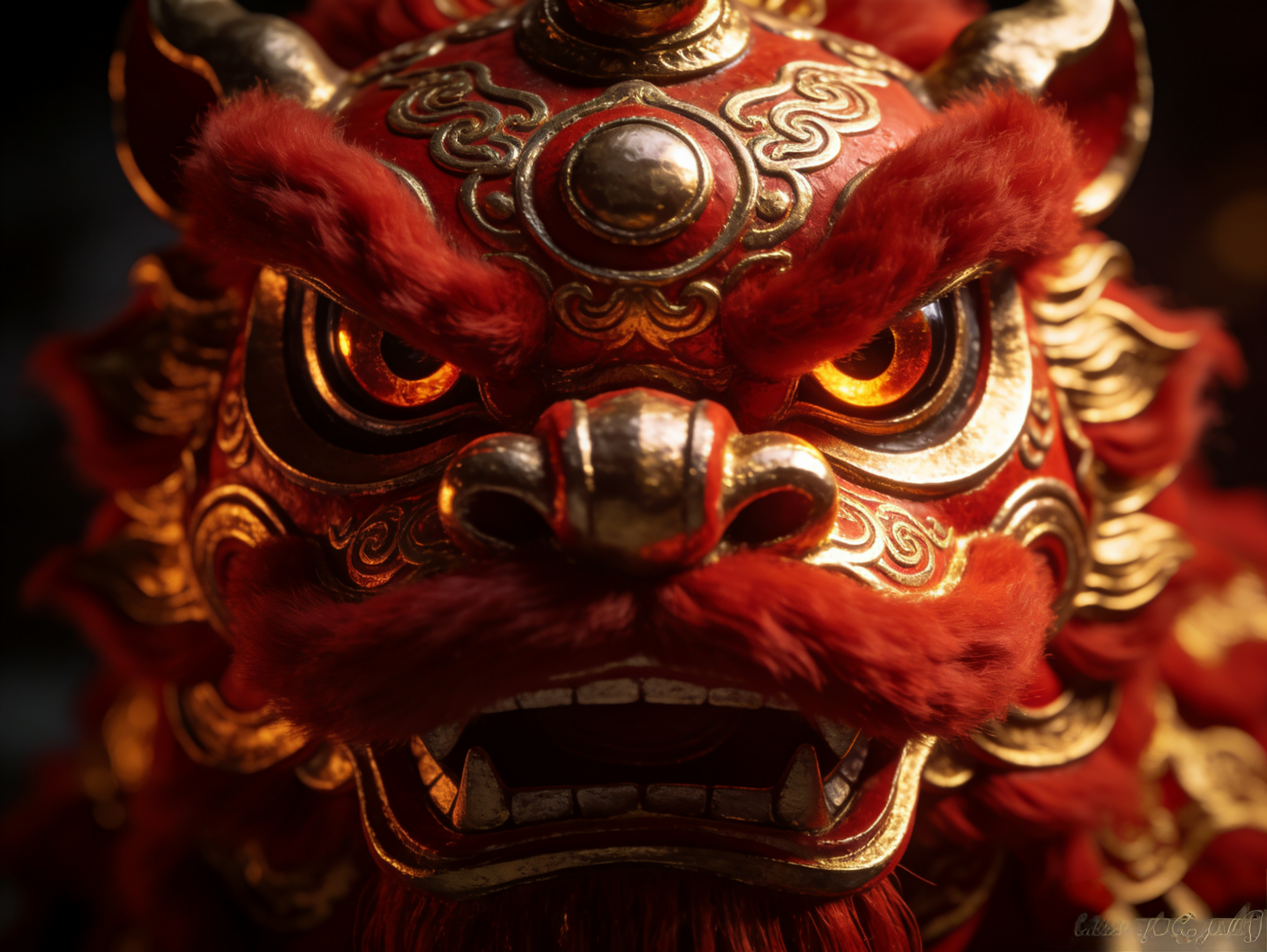
A Roaring Entrance
Imagine a creature born from myth, bursting into life with the crash of cymbals and the rumble of drums. This is the Chinese Lion Dance. Far more than festive entertainment, it is a living, moving talisman believed to bring good luck, scare away evil spirits, and bless any space it enters—from new businesses to community celebrations.

Origins: From Mythical Beast to Auspicious Guardian
The dance’s origins are woven from legend. One famous tale speaks of a monstrous beast named Nian terrorizing a village. To drive it away, the villagers created a fierce-looking lion costume and made loud noises with drums and firecrackers. The ruse worked, and the tradition was born, evolving into a symbolic act of protection and purification.

The Dance of Meaning: Every Move Tells a Story
Every step and gesture is rich with symbolism. The lion’s blinking eyes show alertness. Nipping at lettuce (“cai,” sounding like “wealth”) scatters prosperity. The high-stakes walk on raised poles represents overcoming obstacles with courage and skill. It’s a non-verbal epic, where athleticism and folklore combine to narrate a story of triumph.

Two Souls, One Beast: The Partnership Within
A single lion is brought to life by two dancers in perfect sync. The lead dancer controls the head, expressing the lion’s personality—playful, curious, or majestic. The partner forms the body, following every twist and turn. Their harmony is absolute; their coordination is as crucial as that between actors in a stage play.
From Temple to TikTok: A Living Tradition
While rooted in ancient ritual, the Lion Dance is vibrantly alive today. It is a cornerstone of Lunar New Year and grand openings worldwide. Young teams push athletic boundaries with acrobatic stunts, while social media shares its energy globally. It’s a powerful, dynamic link between a deep cultural past and a connected present.

A Traveler’s Guide: How to Witness the Roar
To experience it, plan around Chinese New Year (Jan/Feb) or Mid-Autumn Festival. Major hubs include Foshan, China (its birthplace), and Singapore during its vibrant celebrations. For deeper immersion, seek out cultural centers offering short workshops to try on the headdress and feel the weight of the tradition firsthand.
Conclusion: The Unbroken Rhythm
The Lion Dance is not a relic; it is a continuous, pounding heartbeat of culture. It embodies community hope, artistic discipline, and the universal joy of shared celebration. Its enduring roar reminds us that some of the most powerful blessings come to life through motion, music, and collective belief.
Have you witnessed a Lion Dance or a similar performance in your culture? What traditional art form uses movement to tell stories or bring luck? Share your experiences below!
Copyright Disclaimer for Images
Some images displayed on this website are sourced from the internet and are used for informational and reference purposes only.
We respect the intellectual property rights of all creators. The use of these images is not intended to infringe upon any owner’s copyright.
If you are the copyright holder of any image used on this site and believe it is being used without appropriate permission, please contact us. Upon verification of your ownership claim, we will promptly take the necessary action, which may include removing the image or providing proper attribution as per your request.
Please reach out to us at: [email protected]”