
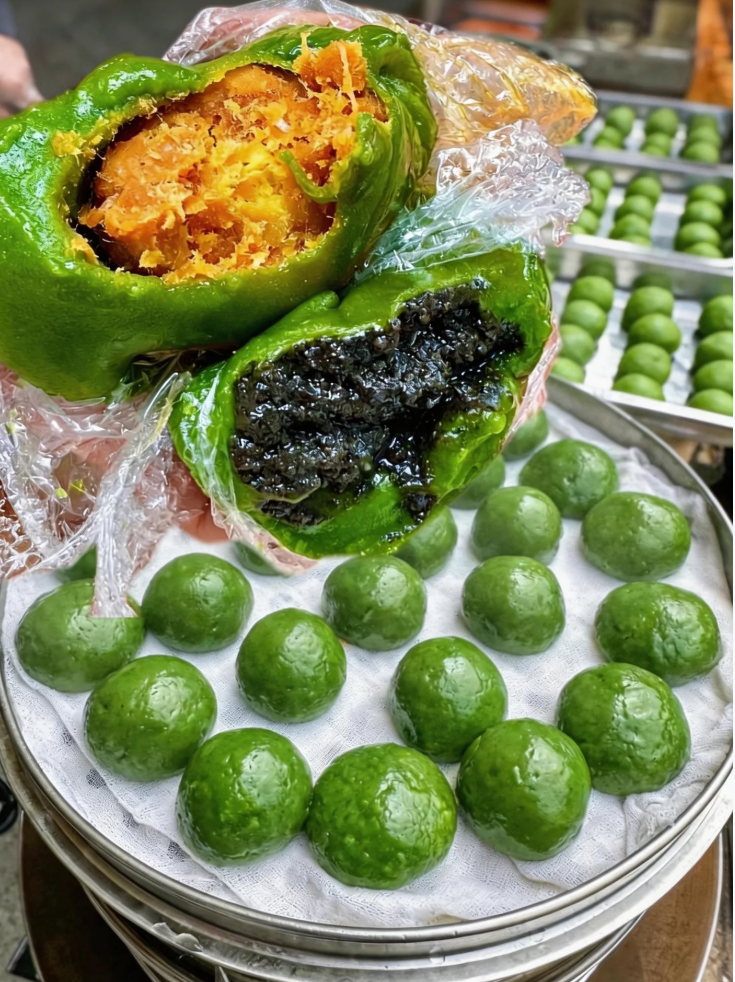
Qingtuan, or “green dumplings,” are a cherished seasonal snack in China, traditionally enjoyed during the Qingming Festival (Tomb-Sweeping Day) in early spring. More than just a treat, these vibrant green pastries are a delicious symbol of renewal, family remembrance, and ancient culinary wisdom. Discover the story, flavor, and hands-on experience behind this iconic bite of Chinese culture.

Green Memories of Spring in the Jiangnan Region
Qingtuan originates from the agricultural regions of the Yangtze River Delta, particularly Jiangsu, Zhejiang, and Shanghai. This area’s humid, temperate spring climate provides the essential wild herb—Japanese mugwort or barley grass—that gives the snack its signature jade-green color and distinctive, refreshing aroma. The tradition is deeply rooted in local life and is now easily experienced in cities across eastern China, especially in local markets, traditional tea houses, and specialized pastry shops during the spring season.

The colors of nature, the flavors of festivals, and the joy of handmade crafts

A Unique Natural Palette
The most striking feature of Qingtuan is its vivid, natural green hue. This color comes not from food dye, but from the juice of young mugwort or barley grass, foraged in early spring. The process of transforming these wild plants into a smooth, emerald-green dough is a beautiful example of traditional, plant-based food craftsmanship, connecting the snack directly to the awakening of nature.
A Symbol of Memory and Season
Eating Qingtuan during the Qingming Festival is a centuries-old custom. The festival is a time for families to honor ancestors and tend to grave sites. The round, green dumplings symbolize the cycle of life and renewal. The practice is listed as part of China’s intangible cultural heritage, representing a living link between food, family rituals, and the rhythm of the agricultural calendar.
Edible and craftable seasonal experiences
Visitors can deeply experience Qingtuan culture through various approaches:
- Tasting the Flavors: Traditional Qingtuan typically features a smooth and sweet red bean paste filling. Nowadays, innovative flavors such as salted egg yolk with pork floss, black sesame, and kalimeris indica have also gained popularity. The glutinous rice skin is soft yet pleasantly chewy, while the fillings are sweet and dense, offering a rich and layered texture.
- Festive Participation: During the Qingming Festival, if you have the opportunity to visit local families or take part in community activities, you can experience the true significance of Qingtuan within the complete context of tomb-sweeping rituals and spring outings.
- Hands-on Workshops: In cities like Shanghai, Suzhou, and Hangzhou, cultural centers, homestays, and cooking studios often offer short-term Qingtuan-making courses. These workshops guide participants through the entire process—from identifying mugwort, kneading the green dough, to shaping and filling the dumplings—allowing for a personal, hands-on experience of this traditional craft.
- The Art of Making: The traditional preparation of Qingtuan emphasizes seasonality and manual skill. Tender mugwort, harvested in spring, is blanched, processed to remove bitterness, mashed, and strained to extract its vibrant green juice. This juice is then mixed with glutinous rice flour and regular rice flour in specific proportions, and kneaded repeatedly to form a smooth, uniformly green dough. After wrapping the filling, the dough is gently shaped in the palms into round, plump dumplings. Each is then placed on a small piece of bamboo leaf or baking paper and steamed. Once out of the steamer, a thin layer of cooked oil is brushed on to enhance its glossy appearance and moist texture. This entire process—which integrates an understanding of seasonality, control of kneading force, and mastery of steaming heat—is a traditional craft filled with ritual, capturing the essence of spring in the Jiangnan region.
The best time to seek out the most authentic Qingtuan is around the Qingming Festival, which typically falls in early April. While readily available in shops, for a deeper experience, visit a local wet market to see fresh batches being made, or join a festival-related activity. This experience pairs perfectly with exploring the water towns, classical gardens, and historic neighborhoods of the Jiangnan region.
A Bite of Spring, A Taste of Memory
Qingtuan is a flavorful portal into China’s profound connection between season, memory, and the dining table. It’s an experience that engages all the senses—from its radiant color and herbal fragrance to its unique texture and sweet taste. We invite you to try this springtime delicacy, to taste a piece of living history, and to share in a seasonal ritual that has brought families together for generations.
Copyright Disclaimer for Images
Some images displayed on this website are sourced from the internet and are used for informational and reference purposes only.
We respect the intellectual property rights of all creators. The use of these images is not intended to infringe upon any owner’s copyright.
If you are the copyright holder of any image used on this site and believe it is being used without appropriate permission, please contact us. Upon verification of your ownership claim, we will promptly take the necessary action, which may include removing the image or providing proper attribution as per your request.
Please reach out to us at: [email protected].