
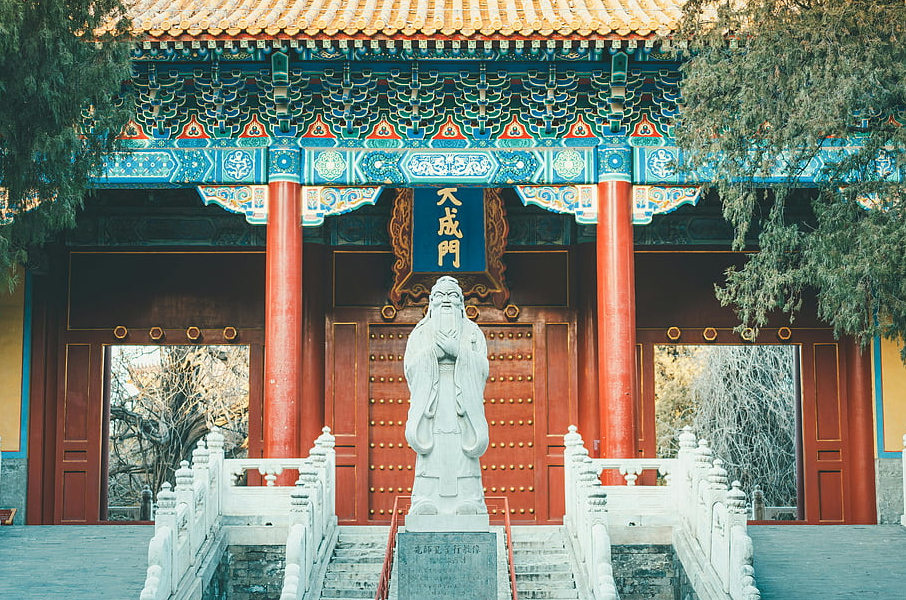
The Core Ideas of Confucianism

Confucianism focuses on moral character, relationships, and harmony. Its most important teachings can be summarized in a few simple concepts.
First, the Five Virtues (Wu Chang) form the foundation of Confucian ethics:
1、Ren (仁) – kindness, love, and care for others
2、Yi (义) – righteousness, doing what is right
3、Li (礼) – respect, manners, and proper behavior
4、Zhi (智) – wisdom, learning, and self-improvement
5、Xin (信) – honesty, trust, and keeping promises
These virtues guide people’s behavior in daily life. Confucianism believes that if everyone follows these values, society will be stable and peaceful.
Second, filial piety is the most important family value. It means respecting parents, obeying elders, and caring for family members. Confucius taught that a good person must first be a good son or daughter. Filial piety strengthens family bonds and creates harmony at home.
Third, Confucianism emphasizes harmony . It encourages people to avoid conflict, respect differences, and work together for the common good. Harmony is valued in families, communities, and even between countries.
Unlike Western ideas that focus more on individual freedom, Confucianism puts relationships and responsibility first. It teaches that everyone has a role in society—children respect parents, students respect teachers, and citizens respect the community. These ideas helped China stay united for thousands of years.
Confucian Values in Modern Family Life

Although modern China has changed a lot, Confucian family values remain strong.
Filial piety (Xiao) is still deeply rooted in Chinese culture. Many young people take care of their parents when they grow old. It is common for adult children to live near their parents or support them financially. During festivals like the Spring Festival, millions of people travel home to reunite with family. This shows how much Chinese people value family togetherness.
Confucianism also teaches respect for elders. In Chinese families, older family members are often listened to and respected. Younger people speak politely to elders and follow family traditions. This respect creates a warm and caring family atmosphere.
Moreover, Confucianism encourages family harmony. Chinese families usually value cooperation and avoid arguments. Parents teach children to share, help each other, and put family interests above personal wishes. These values help families stay close and stable.
Even in modern cities, where life is fast-paced, many Chinese parents still raise their children with Confucian ideas: be polite, work hard, respect teachers, and love family. These values have not disappeared—they have adapted to modern life.
Confucian Influence on Education, Society and National Values
Confucianism also strongly influences education, social behavior, and national culture in modern China.
Education and Work Ethic
Confucius was a great teacher, and his ideas about education are still important today. Confucianism encourages hard work, discipline, and lifelong learning. Chinese students are often known for being hardworking, respectful to teachers, and eager to improve. Parents and teachers stress the importance of study and self-improvement. This work ethic helps many young people succeed in school and careers.
Social Manners and Harmony
In daily life, Confucian ideas of Li (manners) and He (harmony) guide social behavior. Chinese people usually greet others politely, wait in line, speak softly in public, and avoid embarrassing others. Respect for teachers, service workers, and strangers is common. These manners help society run smoothly and peacefully.
National Identity and Modern Governance
Confucianism is also part of China’s national identity. The government promotes social harmony, family values, and respect for tradition alongside modern development. Ideas like “harmonious society,” “people-centered development,” and “moral education” all have roots in Confucianism. Confucian culture helps modern China connect with its long history and build cultural confidence.
