
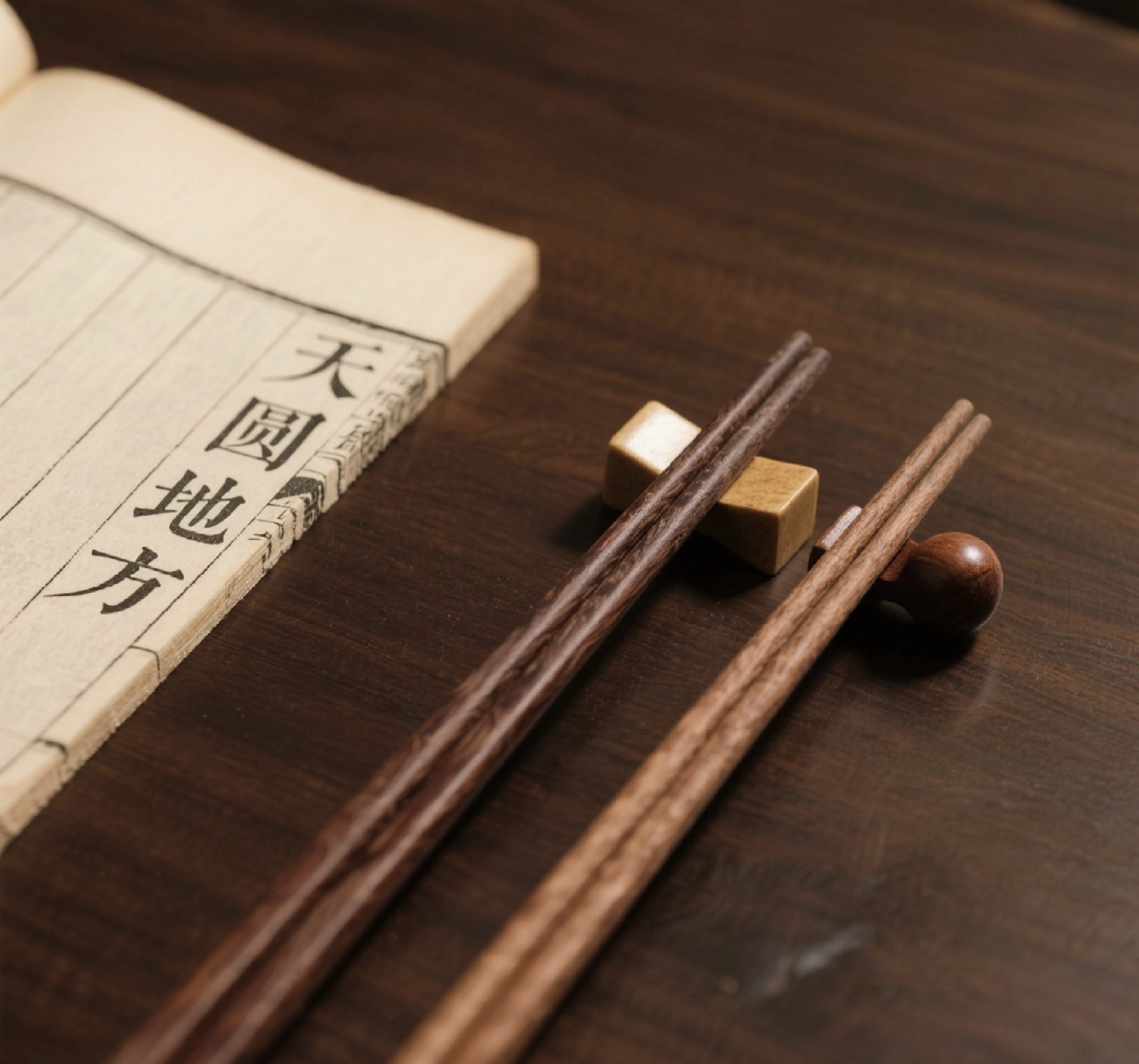
When you sit in a Chinese restaurant, whether it’s a street stall in Chengdu or a family dinner in Beijing, there will always be a pair of chopsticks in front of you. These simple and slender tools are not only tableware, but also a symbol of Chinese culture, respect and harmony, carrying thousands of years of tradition. To use chopsticks politely, you don’t need to master complex skills; the key is to understand those subtle gestures that show respect. This can help travelers establish a warm connection with locals and avoid awkward misunderstandings. Below, we will break down the history of chopsticks, modern etiquette, as well as practical tips and common mistakes for travelers.

The Story Behind Chopsticks: From Ancient Tools to Modern Symbol
Chopsticks, known as “kuaizi” in Chinese, have a history of more than 4,000 years, dating back to the Shang Dynasty. The earliest bronze chopsticks were unearthed in Anyang, Henan Province, and were originally used for cooking rather than eating. Unlike Western knives and forks, which are used for cutting, chopsticks are designed to gently pick up food, reflecting the Confucian concepts of “moderation, courtesy and non-violence”, which echoes the saying “a warrior’s knife, a scholar’s chopsticks”.
The design of chopsticks hides profound meaning: the upper end is square and the lower end is round, corresponding to the traditional philosophy of “heaven is round and earth is square”. In ancient times, chopsticks were a symbol of status—emperors used ivory or jade chopsticks, while ordinary people used bamboo or wood chopsticks; today, using chopsticks politely is to inherit this ancient tradition.
The naming of chopsticks is also exquisite. In ancient times, they were called “zhu”, which sounds similar to the word “stop” in Chinese. To avoid bad luck, they were renamed “kuaizi”, meaning “small and flexible”, showing that chopsticks have long been integrated into Chinese culture and language.

Chopsticks in Modern Chinese Life: Etiquette That Still Matters
Even as China modernizes rapidly, chopstick etiquette remains an important part of daily life, especially in family gatherings, restaurants and formal occasions, with the core being respect for others. Here are polite practices for common scenarios.
Basic way to use chopsticks: Hold them with your dominant hand, pinch the upper third with your thumb and index finger, and support the lower half with the other three fingers. Keep the two chopsticks aligned, avoid dropping them or making noisy sounds, which is a sign of good upbringing.
Communal chopsticks and spoons are widely used in modern restaurants, and many restaurants use “black and white chopsticks” to distinguish: black ones are for personal use, and white ones are for serving food. If you are dining with a local family in Guangzhou, the white chopsticks placed by the host should be used to take food; do not use your personal chopsticks, otherwise it will be regarded as unsanitary and disrespectful.
Another important etiquette is to wait for the elders or the host to start eating first. At family dinners, grandparents or parents usually pick up their chopsticks first, and guests need to wait for the host to say “please enjoy” before eating. This is a continuation of the Confucian concept of “respecting the elderly and elders”.
Chopsticks are also a social tool: when someone picks up food for you with chopsticks, it is a kind gesture and you should accept it politely; when picking up food for others, be sure to use communal chopsticks to show care for others.

Traveler’s Guide: How to Use Chopsticks Politely (and Avoid Common Mistakes)
For travelers, using chopsticks politely is a sign of respect for Chinese culture. You don’t need to be perfect, and locals will appreciate your efforts. Below are practical tips and mistakes to avoid.
When dining at a street stall in Xi’an, do not rub the chopsticks (it will offend the stall owner, as it is regarded as dislike for the chopsticks); you can place the chopsticks gently on the edge of the bowl or the chopstick rest. When picking up noodles, twist them gently to avoid slipping. If you really can’t pick them up, you can ask for a spoon, but try to use chopsticks first.
When attending a business dinner in Beijing, you need to use communal chopsticks to take food; do not rummage through the food with your personal chopsticks (known as “mi zhu pao fen”, which is extremely rude). Never stick chopsticks upright in the rice bowl (known as “dang zhong shang xiang”, imitating the way incense is placed at funerals, which is inauspicious); instead, place them horizontally on the edge of the bowl or the chopstick rest.
Common mistakes to avoid: Do not point at people or wave with chopsticks (known as “xian ren zhi lu”, regarded as disrespect); do not tap bowls or plates with chopsticks (known as “ji zhan qiao zhong”, associated with beggars begging, which is undignified).
If you drop your chopsticks, don’t panic. Apologize to the people around you and ask for a new pair. Modern people will understand it is an accident, so you don’t have to worry about offending others.
Practice makes perfect. You can practice picking up peanuts and beans at home before traveling. If you have difficulties in China, you can ask locals for help. They will be happy to teach you the correct way to use chopsticks, which is also a good opportunity for interaction and learning.
In the final analysis, the core of using chopsticks politely is respect and acceptance of local culture. A pair of chopsticks can become a bridge between you and the Chinese people. Whether it’s street food or a formal dinner, remember these tips, and you will surely receive warmth and welcome, truly achieving “when in Rome, do as the Romans do”.
