
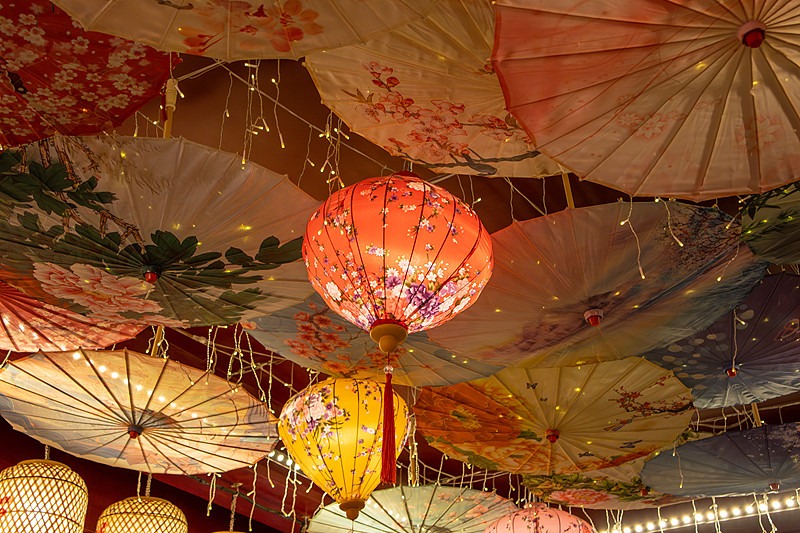
Rooted in ancient Chinese folk craftsmanship, oil-paper umbrellas are precious intangible cultural heritage works. Made of natural bamboo frames, tough handmade paper and pure raw tung oil, they go through dozens of elaborate manual procedures. Famous producing areas include Luzhou in Sichuan, Jialu in Jiangxi, Changsha in Hunan and Fuzhou in Fujian. Beyond practical rainproof use, they carry auspicious meanings of reunion, peace and progress. Nowadays, travelers can visit traditional workshops to learn making skills, take cultural photos and collect exquisite handcrafted umbrellas. This classic oriental artwork perfectly combines practicality, aesthetics and traditional Chinese spiritual culture.

Walking through ancient Chinese water towns and misty ancient alleys, the most elegant and classic scenery is always a soft oil-paper umbrella. More than a simple tool for sheltering from wind and rain, Chinese oil-paper umbrellas are well-preserved intangible cultural heritage. They integrate natural raw materials, rigorous handmade techniques, regional characteristics and profound cultural connotations. This article will fully introduce its raw materials, production steps, famous origins, cultural symbolism and modern experience ways for global cultural lovers.
Pure Natural Raw Materials of Oil-Paper Umbrellas
All materials used to make standard traditional oil-paper umbrellas are taken from nature without harmful industrial chemicals, which ensures their practicality, durability and unique classical charm.
The main framework of the umbrella is made of high-quality mountain bamboo that has grown for more than five years. This kind of bamboo has straight joints, strong toughness and strong compression resistance. After soaking, steaming and sun-drying, it can effectively prevent moth and mildew, becoming the most stable support of the whole umbrella.
The umbrella surface adopts specially made tough cotton paper and refined rice paper. These papers are fine in texture, not easy to crack, and suitable for hand-painting and oil brushing. The core waterproof material is natural ripe tung oil. After evenly coating and air-drying, a breathable and firm waterproof layer will be formed on the paper surface, with faint natural plant fragrance.
In addition, craftsmen use pure cotton thread to fix umbrella ribs and natural plant pigments for hand drawing. All accessories follow the ancient production standard, presenting the original oriental handicraft texture.

Complete Handmade Production Processes
The production of oil-paper umbrellas completely relies on manual work, and there is no large-scale mechanical mass production. There is an old folk saying that making an oil-paper umbrella needs more than seventy complex procedures, and every link tests the patience and professional skills of traditional craftsmen.
- First of all, craftsmen select and cut qualified bamboo materials, remove deformed and worm-eaten parts, and cut them into umbrella ribs of unified specification. Then they polish, drill holes and splice the umbrella frame, connect all umbrella ribs tightly with cotton thread, and fix the umbrella handle and umbrella top to form a complete and stable skeleton structure.
- The second step is pasting umbrella paper. Workers cut the paper neatly, paste it smoothly on the outer layer of the bamboo frame, trim the edges neatly, and place it in a ventilated place to dry and shape. After the umbrella surface is fixed, craftsmen start hand-painting creation, painting classical flowers and birds, landscape scenery, traditional opera figures and various auspicious patterns on the umbrella surface, endowing each umbrella with unique artistic personality.
- The most critical step is oil brushing. Uniformly brush natural tung oil on both sides of the umbrella surface repeatedly, and place it in a cool place for slow air-drying. Finally, finish detailed polishing, thread decoration and overall assembly. It usually takes more than ten days to make a complete handmade oil-paper umbrella, so every finished product is a rare exclusive craft work.


Representative Producing Areas and Regional Features
Different regions in China have formed distinctive oil-paper umbrella making styles after years of inheritance, and four major producing areas are the most famous and influential at home and abroad.
- Luzhou oil-paper umbrella from Sichuan Province is a national-level intangible cultural heritage. It is firm and durable, with simple and grand umbrella surface patterns, focusing on practical performance, suitable for daily sunshade and rain shelter, and retains the most authentic ancient folk craft style.
- Jialu oil-paper umbrella in Wuyuan, Jiangxi has a heritage history of more than 600 years. It is light, elegant and exquisite, and is a typical representative of Huizhou traditional folk art. It often appears in ancient villages and misty scenery, full of poetic ancient charm.
- Changsha oil-paper umbrella in Hunan is famous for bright colors and delicate patterns. Most of its painted patterns are traditional opera characters and festive auspicious patterns, with strong artistic sense, which is very suitable for home decoration and cultural gifts.
- Fuzhou oil-paper umbrella in Fujian is fine in workmanship, thin and soft in umbrella surface and soft in color matching. It balances practicality and collection value, and has long been exported to many overseas countries as a Chinese cultural gift.

Profound Cultural Meanings and Symbolic Values
In traditional Chinese society, oil-paper umbrellas are not only daily necessities, but also important cultural carriers with rich implied meanings, and have been widely used in folk customs and traditional rituals.
The round shape of the umbrella symbolizes family reunion, harmony and perfect life, so it is an indispensable traditional custom gift in Chinese wedding and major festivals. The umbrella frame is made of bamboo, which stands for noble personality, steady progress and healthy longevity.
In terms of homophonic culture, oil-paper umbrella has the beautiful implication of blessing for offspring and happy family. When the umbrella is fully opened, it can shelter all wind and rain, representing good luck, safety and protection from disasters.
For a long time, oil-paper umbrellas have frequently appeared in Chinese classical poems, traditional paintings, ancient costumes dramas and literary works, and have gradually become the most typical symbolic symbol of oriental classical romance and elegant aesthetic culture.

Modern Experience Ways of Inheriting Intangible Cultural Heritage
With the vigorous development of cultural tourism, ancient oil-paper umbrellas have walked out of traditional craft workshops and museums, and integrated into modern life in diverse and vivid forms, bringing convenient cultural experience to foreign tourists and cultural lovers.
Zhejiang ancient village culture trips include handmade oil-paper umbrella workshop exploration.Tourists can visit traditional intangible cultural heritage craft workshops in major producing areas to participate in immersive umbrella-making experience, learn basic bamboo frame making, paper pasting and simple hand-painting skills, and take away their own handmade oil-paper umbrellas.
Art-themed Jiangsu travel often arranges DIY umbrella making for craft-loving international visitors.Improved lightweight oil-paper umbrellas are widely used in travel photography, ancient style dressing matching and scenic spot scene layout. Many ancient towns and cultural blocks have built oil-paper umbrella-themed landscape corridors, which have become popular cultural check-in spots.
In addition, exquisite packaged oil-paper umbrellas have become high-quality Chinese characteristic cultural souvenirs and foreign exchange gifts. More and more cultural exhibitions and overseas Chinese cultural promotion activities also take oil-paper umbrellas as important display works, letting the world know about traditional Chinese handmade culture.

From ancient folk daily necessities to world-famous intangible cultural heritage treasures, Chinese oil-paper umbrellas have gone through hundreds of years of wind and rain. It relies on pure natural raw materials, rigorous whole manual craftsmanship, distinctive regional styles and warm traditional cultural meanings, connecting the past and the present, and linking Chinese traditional culture with the world cultural vision.
Holding an oil-paper umbrella and walking in the misty rain of ancient towns, people can not only feel the practical convenience brought by traditional crafts, but also deeply perceive the gentle romance and ingenuity inheritance hidden in oriental traditional culture. This timeless Chinese classic craft is worthy of being known, experienced and inherited by more global people.