
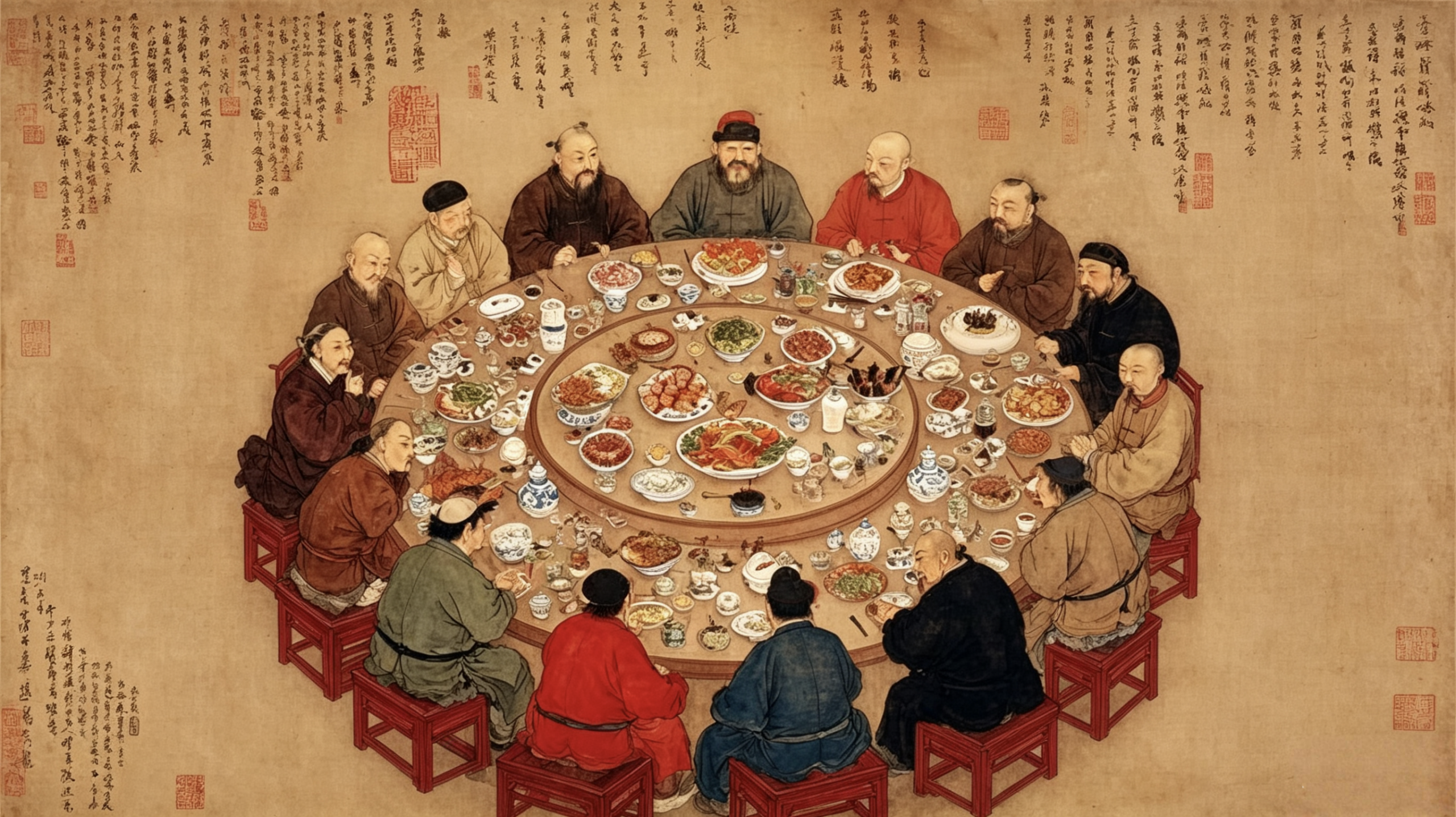
Imagine sitting in a cozy Chengdu restaurant, the aroma of spicy hot pot filling the air. A friendly Chinese family invites you to join them, and soon shared dishes of Sichuan peppercorns and tender beef are placed center-stage. As you reach for chopsticks, you pause—should you pick directly from the shared plate? Do you wait for others to start? These questions are common for first-time visitors. Dining in China isn’t just about food; it’s a window into culture, where gestures carry history and respect. Unlike rigid rules, Chinese table manners are about kindness and “reading the room”—with a little guidance, you’ll fit right in.

From Ancient Rituals to Modern Meals: The Heart of Chinese Dining Etiquette
Understanding Chinese table manners doesn’t require deep dives into ancient texts, but a little background helps. The Book of Rites says “The origin of etiquette begins with eating,” showing dining manners have been central to Chinese culture for over 2,000 years. Ancient formal banquets had strict rules for seating and food placement to honor elders and guests—customs that still influence modern dining. For example, Zhou Dynasty seats were arranged by age or rank, and dishes were placed for guests’ convenience.
Today, most strict ancient rules have softened, especially in casual settings, but the core remains: dining is social, not just about eating. Round tables with lazy susans symbolize unity—everyone shares dishes to foster connection. Whether at a Beijing street stall, Guangzhou family home, or Shanghai restaurant, manners focus on respect for hosts, elders, and fellow diners. Perfection isn’t required; thoughtfulness is.
A common example: when invited to a Chinese friend’s home, your host will greet you with hot tea (a welcome sign) and lead you to a seat. They may offer fruit or nuts to make you comfortable, and serve you first—this kind gesture means they want you to try the best food.
Navigating Modern Chinese Dining: What to Do (and Expect) as a Visitor
For first-time visitors, the key is to observe, ask when unsure, and adapt. Here are practical tips for common scenarios, with real travel examples.
First, seating. In formal settings (business dinners, family celebrations), the “seat of honor” faces the entrance or main wall, reserved for elders, guests of honor, or high-ranking people. As a visitor, politely decline if offered this seat—say “Please, you sit first” (Qǐng nǐ xiān zuò). Your host will guide you to a comfortable spot. For casual meals, seating is flexible—avoid the entrance-facing seat unless invited.
During a Xi’an trip, I joined a local tour for roujiamo and biangbiang noodles. The elderly tour guide, Mr. Li, insisted I take the honor seat. I declined, saying “Mr. Li, you’re the eldest—please sit there,” and he smiled, starting a great chat about Xi’an’s food culture. Humility goes a long way.
Second, chopsticks—intimidating but forgiving. Key “don’ts”: Never stick chopsticks upright in rice (it resembles funeral incense, unlucky). Don’t wave, stab food, or tap bowls (beggars’ behavior). Don’t use personal chopsticks for shared dishes—use longer “serving chopsticks” (gōng kuài) to transfer food to your plate.
“Do’s” are simple: Hold chopsticks gently (like a pencil) and take small bites. Use a spoon for slippery food (e.g., dumplings)—no judgment. If you drop chopsticks, ask for a new pair. In Chongqing, I dropped mine while picking hot pot beef; the waiter laughed and brought a new set: “Even Chinese people drop chopsticks!”
Third, toasting. Hold your glass with both hands (respect) and clink lower than others (humility). “Gan bei!” (Bottoms up) doesn’t mean you must finish—take a big sip. If you don’t drink alcohol, use tea or soda and say “I don’t drink, but I’ll toast you with tea!” (Wǒ bù hē jiǔ, dàn wǒ yòng chá gēn nǐ gān bēi!). A lighthearted joke: “Leaving wine in your glass? Are you raising fish?”
Finally, eating habits. Wait for elders/hosts to start eating. Chew quietly, don’t talk with a full mouth, and thank hosts for serving. Leave a little food—this signals you’re full. Finishing every bite might make them think you’re still hungry!

Common Misconceptions: What First-Time Visitors Often Get Wrong
Good intentions can lead to misunderstandings—let’s clear up common myths.
Myth 1: “Mistakes mean judgment.” Chinese people are forgiving of foreigners. A friend once stuck chopsticks upright in rice in Hangzhou; the host laughed and gently explained. Most will help—asking questions shows respect, pretending you know everything doesn’t.
Myth 2: “I can’t refuse food.” Try a little of everything to show appreciation, but if you’re full or dislike something, say “It’s delicious, but I’m full” (Hěn hǎochī, dàn wǒ chī bǎo le). In Fuzhou, a family served century eggs; I tried a bite, said “Thank you—it’s unique,” and they were happy, no pressure.
Myth 3: “Manners are the same everywhere.” China’s regional diversity means small differences—Beijingers are casual with chopsticks, Guangzhou locals use serving chopsticks carefully. Sichuan hot pot is lively, Shanghai formal meals quiet. But core rules (respect elders, use serving chopsticks, wait to start) are universal—follow locals’ lead.
Myth 4: “Paying is a free-for-all.” If invited by a Chinese friend, they’ll likely pay (hospitality). Thank them and offer to treat later (e.g., buying milk tea after a hot pot dinner). Split bills with foreigners, but let locals lead if present.
At its core, Chinese table manners are about connection, respect, and joy—guidelines, not rigid rules. Relax, smile, and enjoy the food and company. A little effort to understand customs goes far—you might make friends, learn about culture, and create lifelong memories. Grab your chopsticks, take a breath, and dive in—you’ve got this!
