
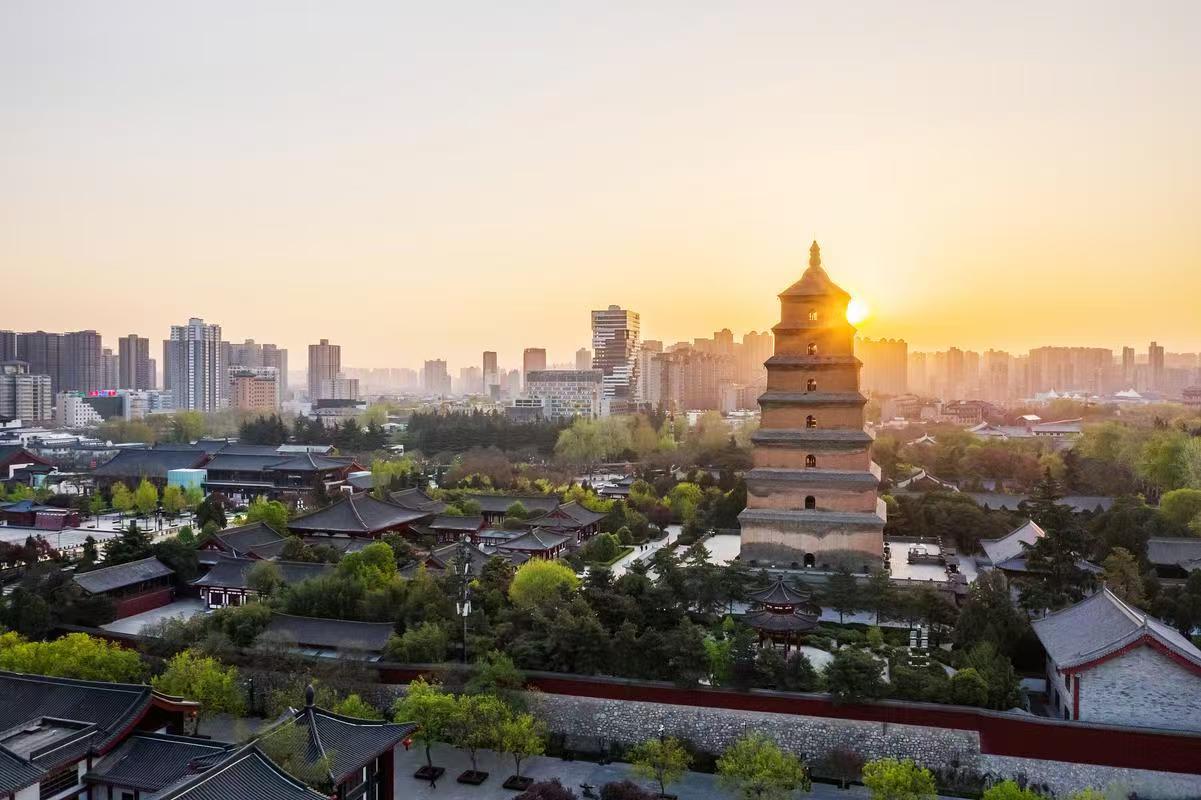
If you’re planning your first deep dive into Chinese culture, chances are Beijing and Xi’an are both sitting at the top of your bucket list. Both cities are steeped in history, but they offer totally different vibes and travel rhythms. Beijing impresses with its grand imperial scale and modern city energy, while Xi’an wins you over with its raw ancient history and down-to-earth street life. In these places, history isn’t just behind glass cases—it’s part of the air you breathe.
Cultural Core: The Logic of Order & The Spirit of Fusion
Both are ancient capitals, but they represent two sides of Chinese civilization.
Beijing served as the imperial seat for the Yuan, Ming, and Qing dynasties. It’s all about order. The city is laid out with mathematical precision along a central axis, reflecting the old Confucian idea that the center is sacred. Here, history is defined by the vermillion walls and yellow glazed tiles of the Forbidden City, and the grid-like layout of the Hutongs (alleys)—it feels formal and structured.

Xi’an (known as Chang’an in ancient times) is the icon of the Han and Tang dynasties and the starting point of the Silk Road. Its keyword is “fusion.” Back in the day, it was a global metropolis buzzing with traders from Persia, Rome, and Central Asia. Compared to Beijing’s strict formality, Xi’an feels more open, gritty, and full of that melting-pot energy where East meets West.

The Experience: Looking Up at Palaces vs. Touching History
1.The Formality of Beijing
The Palace Museum (Forbidden City): Don’t just rush through. Look at the architecture. The split between the Outer Courts (state affairs) and the Inner Courts (living quarters) tells you everything about how ancient Chinese politics and family life worked.
The Temple of Heaven: Beyond the beautiful blue roofs, check out the Echo Wall. It’s a clever piece of ancient acoustic engineering.
The Great Wall: Skip the crowded Badaling section. Head to Mutianyu for great views and fewer people, or Simatai if you want something wilder and more rugged.

2.The Immersion of Xi’an
Muslim Quarter & Shuyuanmen Street: The Muslim Quarter is where Islamic and Han cultures collide, famous for its food stalls. Shuyuanmen is a cultural street where you can find traditional calligraphy supplies and unique souvenirs.
Cycling the Ancient City Wall: It’s the most complete old city wall in China. Rent a bike around sunset. You’ll have ancient bricks on one side and modern traffic on the other—it’s a wild visual contrast.
Muslim Quarter & Shuyuanmen Street: The Muslim Quarter is where Islamic and Han cultures collide, famous for its food stalls. Shuyuanmen is a cultural street where you can find traditional calligraphy supplies and unique souvenirs.
The Terracotta Warriors: Look closely. The hairstyles, beard shapes, and even the tread patterns on their shoe soles are all different. This level of detail shatters the myth that they were mass-produced clones.

Practical Tips: Logistics & Timing
1.When to Go
- Prime Time: Mid-April to late May, and mid-September to mid-October. The weather is mild and perfect for walking.
- Avoid If Possible: Summer is hot, humid, and rainy. Winter is dry, freezing, and can bring smog.
2.How Long to Stay
- Beijing: Plan for at least 3–4 days. The sights are spread out.
- Xi’an: 2–3 days is enough to hit the major highlights.
- Doing Both? The high-speed train between them takes only 4.5 to 5.5 hours. A popular route is to fly into Beijing and out of Xi’an (or vice versa) to experience the efficiency of Chinese trains.
3.Survival Guide
- Communication & Cash: English is more common in Beijing. In Xi’an, have a translation app ready. Mobile payments (Alipay/WeChat Pay) are everywhere, but linking a foreign card can be tricky. Carry some cash just in case.

How to Choose: Match Your Travel Style
Go for Beijing if: You’re into political history, architectural symmetry, and iconic landmarks. You also want the option to mix your history fix with modern art galleries (like the 798 Art Zone) and shopping.
Go for Xi’an if: You love archaeology, authentic local food, and a slower pace. Here, history isn’t locked away; it’s in every bowl of noodles and every worn brick of the city wall.
Got a game plan? Start with the visa and flight bookings. Just remember: tickets for the Forbidden City and the Warriors sell out fast, so book online before you go. Here’s to an epic adventure in the East!
Image sourced from the internet
Copyright Disclaimer for ImagesSome images displayed on this website are sourced from the internet and are used for informational and reference purposes only.We respect the intellectual property rights of all creators. The use of these images is not intended to infringe upon any owner’s copyright.If you are the copyright holder of any image used on this site and believe it is being used without appropriate permission, please contact us. Upon verification of your ownership claim, we will promptly take the necessary action, which may include removing the image or providing proper attribution as per your request.Please reach out to us at: [email protected]