
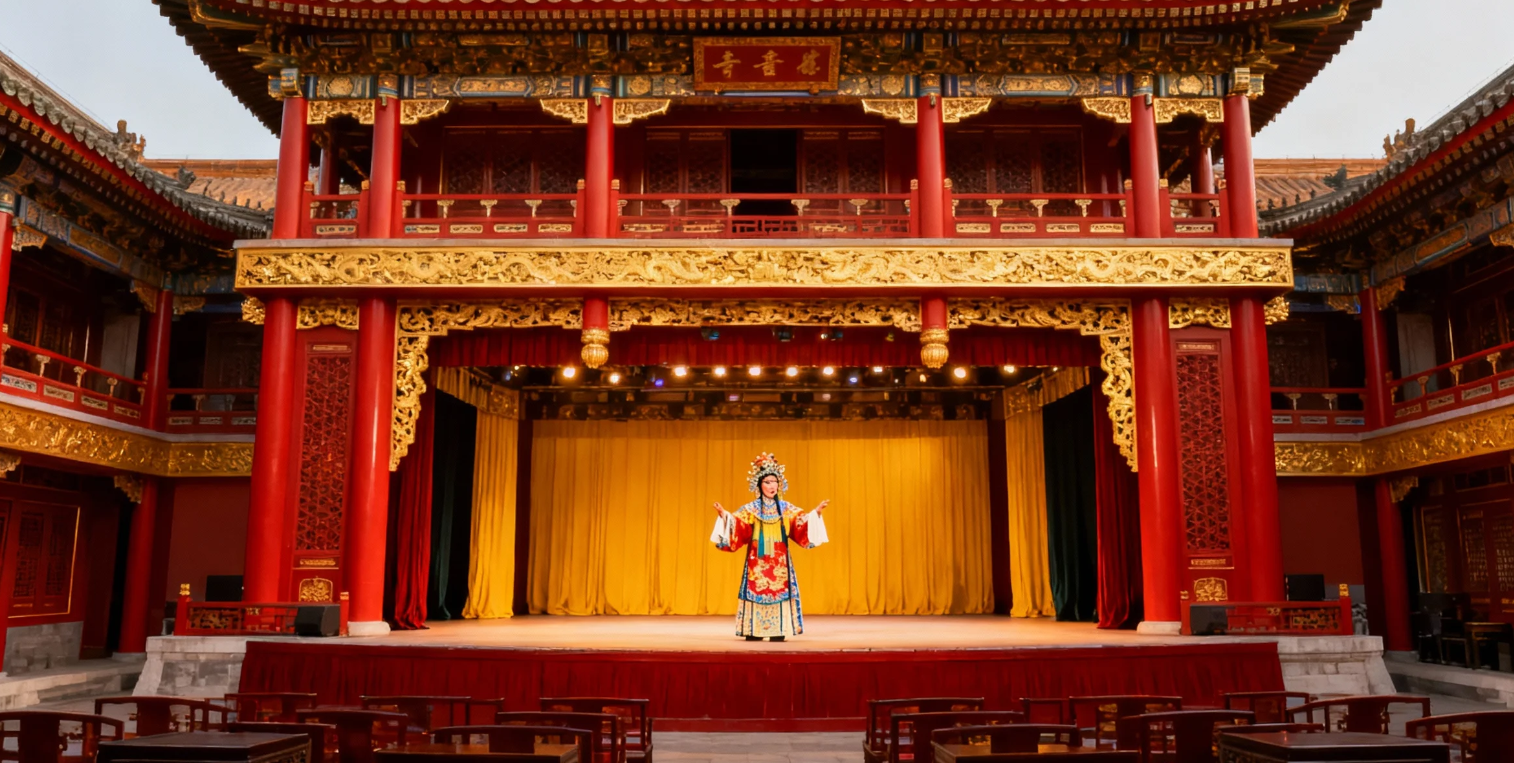
Since its designation as a World Intangible Cultural Heritage in 2001, Kunqu Opera has transcended its origins in classical literature to take its place on the global stage of artistic mastery. More than just the “Ancestor of Chinese Opera,” it is a living aesthetic: six centuries of time have been refined into the mellifluous “watermill tunes,” carved into exquisite gestures, and woven into lyrical poetry. Today, this Eastern dream continues to be performed.
Click to watch an introductory video on Kunqu Opera:https://b23.tv/wLD570c

World Intangible Cultural Heritage, Oriental Elegant Music: Interpreting ‘the Ancestor of a Hundred Performances’ Kunqu Opera

🏆 UNESCO Status: Intangible Cultural Heritage (Inaugural 2001 List)
👑 Title: “Ancestor of Chinese Opera”
🗺️ Roots: Late Yuan/Early Ming Dynasty · Kunshan, China
🎭 Hallmarks: Melodic “Watermill Tunes” · Poetic Dance-Drama · Aesthetic Grace
📖 Must-See Works: The Peony Pavilion, The Palace of Eternal Life, The Peach Blossom Fan
The uniqueness of Kunqu Opera

The uniqueness of Kunqu Opera stems from the perfect integration of four core dimensions:
I. The “Adagio” Tune: A Lingering Melody Polished by Time
Its rhythm is slow and measured, with melodic lines that are fluid and exquisitely refined.
· Each syllable is articulated with precision, divided into initial, middle, and final sounds, creating a smooth and prolonged vocal effect.
II. Literary Scripts: Classical Poetry Made to be Sung
· The librettos, written by literary masters such as Tang Xianzu, are literary treasures in their own right.
· The lyrics blend poetic elegance with philosophical depth [e.g., “See how the brightest purple and the deepest scarlet…”].
III. Stylized Performance: The Body Language of Suggestion
· It employs a codified system of movement—integrating singing, recitation, acting, and dance, along with precise hand, eye, body, and foot techniques.
· It uses symbolic gestures to represent all things (e.g., opening a window, rowing a boat).
IV. Role Types and Makeup: An Aesthetic of Refined Elegance
· The roles—Sheng, Dan, Jing, Mo, Chou—are strictly defined, each with its own distinct performance conventions.
· The “handsome” makeup is subtle and elegant, highlighting the actor’s expressions and natural features.
Together, these four elements form the complete system of Kunqu Opera as a “living art,” establishing it as the ultimate expression of classical Chinese aesthetics.
Appreciating the Classics: Stepping into a 600-Year-Old Dream

Purpose: To combine the literary depth of classic plays with their stage artistry, providing audiences with an accessible and evocative guide to appreciation.
Example: The Peony Pavilion— A Romantic Epic Born from Love
The Story:
Du Liniang, the daughter of an esteemed family, strolls in a garden and falls asleep. In her dream, she meets the scholar Liu Mengmei. After awakening, she pines for the dream lover to the point of illness and passes away. Moved by her profound devotion, the powers of heaven eventually allow her spirit to return to the world of the living, where she is reunited with her beloved and returns to life for love. The story极致展现了 the romantic theme that “true passion” can transcend even life and death.
Classic Appreciation – Wandering in the Garden · The Dream Interrupted:
(Embed authorized high-definition performance clips of Wandering in the Gardenand The Dream Interruptedhere)
Why It’s Brilliant?
Vocal Melody: The “Zao Luo Pao” melody is graceful and flowing. The lyric “See how the brightest purple and the deepest scarlet bloom…” uses a joyful scene to express sorrow, masterfully conveying Du Liniang’s layered emotions of delight in the spring scenery and her self-pity.
Language of Gesture: Du Liniang’s actions—admiring flowers, chasing a butterfly, gazing at her reflection—are exquisitely subtle. The gentle flutter of her water sleeves perfectly captures a young maiden’s shyness and budding desires.
Emotional Depth: As dream and reality intertwine, the actress, through slight changes in expression and posture, vividly portrays the emotional journey from longing and tenderness to the poignant sense of loss upon waking.
Traveler’s Guide: A Practical Guide to Immersing Yourself in the World of Kunqu Opera
Suzhou — A Pilgrimage to the Roots: Experience Authentic Elegance at the Source

Core Experience: As the birthplace of Kunqu Opera, Suzhou offers the most authentic cultural atmosphere.
Must-Visit Venues:
China Kunqu Opera Museum: Housed within the exquisite Quanjin Guild Hall with its ancient stage, this museum systematically presents Kunqu’s history, costumes, and scripts, making it the perfect primer.
Suzhou Kunqu Theatre: Attend performances of “The Peony Pavilion” or “The Palace of Eternal Life” by the Suzhou Troupe, renowned for their elegant and orthodox style—the premier choice for experiencing traditional stage art.
Garden Performances: Watch Kunqu performed amid the authentic landscapes of UNESCO World Heritage sites like the Humble Administrator’s Garden or the Master-of-Nets Garden. The “The Peony Pavilion” performance during the night tour of the Master-of-Nets Garden is a quintessential immersive experience, where pavilions and towers become the natural stage.
Travel Tip: Tickets for the Suzhou Kunqu Theatre are often in high demand. It is advisable to book in advance via their official WeChat account or platforms like Damai.cn.
Shanghai — The International Stage: Where Classical Art Meets Contemporary Vitality

Core Experience: In Shanghai, Kunqu is presented with a more modern and international flair, featuring sophisticated stage productions.
Must-Visit Venues:
Shanghai Kunqu Opera Troupe: One of China’s top troupes, frequently performing in professional venues like the Shanghai Conservatory of Music Opera House and the Shanghai Oriental Art Center, known for their high production standards.
The Red Box at Yang’s Theater: Serves as one of the troupe’s resident performance spaces, offering a modern environment and excellent viewing experience.
Travel Tip: Follow the official WeChat account of the “Shanghai Kunqu Opera Troupe” for the latest schedules and direct ticket purchases. Shanghai’s efficient public transport makes it easy to combine a performance with city sightseeing.
Beijing — Imperial Ambiance: Dreaming of the Ming and Qing Dynasties in Centuries-Old Theaters

Core Experience: Watch performances in ancient playhouses that are hundreds of years old, enjoying the unique charm of transcending time and space.
Must-Visit Venues:
Zhengyici Theater: Hailed as a “living fossil of Chinese theater,” watching Kunqu here allows you to genuinely sense the atmosphere enjoyed by ancient scholars and literati.
Royal Granary: This unique venue offers an intimate, refined chamber version of “The Peony Pavilion,” providing an up-close and personal experience.